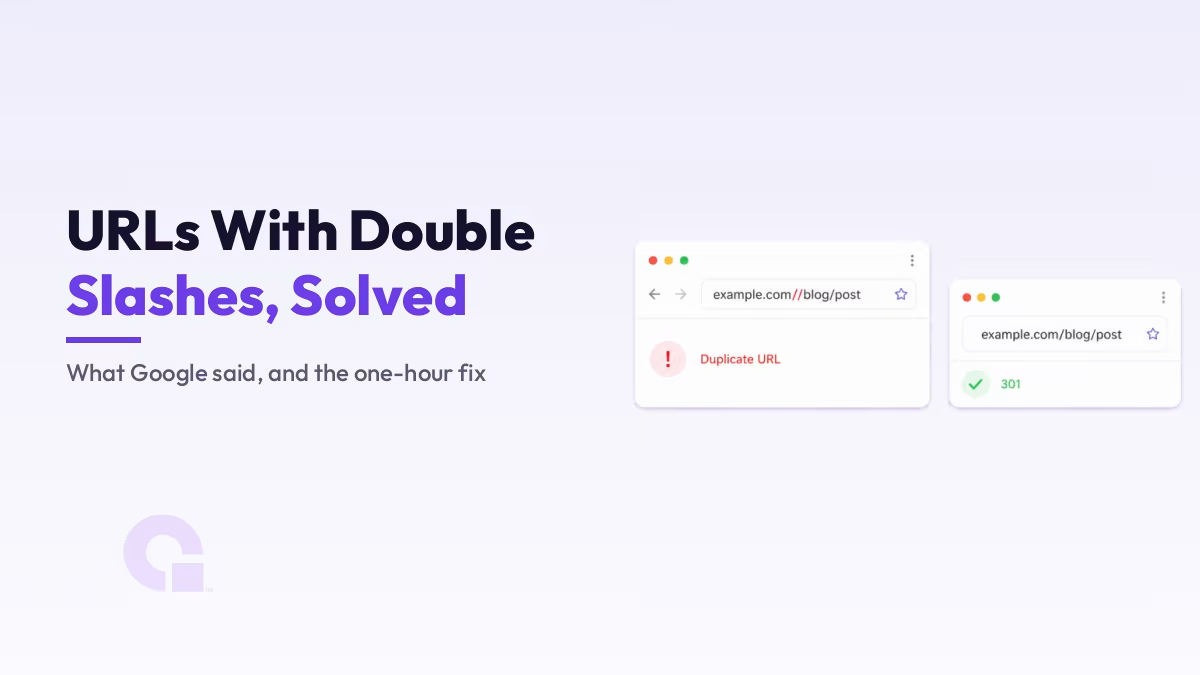
Somewhere on your site, a link like example.com//blog/post is quietly creating a second copy of a page you already have. URLs with double slashes are technically valid, which is exactly why nothing errors out, and why they sit unnoticed while search engines treat each variant as a separate page.
Google has said these URLs can confuse some crawlers, so the warning is real, just smaller than the headlines make it. I will show you what actually causes double slashes on a WordPress site, how to find them, and the clean way to fix them for good.
Key Takeaways
- The URL standard (RFC 3986) allows repeated slashes in a path, so
//pageloads fine and nothing ever warns you about it. - Google’s Gary Illyes called double slashes a usability problem that may also confuse some crawlers; it is not a penalty, it is a duplication problem.
/page/and//page/are two different URLs to a search engine, so the variant splits canonical signals and wastes crawl on pages you never meant to publish.- Almost every double slash comes from one of four sources: sloppy link concatenation, a trailing slash saved in a URL setting, stacked redirect rules, or migration leftovers.
- Fix the source first, then let one site-wide 301 rule collapse whatever slips through; a canonical tag is the backstop, not the fix.
What Google actually said about double slashes in URLs
In the December 2023 Google SEO office hours, Google’s Gary Illyes was asked whether a double slash in a URL path, something like example.com//us/shop, has any SEO impact. His answer had two halves: technically the format is fine, because RFC 3986 treats the slash as a separator that may repeat in a path, but from a usability standpoint it is a bad idea and it may confuse some crawlers.
Notice what he did not say: there is no double-slash penalty, and Google is not going to demote a page for it. Search Engine Journal’s coverage landed on the same reading. The real cost shows up indirectly, through duplication and crawl waste, which is what the rest of this post deals with.
Why URLs with double slashes hurt your SEO anyway
To a search engine, a URL is an identifier, so /blog/post/ and //blog/post/ are simply two different addresses that happen to serve the same content. If both return a normal 200 page, you have shipped a duplicate: two URLs collecting links, impressions, and crawl budget for one piece of content.
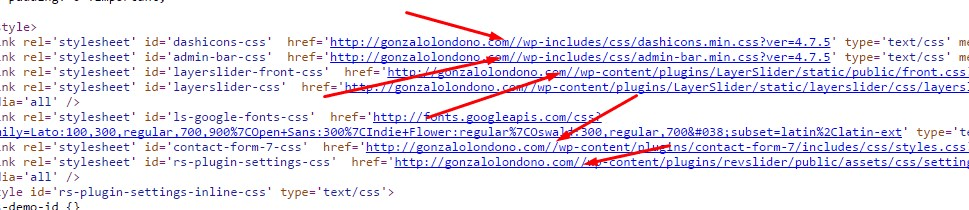
On a handful of pages that is a rounding error, but double slashes rarely stay a handful, because the broken template or setting that created one creates them everywhere it renders. The result is split canonical signals, messy Search Console reports, and crawlers spending requests on variants instead of on the pages you want indexed faster.
What creates double slash URLs on a WordPress site
Double slashes are almost never typed by hand; they are assembled by code. The classic case is concatenation: a base URL stored with a trailing slash meets a path that starts with its own slash, and site.com/ plus /page becomes site.com//page.
| Cause | Where it usually hides | Fix |
|---|---|---|
| Link concatenation | Theme templates, widgets, menus with hardcoded paths | Remove the doubled slash in the template or menu item |
| Trailing slash in a saved URL | Plugin settings, custom fields, hardcoded site URLs | Store the base URL without a trailing slash |
| Stacked redirect or rewrite rules | .htaccess, redirect plugins, CDN rules adding an extra slash | Audit the rules and test the redirect chain |
| Migration leftovers and old backlinks | Internal links imported from an old structure, external sites linking wrong | Update internal links; let the 301 rule below catch external ones |
How to find double slash URLs on your site
Crawl your site with a tool like Screaming Frog and filter the URL list for // after the protocol; that surfaces both the variant pages and, more usefully, the internal links pointing at them, which is where the source lives. Search Console helps from the other side: the Pages report lists duplicate and “crawled, currently not indexed” variants Google has already met.
If an ugly variant is already indexed and you want it gone quickly, the Removals tool buys you time while the redirect does the permanent work; I cover that in removing URLs from Google search results.
How to fix URLs with double slashes for good
Fix the source first, because a redirect that masks a broken template is a patch, not a repair. Correct the concatenation, strip the trailing slash from the stored URL, or repair the rewrite rule, and the new double slashes stop appearing.
Then add a site-wide rule that collapses anything that still slips through, including old external links you cannot edit. On Apache, this goes in your .htaccess:
RewriteEngine On
RewriteCond %{THE_REQUEST} ^[A-Z]+\s//+(.*)\sHTTP/[0-9.]+$ [OR]
RewriteCond %{THE_REQUEST} ^[A-Z]+\s(.*/)/+(.*)\sHTTP/[0-9.]+$
RewriteRule .* /%1%2 [R=301,L]
The rule reads the raw request line (THE_REQUEST) because Apache quietly collapses repeated slashes in its other variables, then 301-redirects any doubled-slash path to its clean version. A 301 is the right tool here since the variants should never exist again; if you want the fuller reasoning on choosing redirect types, see my guides on 301 vs 302 use cases and the difference between 301, 302, 307, 410, and 451 redirects.
Two easier paths for specific setups: Nginx merges repeated slashes by default, so Nginx users usually only need the source fix. And if you just have a few known stragglers, you can stage those one-off 301s from your WordPress dashboard with the Redirections module in Rank Math.
Finally, keep self-referencing canonical tags on your clean URLs. That is the backstop: if a variant ever gets crawled before the redirect catches it, the canonical still tells Google which address owns the content.
So, do double slashes in URLs actually hurt your rankings?
Honestly, not in the dramatic way the warning headlines suggest; there is no penalty, and Google usually sorts the duplication out on its own eventually. I would not panic over one stray variant in a crawl report.
But “Google usually sorts it out” is doing quiet damage while you wait: split signals, wasted crawl, and reports you cannot trust. The whole fix, source plus redirect rule, costs about an hour, and that trade is so lopsided that leaving double slashes in place is just untidiness you are choosing to keep.
Still seeing double slash URLs in your crawl?
If the variants keep coming back or the redirect rule is not behaving, feel free to contact us or email me and I will help you track the source down.
Update Logs
02 Jul 2026
- Reframed the piece around Google’s actual office-hours answer (no penalty, but a crawler-confusing duplicate), added the four real WordPress causes with fixes, and a site-wide redirect rule that collapses stray double slashes.
Want our posts to show up more often on Google?
One step & Google will surface this site in your Top Stories.