How to Deindex a Page From Google (and the robots.txt Trap That Keeps It Indexed)
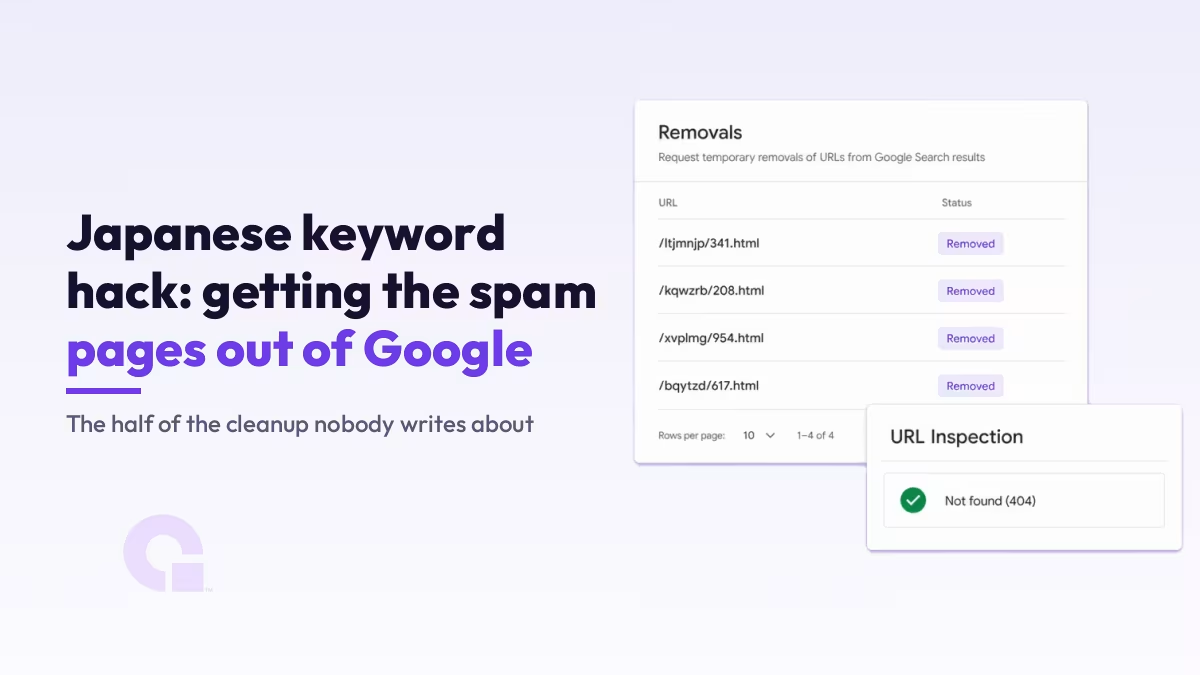
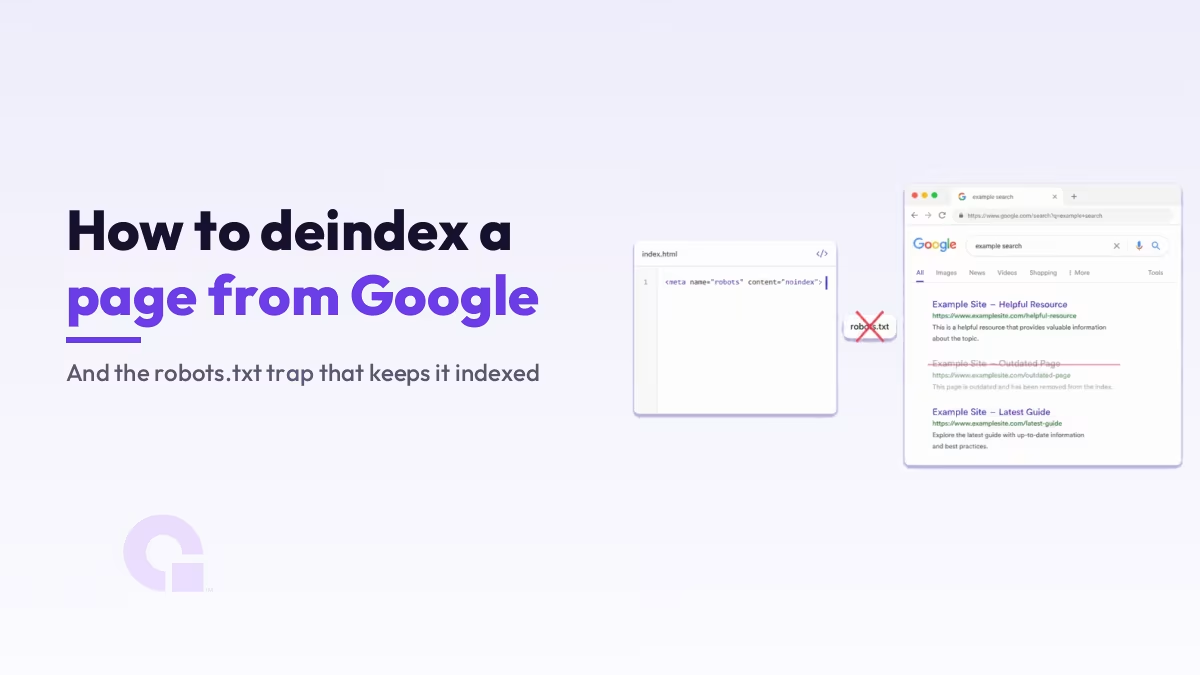
How to deindex a page from Google: add noindex and keep the page crawlable, because a robots.txt block means Googlebot never sees the tag and the URL can stay indexed.
The under-the-hood stuff that makes or breaks rankings. Crawlability, site speed, indexing, structured data, and everything Google needs to properly read your site.
How to deindex a page from Google: add noindex and keep the page crawlable, because a robots.txt block means Googlebot never sees the tag and the URL can stay indexed.

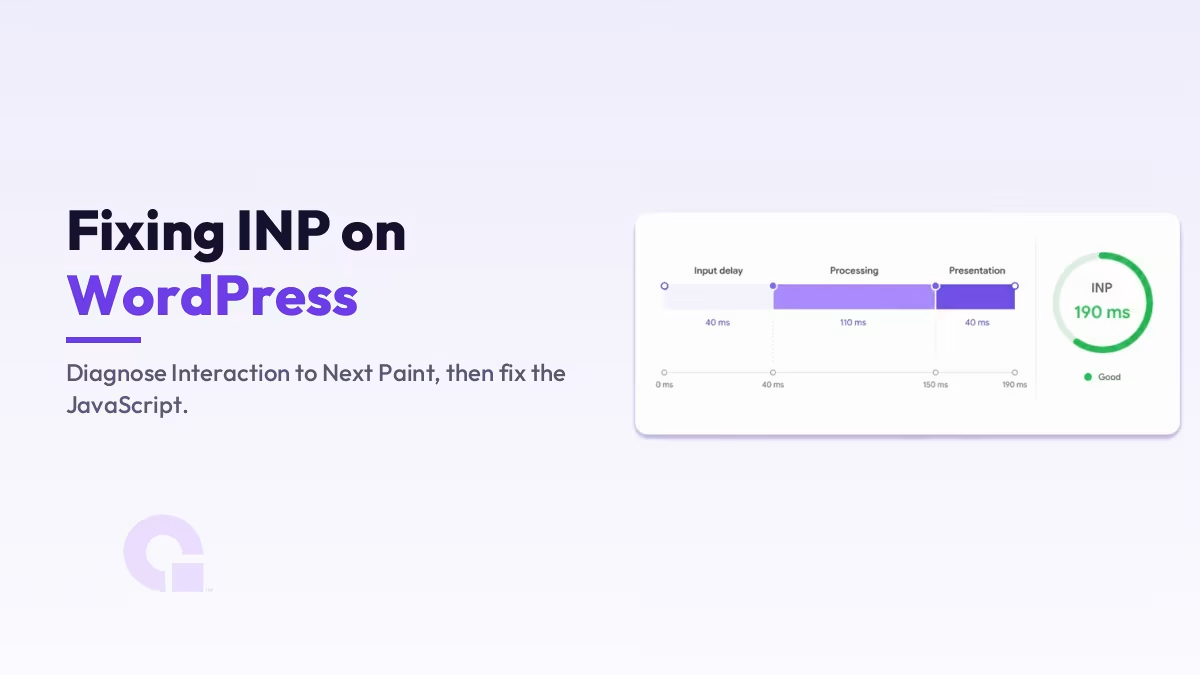
INP is the Core Web Vital most WordPress sites now fail. This guide shows how to diagnose Interaction to Next Paint and fix it with a practical JavaScript diet, step by step.

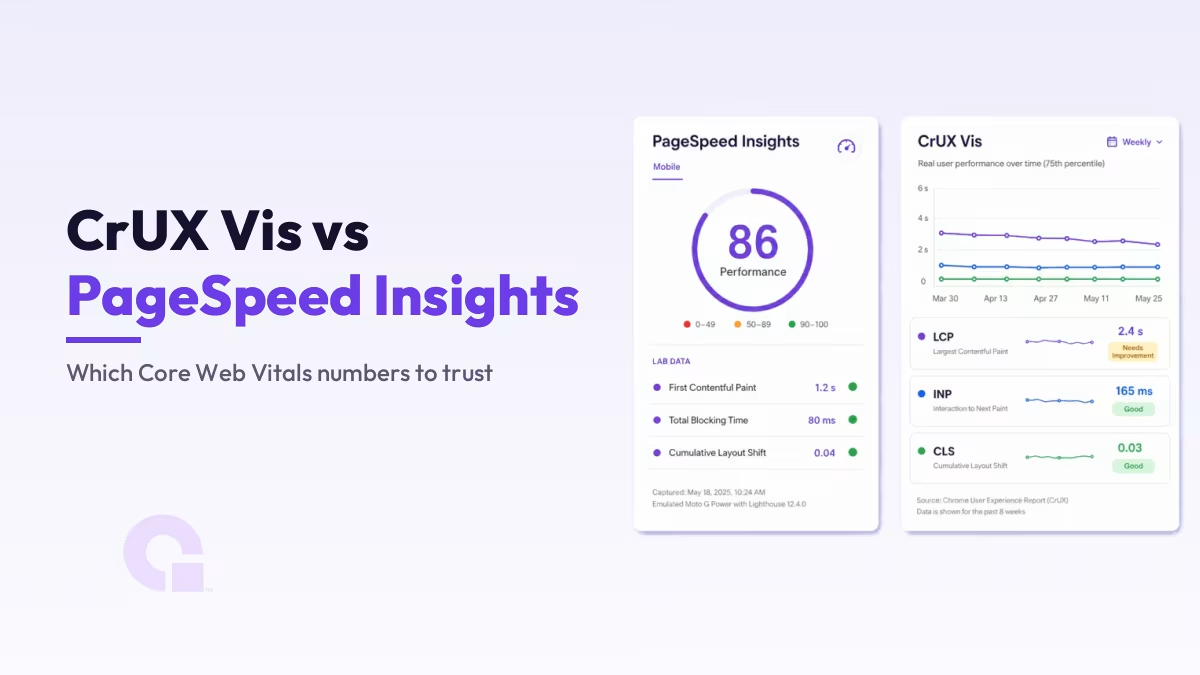
A plain-English look at CrUX Vis vs PageSpeed Insights: what lab and field data each one shows, why low-traffic pages show no field data, and which Core Web Vitals numbers to trust.

A practical WordPress migration SEO checklist: what to record before you move, how to map 301 redirects, and the post-launch checks that catch broken images, lost URLs, and ranking drops.

The x402 protocol revives HTTP 402 so AI agents can pay with stablecoins over the web. How it works, where it fits, and what it means for your store.

An agentic commerce readiness checklist for your store: the identifiers, schema, feed, and protocol steps that get your products found and bought by AI agents.

llms.txt is sold as an AI-visibility must-have. Across 515 million AI bot requests it was touched 408 times, and Google says it does not use it. Here is the one case where it earns its place.

The schema-for-AI pitch is mostly fiction. The data shows near-zero citation lift; here is what actually drives AI visibility, and how to test it yourself.

GA4 cannot see AI crawlers because they do not run JavaScript. Your raw server logs can. Here is the cross-reference audit that separates training bots from retrieval agents, kills spoofed traffic, and exposes crawl-budget waste.

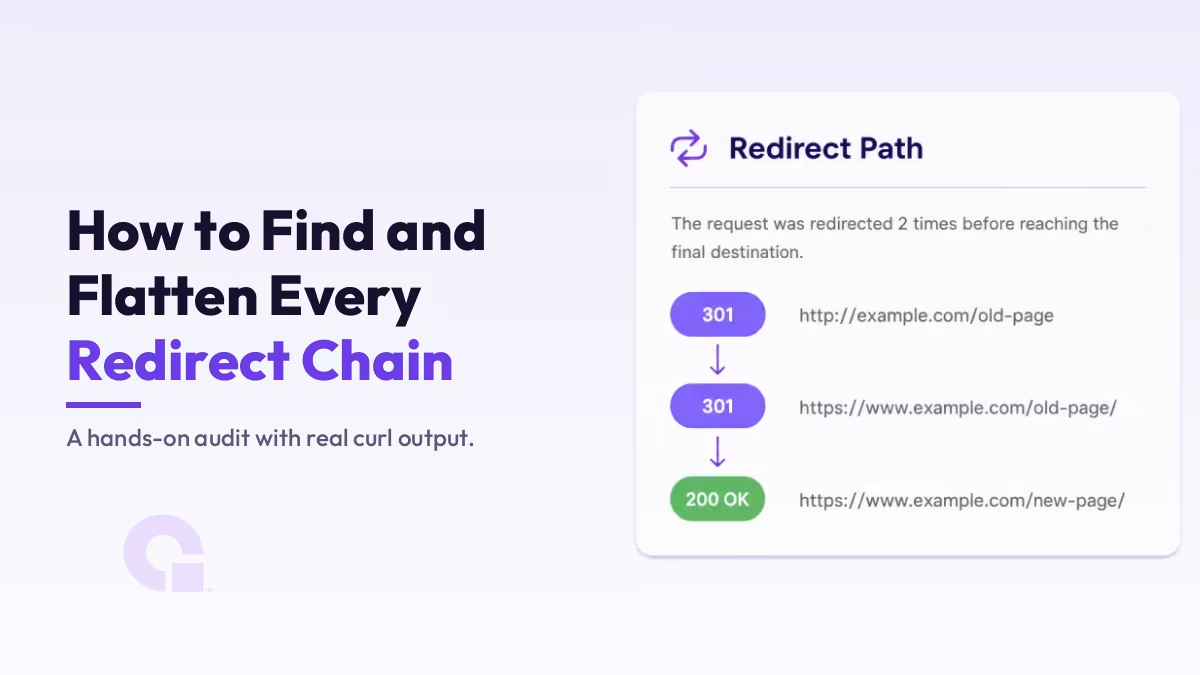
A plain-English guide to redirect status codes: what 301, 302, 307, 410, and 451 each do, when to use them, and exactly how each one affects your SEO.

WordPress images not loading after a migration? Here is what actually causes it, from broken URLs to file paths and permissions, and how to fix it for good.

LiteSpeed Cache ESI lets you cache pages even for logged-in users by splitting them into static and dynamic fragments. Here is what each ESI setting does, when it is worth enabling, and when it is not.

You cannot submit a URL to DuckDuckGo directly; it has no submission form and pulls results mainly from Bing. Here is the real path to getting indexed, using Bing Webmaster Tools and IndexNow.

301 and 302 redirects both send visitors from an old URL to a new one, but only one passes your SEO value. Here is when to use each, and the default mistake that leaks rankings.

Core Web Vitals now come down to three metrics, LCP, INP, and CLS, after INP replaced FID. Here is how to find what is failing and the fixes that actually move each one.

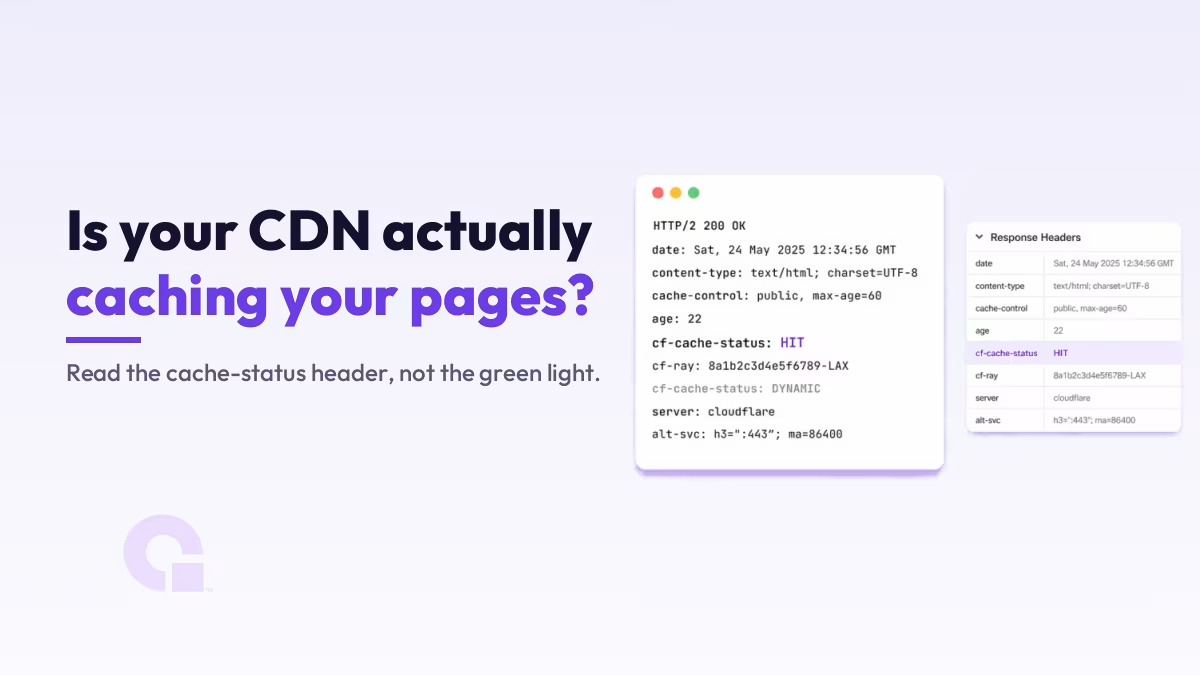
Cloudflare retired Auto Minify on August 5, 2024. The honest news: it was trimming under 0.1% of bytes, so here is where minification belongs now and what actually speeds up your site.
We use cookies to improve your experience on our site. By using our site, you consent to cookies.
Manage your cookie preferences below:
Essential cookies enable basic functions and are necessary for the proper function of the website.
These cookies are needed for adding comments on this website.
Google Tag Manager simplifies the management of marketing tags on your website without code changes.
These cookies are used for managing login functionality on this website.
Statistics cookies collect information anonymously. This information helps us understand how visitors use our website.
Google Analytics is a powerful tool that tracks and analyzes website traffic for informed marketing decisions.
Service URL: policies.google.com (opens in a new window)
Clarity is a web analytics service that tracks and reports website traffic.
Service URL: clarity.microsoft.com (opens in a new window)
You can find more information in our Cookie Policy and Privacy Policy.