On almost every store I audit, the product feed is an afterthought: set up once for Google Shopping, then left alone for years. That habit is about to get expensive, because agentic commerce, which is shopping an AI agent does on the buyer’s behalf, now reads that same feed to decide whether to show, cart, and buy your products.
This is not a far-off idea. The checkout already happens inside tools like ChatGPT and Google’s shopping surfaces, so here I will map the whole stack (MCP, ACP, UCP, AP2, and x402) in plain language, show where your ranking surface has quietly moved, and give you my honest read on what actually matters for an eCommerce store right now.
Key Takeaways
- Agentic commerce means an AI agent discovers, compares, and buys for the shopper, often with no visit to your site.
- These protocols are not rivals, they are layers: MCP lets agents talk, ACP and UCP handle the store journey, AP2 grants permission to pay, and x402 and MPP move the money.
- ChatGPT Instant Checkout (ACP, from OpenAI and Stripe) and Google’s UCP are already live with real merchants like Etsy and Shopify stores.
- Your product feed and structured data are now the storefront the agent reads, not your theme or your latest blog post.
- Getting agent-ready is mostly a feed, schema, and platform-support job, and it is still low-competition today.
What agentic commerce actually is
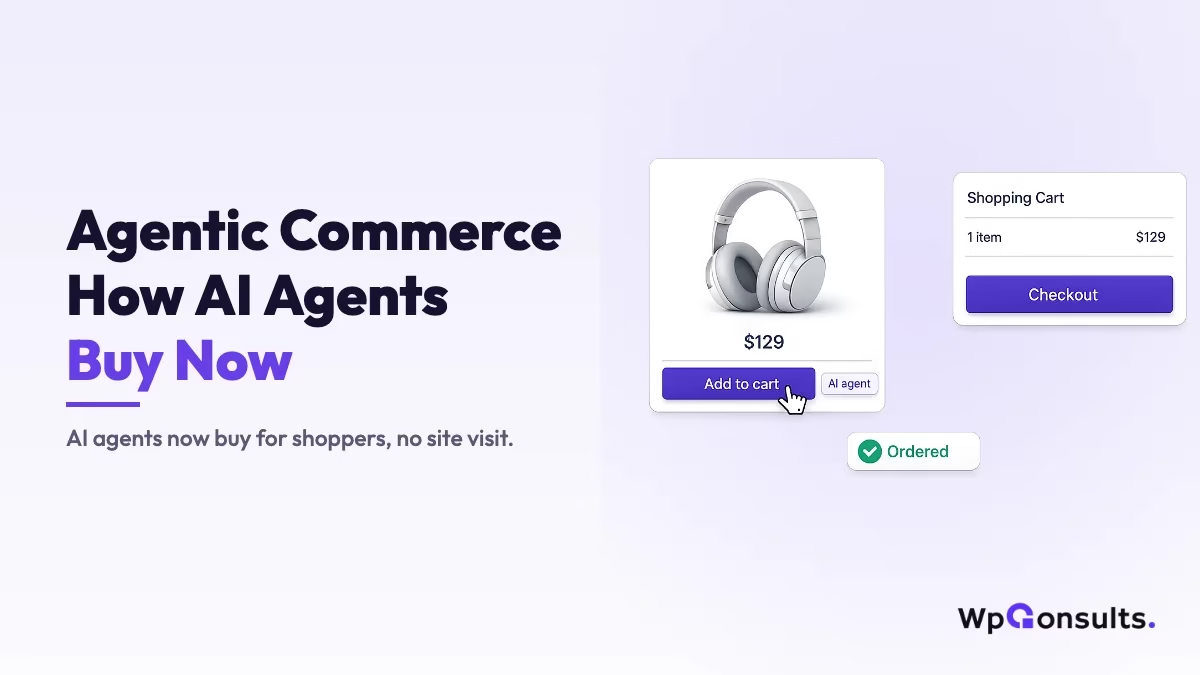
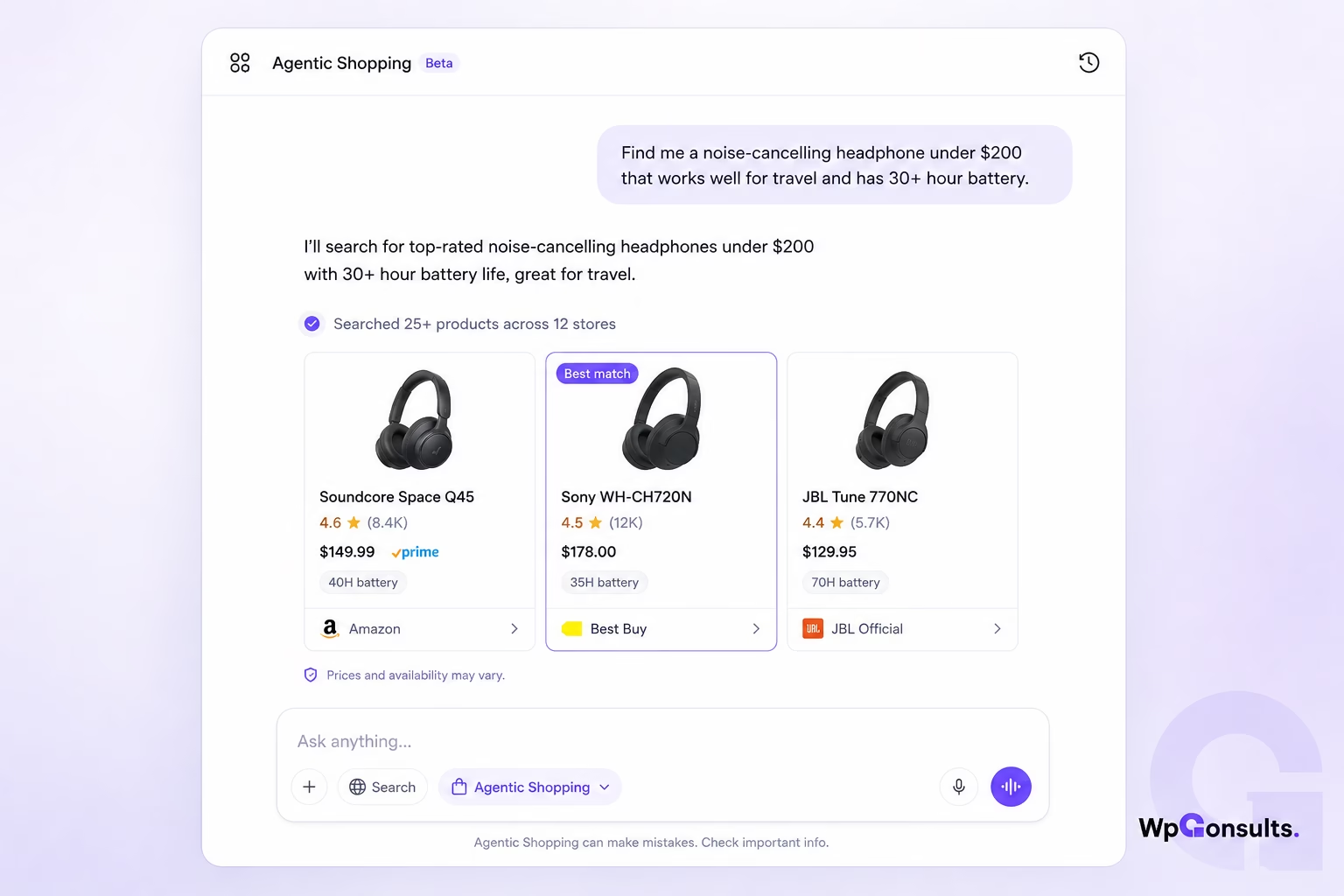
Agentic commerce is simple to picture. You tell an assistant like ChatGPT or Gemini “find me a 55 inch OLED TV under 1000 dollars and buy it,” and the agent searches, compares options, picks one, and completes the purchase for you. You approve it, but you may never open a single store website.
For a store owner, that flips the job. For years the goal was to rank a page a human clicks and reads; now the goal is to be machine-readable and ready to transact, so an agent can pull your price, stock, and product details and complete a sale.
Yes, plenty of people still browse sites the old way, but a growing slice of shopping now starts and ends inside an agent, and that slice is the one moving fastest.
Why it matters now
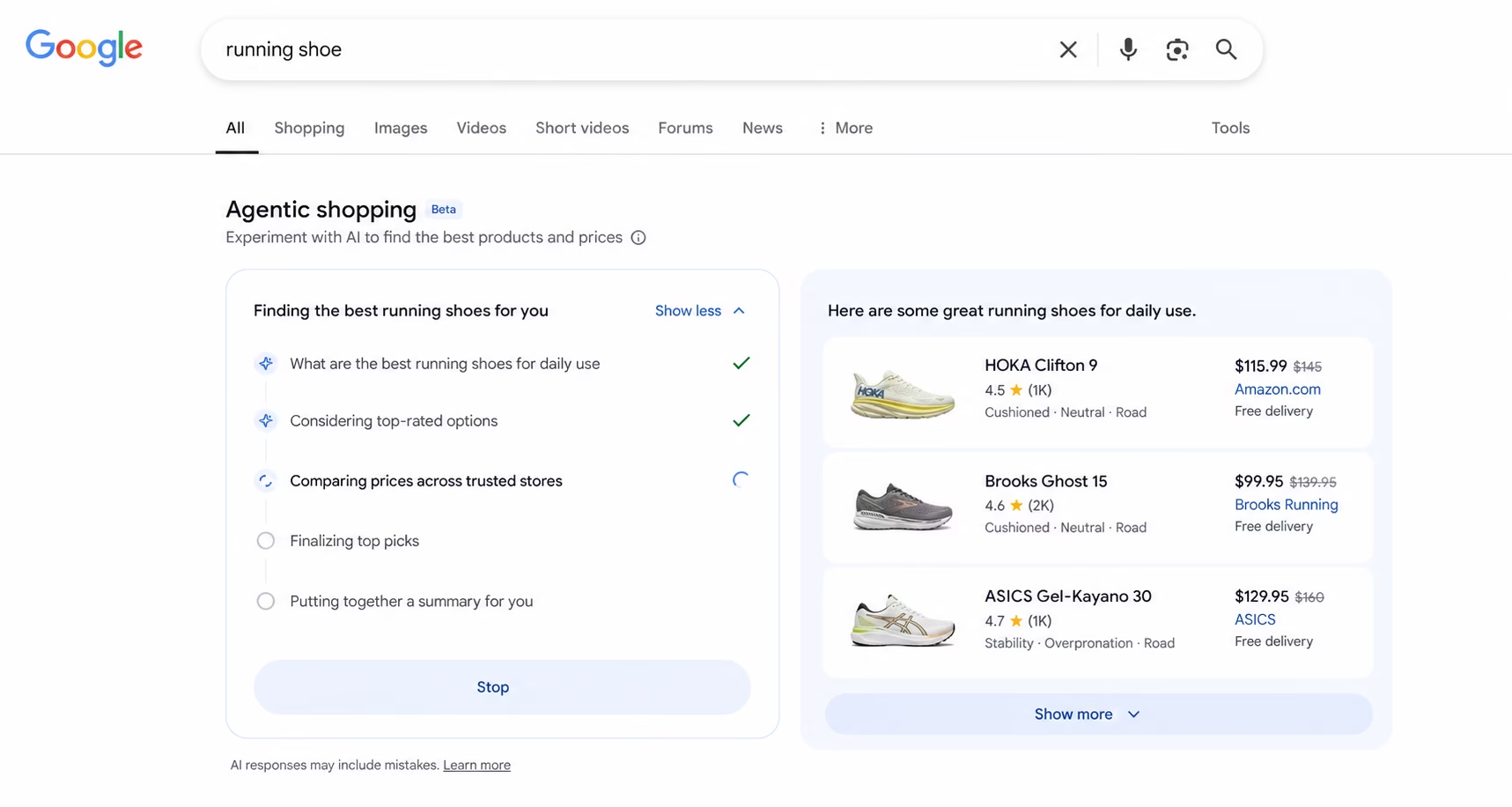
The reason this is urgent is that the buying surface is moving off your website. When a shopper asks ChatGPT to buy something, the agent decides what to show from structured product data, not from how nice your theme looks, so a store the agent cannot read simply is not in the consideration set.
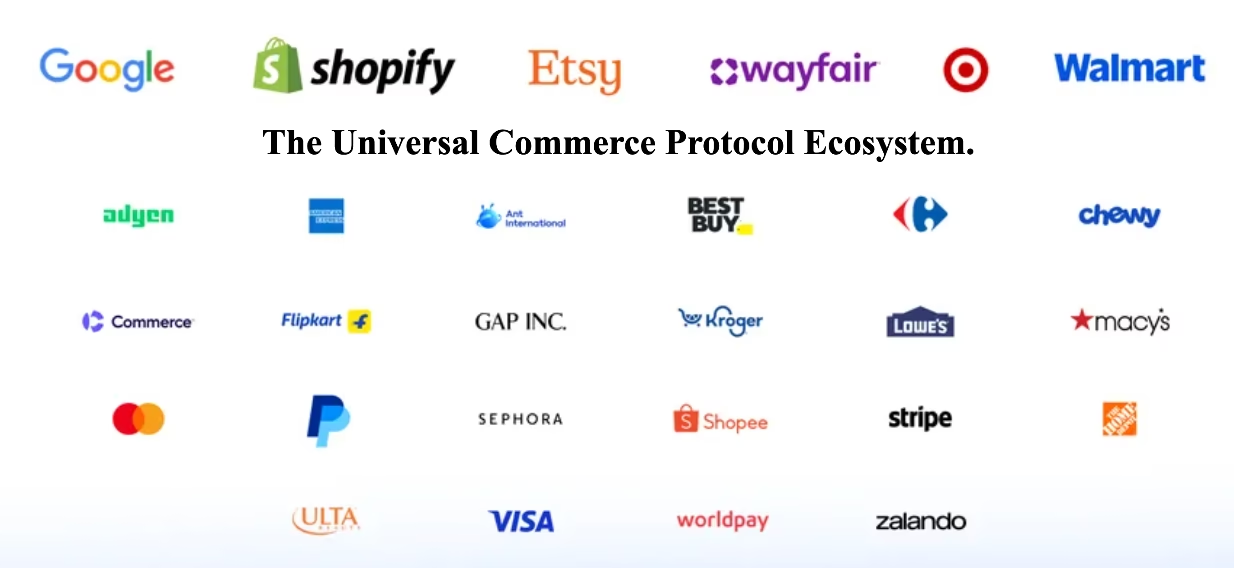
And this is already shipping, not a roadmap slide. OpenAI and Stripe built the standard behind Instant Checkout in ChatGPT, starting with Etsy sellers and expanding to Shopify merchants, while Google rolled out its Universal Commerce Protocol with Shopify and major retailers. The takeaway is blunt: if agents are becoming a real shelf, you want to be on it before your competitors tidy up their feeds.
The stack, layer by layer
The acronyms look like competitors fighting for one slot, but they are not. They are different layers of the same system, and once you see them as a stack, the whole thing gets simple.
At the bottom sits communication. MCP (the Model Context Protocol) is the language an agent uses to read your tools and data, and agent-to-agent (A2A) messaging lets agents talk to each other; almost everything above rides on this layer.
The next layer up is the merchant journey, and this is the one you will feel first. ACP, the Agentic Commerce Protocol from OpenAI and Stripe, is what lets a shopper buy your product inside ChatGPT, while Google’s UCP covers discovery, cart, checkout, and order management across Google’s surfaces. Both do the same core job, which is giving an agent a standard way to browse your catalog and complete a purchase.
Above that is authorization. Google’s AP2 (Agent Payments Protocol) handles permission using signed “mandates” that prove an agent is actually allowed to spend on the buyer’s behalf, which is what stops an agent from buying things you never approved.
The top layer is settlement, the actual movement of money. Coinbase’s x402 revives the old HTTP 402 “Payment Required” response so an agent can pay over the web in seconds, usually in stablecoins, and MPP sits alongside it for machine-to-machine payments. For most stores this layer is the least urgent today, but it is where agent-to-agent buying eventually settles.
| Protocol | Layer | Backed by | What it means for your store |
|---|---|---|---|
| MCP | Communication | Anthropic | How agents read your tools and data; the plumbing the rest sits on. |
| ACP | Merchant journey, checkout | OpenAI, Stripe | Lets shoppers buy your products inside ChatGPT. |
| UCP | Merchant journey, checkout | Google, Shopify | Lets agents discover, cart, and check out across Google surfaces. |
| AP2 | Authorization | Proves the agent has permission to spend on the buyer’s behalf. | |
| x402 | Settlement | Coinbase | Moves the money: instant stablecoin payment over HTTP. |
| MPP | Settlement | Emerging | Machine-to-machine payments, pairs with x402 at the pay layer. |
Where your ranking surface moved
Here is the part that matters for SEO, and it is a real shift. The agent does not read your homepage hero or your theme; it reads your structured data and your product feed, so those are now the storefront. That is exactly why I keep arguing that your product feed is becoming the ranking surface, not an afterthought you set up once for Shopping.
So the work is practical, and each piece earns its place. Your feed needs to be clean and accurate (correct price, real-time availability, GTINs and identifiers) so an agent trusts it enough to transact; your Product and Offer schema needs to match that feed so the data lines up wherever an agent looks; and your platform needs to support ACP and UCP as they roll out, because that is the actual on-ramp into ChatGPT and Google’s agent checkout.
One caution, because it gets oversold: schema is not a magic button here. I have written before about how product schema alone will not get you into AI shopping carts and how schema does not buy you AI citations; it helps machines read you, but the feed and the transaction support are what actually close the loop. And if you want to see the erosion that makes this urgent, measure which queries are already bleeding traffic to AI answers before you assume your classic clicks are safe.
What changes when you get it right
When your store is agent-ready, you stay in the consideration set an agent builds before it ever shows the shopper a choice, and you can capture purchases that never touch your website at all. As classic blue-link clicks keep eroding into AI answers, that becomes less of a nice-to-have and more of a way to protect revenue.
It will not replace your site overnight, and it should not. Your collection pages, your content, and your local presence still do the heavy lifting for human discovery (and local searches are shifting into AI answers too), so this is an addition to that work, not a teardown of it. The point is to stop treating the feed as a Shopping chore and start treating it as a first-class SEO asset.
Glossary
- Agentic commerce: shopping where an AI agent discovers, compares, and buys products for a person, often without them visiting your site.
- AI shopping agent: the assistant (ChatGPT, Gemini, Perplexity, and similar) that does the searching and buying on the shopper’s behalf.
- ACP (Agentic Commerce Protocol): OpenAI and Stripe’s standard for buying inside ChatGPT: you submit a product catalog, OpenAI ranks it, and you pay a platform fee on the sale.
- UCP (Universal Commerce Protocol): Google and Shopify’s open standard: you self-host a product profile (at /.well-known/ucp) and stay decentralized, with no platform fee.
- x402: a payment standard that revives the HTTP 402 status code so agents can pay small amounts (often stablecoins) machine-to-machine over the web.
- Product feed: the structured file of your products (title, price, availability, GTIN, shipping, returns) that agents read to decide what to surface and buy.
- Merchant of Record: the entity that legally makes the sale and handles tax and refunds; in agentic checkouts this can shift to the platform, so check who owns it.
- Instant Checkout: ChatGPT’s buy-in-the-chat experience, powered by ACP.
So, should you get agent-ready now?
In my view, the right move right now is boringly practical, and that is good news. Do not rebuild anything or chase every protocol; get your product feed and structured data clean, accurate, and in sync, and make sure your platform supports ACP and UCP as they reach you. The stores that treat the feed as a real asset, not a set-and-forget Shopping export, will own the agent shelf while everyone else is still arguing about whether this is hype.
I would stay measured on the payment layer. The standards are still settling and I would not wire my checkout to stablecoins (x402) on the strength of early launches, but I would absolutely get agent-readable today, because the cost is low, the competition is thin, and you want to be in the room when a buyer’s agent is deciding what to put in the cart.
Want your store ready for AI shopping agents?
If you are not sure whether agents can read and buy from your catalog, work with us or email me and we will audit your feed and schema first. Getting agent-ready early is cheap insurance against losing the shelf later.
Update Logs
23 Jun 2026
- Added inline links to x402, ACP vs UCP, ChatGPT Instant Checkout, and the agentic commerce readiness checklist.
22 Jun 2026
- Renamed the closing section to a natural question and added a caption to the protocol table.
19 Jun 2026
- Initial publication: mapped the agentic commerce stack (MCP, ACP, UCP, AP2, x402), added the stack diagram and protocol comparison table, and the feed-and-schema readiness steps.
Want our posts to show up more often on Google?
One step & Google will surface this site in your Top Stories.