Most stores are not ready for AI shopping agents, and the gap is rarely the flashy stuff; it is boring data hygiene. If your identifiers are missing, your titles are vague, or your feed is stale, agents quietly skip you, and you never see the sale that did not happen.
So this is the practical checklist I use to get a store ready, in order of what matters most. It is the doing layer under my agentic commerce guide: clean the data, add the right schema, keep it live, turn on the protocols, then test.
Key Takeaways
- Agentic readiness is mostly data hygiene, not a rebuild: identifiers, clear titles, schema, and live price and stock.
- Agents need unique identifiers (GTIN, SKU, MPN, brand) to match and trust your products before they will buy.
- One clean catalog feeds every surface (ChatGPT, Google, Perplexity, Copilot), so the work compounds.
- Schema helps machines read you, but it must match your feed and your live price and stock.
- Test with the assistants themselves; if ChatGPT cannot describe your product correctly, neither can a buyer’s agent.
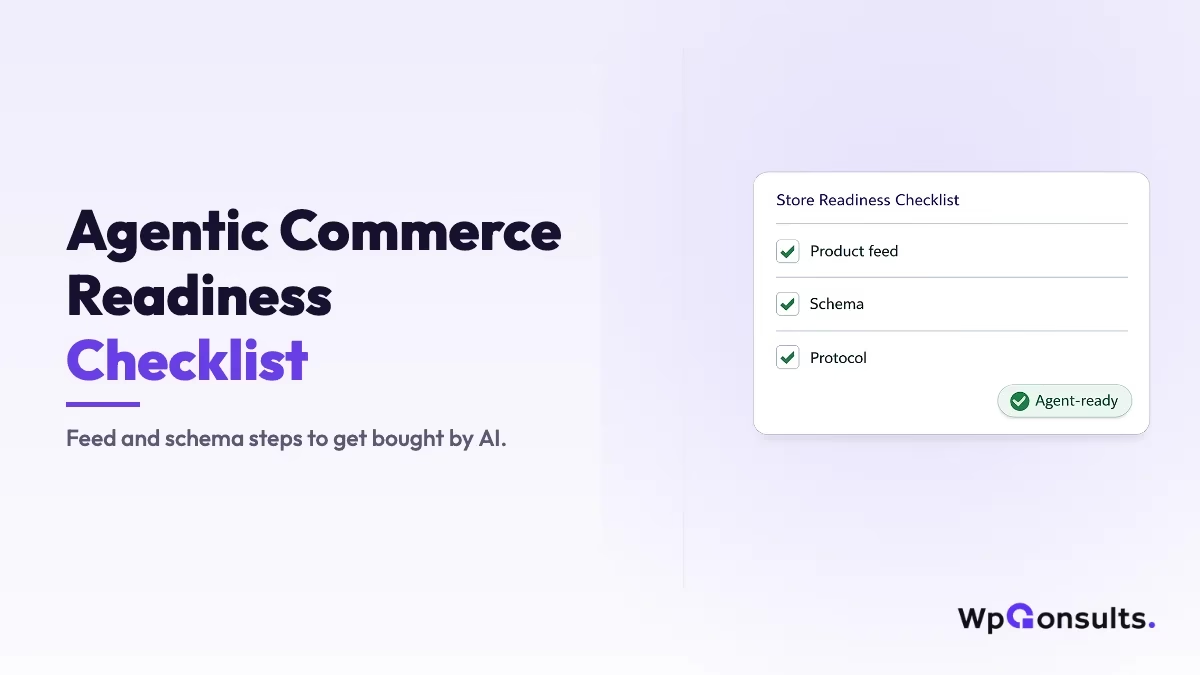
Here is the whole checklist at a glance, in priority order, then each step in detail.
The agentic readiness stack
- Product identifiers (GTIN, SKU, MPN)
- Clear, machine-readable titles and specs
- Product and Offer schema
- Real-time price and availability
- Clean Merchant Center feed
- Protocol support: ACP and UCP
- Test with the AI assistants
1. Fix your product identifiers
Agents do not guess. They match your product to a known item using identifiers, so missing or wrong GTINs, SKUs, MPNs, and brand are the quietest way to get filtered out. Fill them in completely and consistently, because an agent that cannot identify your product with confidence will not put it in a cart. It is unglamorous, but it is the single highest-leverage fix on most stores I audit.
2. Write titles and descriptions for machines, not just humans
A human fills gaps with a nice photo or a vibe; an agent does not, it reads the words. So titles stuffed with marketing fluff and descriptions that bury the specs in a paragraph get skipped, because the agent cannot extract what it needs. Put the real attributes (size, material, compatibility, key specs) in clear language and structured fields, and keep the clever copy for the humans who still visit; Shopify’s own guidance lands in the same place.
3. Add Product and Offer schema, and match it to your feed
Schema markup is how you hand a machine the structured facts on the page itself: Product and Offer at minimum, plus Review, AggregateRating, and ReturnPolicy where they apply. But schema is not a magic switch, as I argued in schema alone will not get you into AI carts; its job is to make you readable, and it has to agree with your feed and your live price, or you look untrustworthy to the agent.
4. Keep price and availability real-time
An agent will not transact on stale data, because it cannot risk quoting a price or stock level that turns out wrong at checkout. So price and availability need to update in near real time through your feed or an API, not on a daily cron you forget about. This is where a lot of otherwise-clean catalogs quietly fall down.
5. Clean up your Merchant Center feed
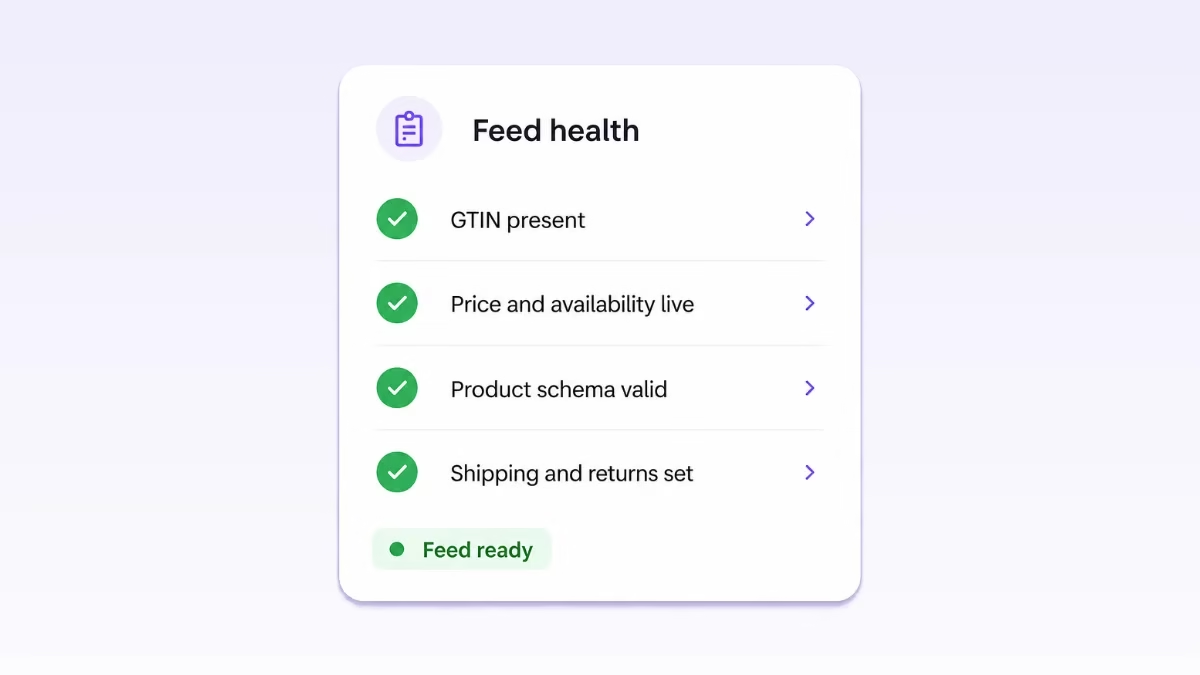
Most agent surfaces lean on the same Google Merchant Center feed quality you already need for Shopping, so this work is not extra, it is shared. Aim for zero disapproved products, no policy violations, fresh updates, and complete attributes, because if your feed is messy, those gaps syndicate to every surface at once. One clean feed is the cheapest multiplier you have.
6. Turn on the protocols (ACP and UCP)
With the data clean, switch on the actual on-ramps: ACP for ChatGPT Instant Checkout and UCP for Google’s surfaces. I covered how to choose and sequence them in ACP vs UCP, and the short version is support both, because they read the same catalog and target different shoppers. This is the step that turns readable into buyable.
7. Test with the assistants, starting with one category
Do not assume it works, check it. Ask ChatGPT, Perplexity, and Google to find and compare your products, and watch what they get wrong, because that is exactly what a buyer’s agent will get wrong too. Start with one high-margin, high-comparison category, fix what surfaces, then roll the pattern out; Google’s own prep guidance pushes the same start-small approach.
So, why get agentic-ready now?
In my view, the reason to do this now is that the work is boring, shared, and cheap, which is exactly why most stores will put it off. None of it is a rebuild; it is identifiers, clear words, schema that matches a live feed, and a couple of switches, and the same clean catalog pays off on every AI surface at once.
Do it in this order, because each step makes the next one work: there is no point turning on a protocol that points at a messy feed. Start with the data, prove it by testing with the assistants, and you will already be ahead of the large majority of stores that have not started.
Want a done-for-you readiness pass?
If you would rather not audit identifiers, schema, and feeds yourself, work with us or email me and we will get your catalog agent-ready and tested across ChatGPT and Google. The data work is shared, so doing it once covers every surface.
Update Logs
22 Jun 2026
- Renamed the closing section to a natural question and added a caption to the readiness-stack diagram.
20 Jun 2026
- Initial publication: the agentic commerce readiness checklist (identifiers, machine-readable copy, schema, real-time data, feed quality, protocols, and testing), with a vertical readiness-stack diagram.
Want our posts to show up more often on Google?
One step & Google will surface this site in your Top Stories.