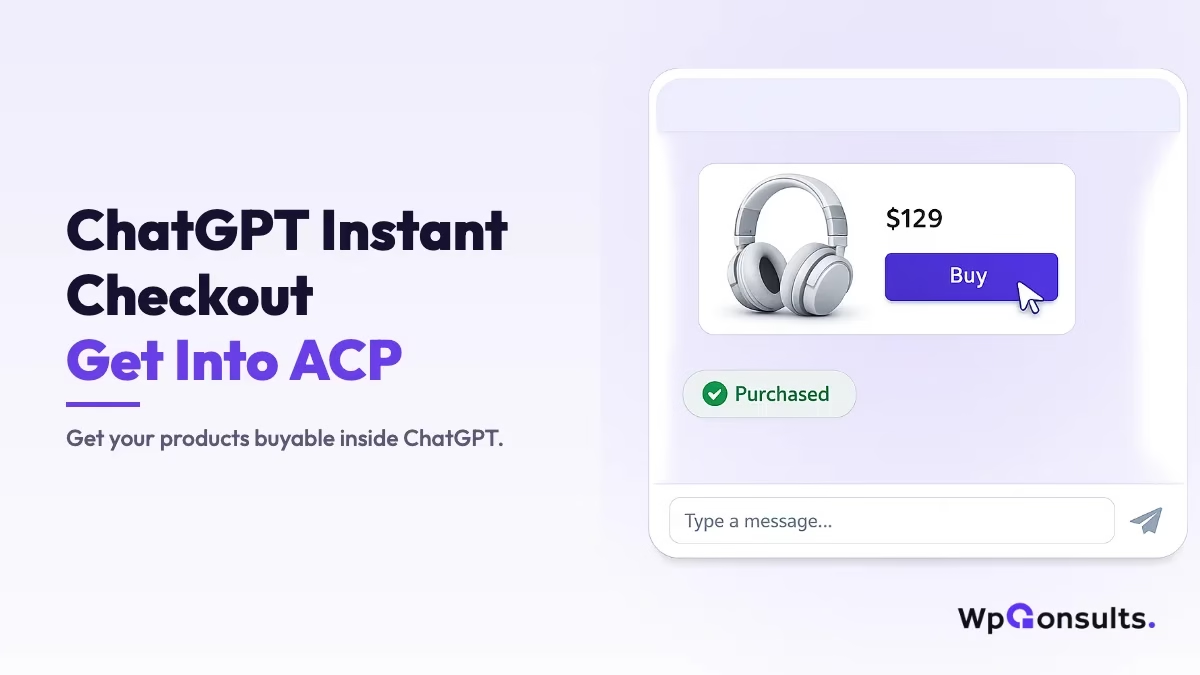
ChatGPT Instant Checkout lets a shopper buy your product without leaving the chat, and the quiet part is that it runs on your product feed, not your website. If your feed is clean and you are on the right platform, getting in is mostly a setup job, not a rebuild.
So here I will walk through who can actually use it today, the exact steps to get your products into ACP (the standard behind it), what the 4% fee really costs you, and how to tell if it is working. This is the hands-on companion to my bigger piece on agentic commerce and the AI shopping shift.
Key Takeaways
- ChatGPT Instant Checkout runs on ACP, the open standard from OpenAI and Stripe, and reads your product feed to decide what to show and sell.
- Right now it is US merchants and US shoppers only; Shopify and Etsy stores are largely auto-eligible, others onboard through approved partner access.
- The core work is a clean, ACP-formatted feed: titles, images, live price and stock, a unique item ID, and the eligibility flags.
- Shopify merchants pay OpenAI a 4% fee on ChatGPT sales, on top of normal payment processing.
- You keep control of what sells, how your brand shows, and fulfillment, but you give up some shopper data and attribution.
What ChatGPT Instant Checkout actually is
ChatGPT Instant Checkout is the “Buy it in ChatGPT” flow: a shopper asks for a product, ChatGPT shows options, and they pay right there in the conversation. Under the hood it is powered by the Agentic Commerce Protocol, the open standard OpenAI and Stripe built so an agent can read your catalog and complete a purchase. If you are weighing it against Google’s side, I put them head to head in ACP vs UCP.
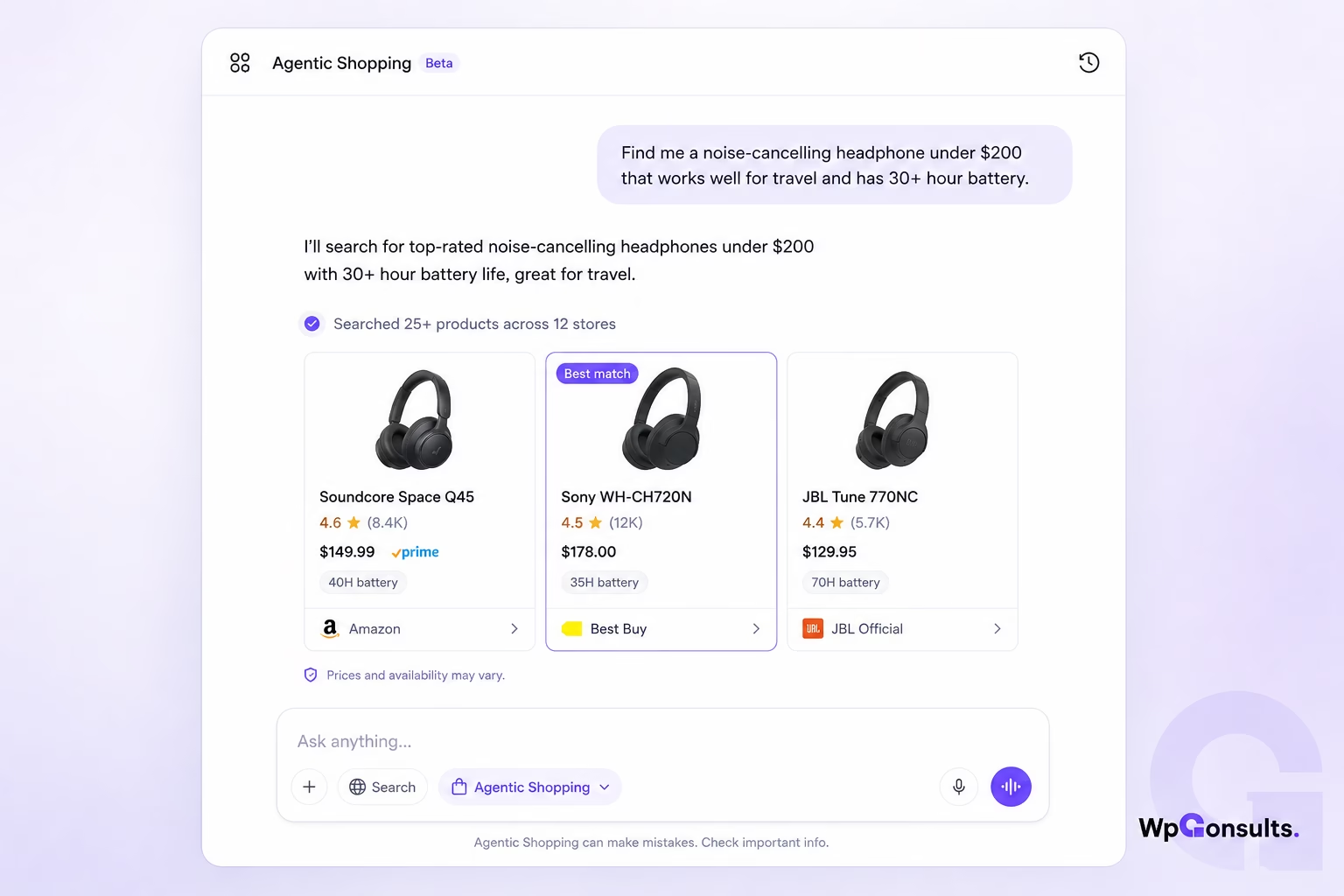
The mental shift for you is small but real. You are not trying to rank a page a human clicks; you are feeding structured product data into a system that decides, on its own, whether your product is a good answer and whether it can be bought cleanly. That is why I keep saying your product feed is becoming the ranking surface, and Instant Checkout is the clearest example yet.
Can you use it yet?
Before you plan anything, check whether you can even join, because today the door is narrow. It is US merchants selling to US ChatGPT users, and the easy on-ramps are the big platforms: US Etsy sellers were switched on automatically through Etsy’s Offsite Ads, and Shopify stores are largely auto-eligible too, as long as you are on a paid plan with Shopify Payments enabled and based in the US.
If you are not on those platforms, onboarding a feed directly is currently gated to approved partners, so you sign up and wait for access rather than flipping a switch. It is worth checking your status now, because the requirement list is short and you do not want to discover a blocker, like Shopify Payments being switched off, on the day you try to go live.
How to get your products into ACP
Here is the path, and each step earns its place.
- Get your feed ACP-ready. This is the real work: accurate titles and descriptions, good images, live price and availability, a unique Merchant Item ID, and the eligibility flags (is_eligible_search and is_eligible_checkout) that opt each product into ChatGPT’s search and buying. Structured data helps machines read you, but as I have argued, schema alone will not get you into the cart; the feed is what actually transacts. If you want it as a step-by-step list, follow the agentic commerce readiness checklist.
- Sign up as a merchant. Register at chatgpt.com/merchants. Direct feed onboarding is rolling out to approved partners, so getting in the queue early matters if you are not on a supported platform.
- Connect payments through Stripe. Stripe is the most compatible processor and can switch on agentic payments with very little code, so this is rarely the hard part.
- Turn it on, or deliver the feed. On Shopify you mostly enable the channel in your admin. Delivering directly, the common pattern is a full feed by file upload once a day, then API updates through the day (the spec supports refreshes as often as every 15 minutes) so your price and stock stay honest.
- Test that products are actually buyable. Confirm your items show up and can be purchased in ChatGPT, and watch for products that appear but are flagged not checkout-eligible, which usually traces back to a missing flag or field.
| Feed field | What it is | Needed for checkout |
|---|---|---|
| Title, description, images | Core product data the agent shows | Yes |
| Price, availability | Live price and current stock | Yes |
| Merchant Item ID | Your unique ID for the product | Yes |
| is_eligible_search, is_eligible_checkout | Flags that opt a product into ChatGPT search and buying | Yes |
| consumer_notice | Required warnings for regulated items | Only if it applies |
If you want the field-level detail, OpenAI’s get-started guide for merchants and the ACP feed spec lay out every attribute, but the table above is the part that decides whether you are buyable or just visible.
What it costs and what you trade away
The fee is the headline tradeoff. Reporting puts the OpenAI cut at 4% on each ChatGPT sale, and that sits on top of your normal payment processing (roughly 2.9% plus 30 cents with Stripe), so model your margins before you celebrate the new channel. Etsy chose to cover that commission for its sellers to kickstart things, but most merchants will pay it.
The softer cost is data and attribution. You keep control of what you sell, how your brand appears, and fulfillment, which is genuinely good, but the shopper relationship lives more inside ChatGPT than on your site, so you see less of the journey. Treat Instant Checkout as an extra shelf you do not fully own, not a replacement for your own store.
How to tell if it is working
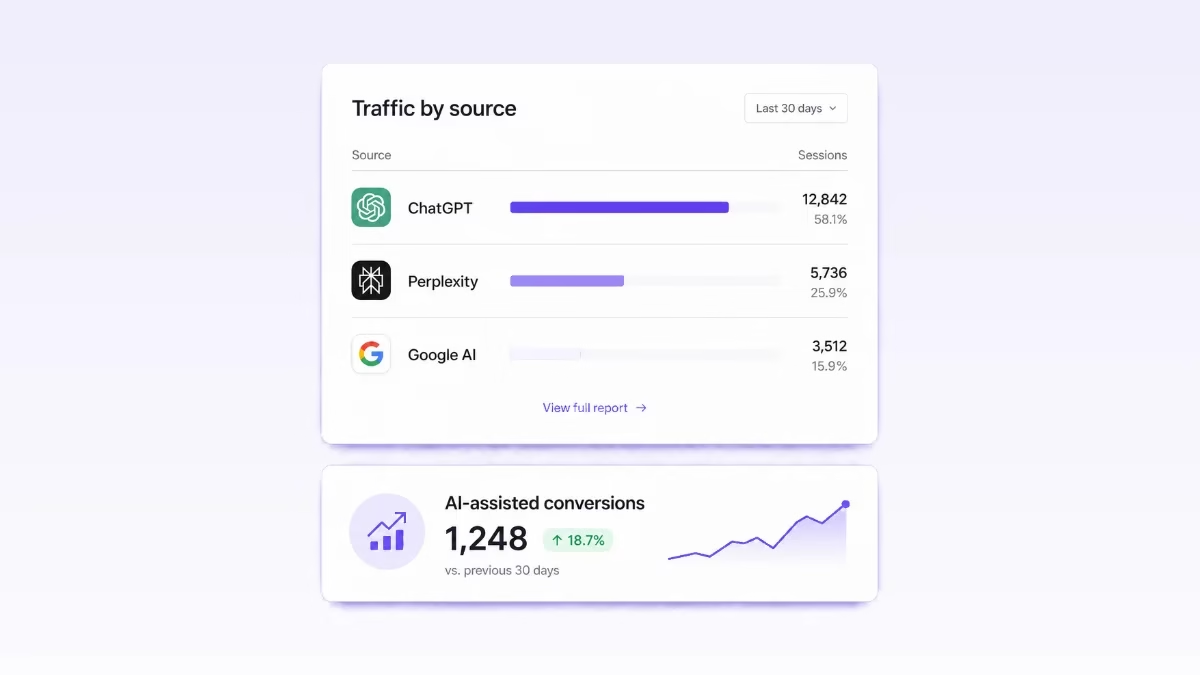
Measuring this is harder than normal eCommerce, so set expectations early. Sales through ChatGPT will not show up like classic on-site conversions, and the attribution is thinner, so lean on your Stripe and platform order data tagged to the channel rather than expecting clean analytics out of the box.
And because agents pull answers from your feed and from AI surfaces at the same time, it helps to measure which queries are already losing clicks to AI answers so you can read this shift in context, not in isolation. The point is to watch the whole picture, because a quiet Instant Checkout channel can sit next to a real drop in classic traffic.
So, should you switch on ChatGPT Instant Checkout?
In my view, the honest position is get ready, stay calm. OpenAI’s first run at shopping was bumpy by several accounts, so I would not expect a flood of orders the week you switch on, and I would not reorganize the business around it yet. But the cost of being feed-ready is low, the setup on Shopify or Etsy is close to free effort, and being on the shelf early is cheap insurance.
So the move is simple: clean the feed, sort out your eligibility, turn it on where it is easy, and watch. The stores that treat the feed as a real asset now will be the ones that benefit when the volume actually arrives, and the 4% only stings if your margins were already thin, which is its own problem worth fixing.
Want help getting your store agent-ready?
If your product feed is not clean enough to trust an AI agent with, work with us or email me and we will get it ACP-ready and into ChatGPT properly. The earlier you are on the shelf, the cheaper this is to win.
Update Logs
23 Jun 2026
- Fixed two internal links to their canonical (trailing-slash) URLs and added links to ACP vs UCP and the agentic commerce readiness checklist.
22 Jun 2026
- Renamed the closing section to a natural question and added a caption to the feed-field table.
20 Jun 2026
- Initial publication: how-to for getting products into ChatGPT Instant Checkout via ACP, covering eligibility, the feed steps and fields, the 4% fee, and measurement notes.
Want our posts to show up more often on Google?
One step & Google will surface this site in your Top Stories.