x402 is the part of agentic commerce that pays the bill, and it works by reviving an old, unused web status code (HTTP 402, “Payment Required”) so software can pay software directly. It is not how you sell a 50 dollar product to a human today, but it is the plumbing the agent economy is settling on, and there is a quietly interesting angle in it for content and feeds.
So here I will explain what x402 is, how a payment actually flows through it, and the honest answer to what it means for your store. This is the settlement layer from my agentic commerce guide, looked at on its own.
Key Takeaways
- x402 revives HTTP 402 (“Payment Required”) so an agent can pay over the web in seconds, usually in stablecoins like USDC.
- It was put to work in 2026 by Coinbase and Cloudflare, with a long list of backers including Visa, Mastercard, Stripe, Google, Shopify, and AWS.
- It is built for machine-to-machine micropayments, the tiny no-human payments that cards make uneconomical.
- For selling products to shoppers you still use ACP and UCP; x402 is not your checkout.
- The interesting angle for site owners is the reverse: charging AI agents to access your content, data, or APIs.
What x402 actually is
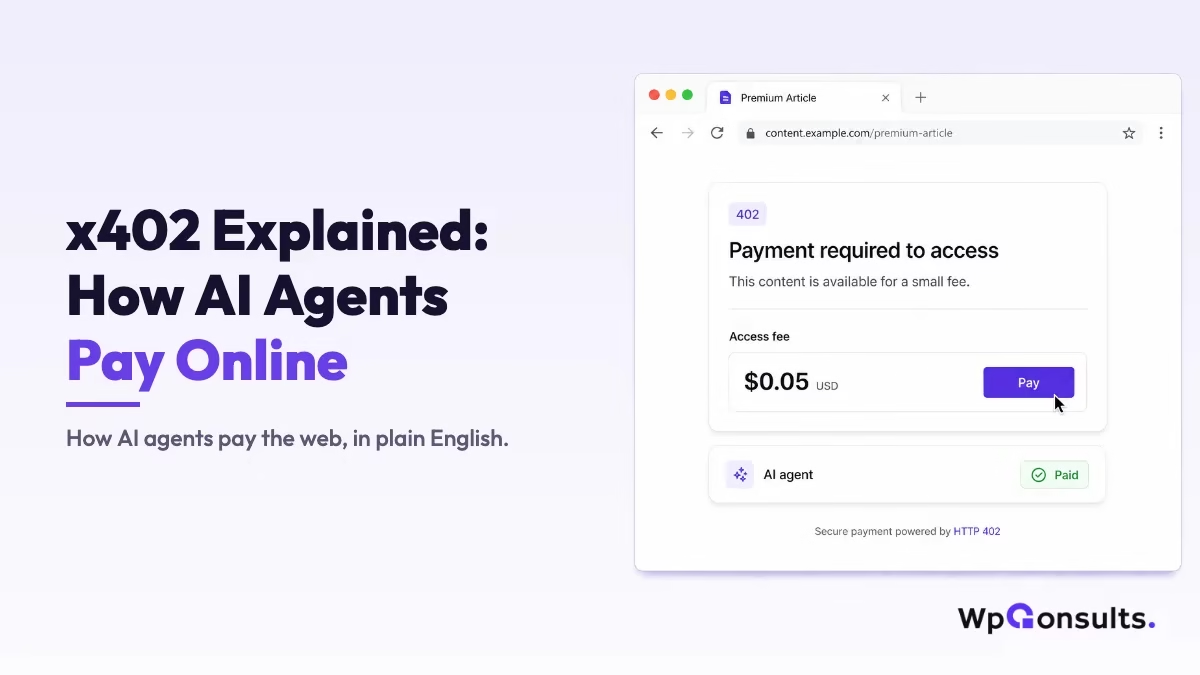
The HTTP 402 status code has sat in the web spec for over 30 years, labeled Payment Required and reserved for future use, and in 2026 Coinbase and Cloudflare finally switched it on. The idea is simple: turn any web endpoint into something a machine can pay for, directly over HTTP, without accounts or card forms. Most payments settle in stablecoins like USDC, so they are near-instant and cost a tiny fraction of card fees.
For developers it is deliberately boring, which is the point. Adding x402 support is roughly ten lines of middleware, about as involved as checking an API key, because the server libraries handle the wallet and on-chain parts for you. You do not need to understand crypto plumbing to accept or make an x402 payment.
How a payment actually flows
The flow is a neat little loop, and once you see it the whole thing clicks.
An agent asks for a paid resource; the server answers with a 402 and the price; the agent signs a stablecoin payment and attaches the proof; a facilitator verifies it; and the server hands back what was asked for. The whole cycle takes seconds and needs no login, which is exactly why it suits software acting on its own.
Why it exists: the payments cards cannot do
x402 is not trying to replace your card checkout for a normal order; it is built for the payments cards make uneconomical. Think sub-dollar, machine-to-machine transactions with no human in the loop: an agent paying a few cents per API call, a few cents to read one article, or one agent paying another for a service. Card rails choke on tiny payments because the fixed fee swamps the amount, and x402’s near-zero cost is what makes those patterns viable.
That is also why it sits at the bottom of the stack rather than the front of your store. It is settlement plumbing for the agent economy, the layer that moves value once an agent has decided to act, which is a different job from getting your product discovered and bought.
What it means for your store
For selling products to shoppers, be clear: x402 is not your checkout, and you do not need it to get into ChatGPT or Google. That is the job of ACP and UCP, which I compared in ACP vs UCP, and they run on normal payment processing. So you can safely file x402 under watch, not act, for your storefront today.
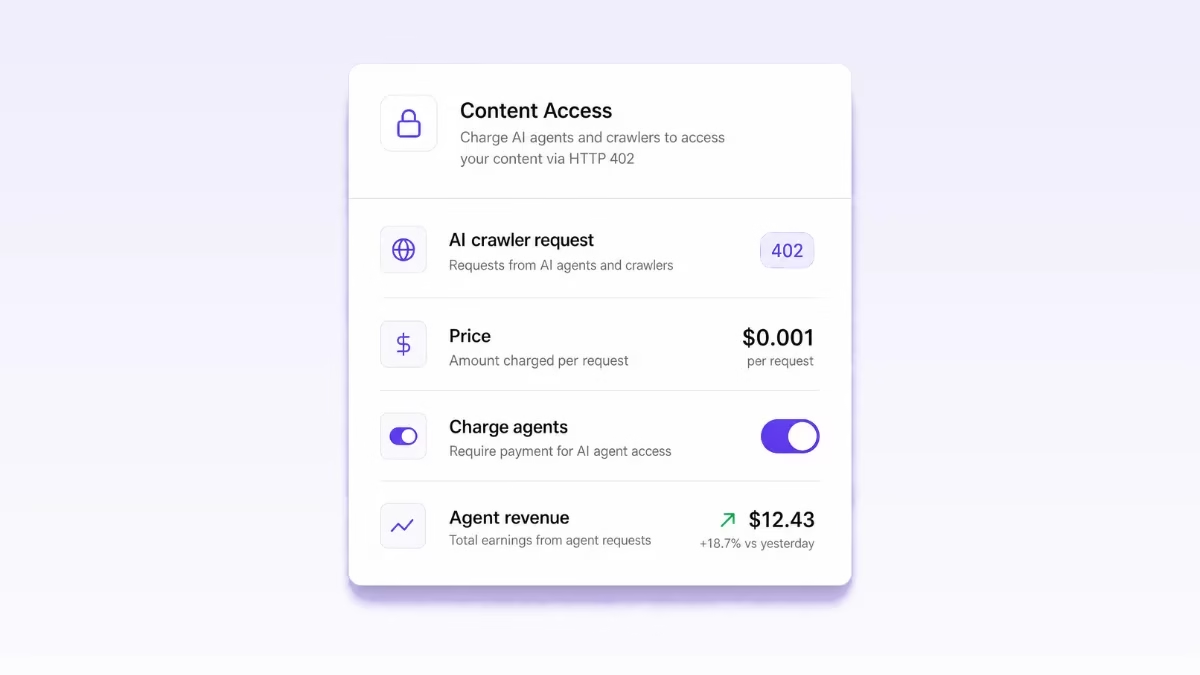
The angle that should interest you is the reverse direction. As AI agents and crawlers increasingly read your content and data, x402 makes it possible to charge them for access instead of just absorbing the cost, a few cents per request to your API, your feed, or your premium content. Set against the way AI is already eroding your classic click traffic, a pay-per-access option is at least an interesting counter-move worth understanding early.
Where it is today
It is real but still early. The backer list is serious, with Coinbase and Cloudflare alongside Visa, Mastercard, Stripe, Google, Shopify, and AWS among others, which tells you the rails are being taken seriously rather than treated as a crypto side-quest. By Coinbase’s own reported figures, x402 had tens of thousands of active agents and tens of millions of dollars in cumulative volume within its first months, which is meaningful traction but a long way from mainstream retail.
So, should you care about x402 yet?
In my view, x402 is genuinely important and genuinely not your problem this quarter, and holding both of those at once is the sensible position. It is the settlement layer the agent economy is converging on, so it matters for where this is heading, but it is not how you sell a product to a person today, so I would not wire anything to it for your checkout.
The one place I would actually pay attention is the pay-per-access idea. If agents are going to read and use your content and data anyway, being able to charge them is a more interesting future than quietly losing the traffic, and x402 is the rail that could make it normal. So learn it now, keep your storefront on ACP and UCP, and watch the content-monetization angle, because that is where it might touch your business first.
Update Logs
22 Jun 2026
- Renamed the closing section to a natural question and added a caption to the payment-flow diagram.
20 Jun 2026
- Initial publication: explainer on the x402 protocol (HTTP 402 revived, the stablecoin payment flow, machine-to-machine use cases, and what it means for stores), with a vertical payment-cycle diagram.
Want our posts to show up more often on Google?
One step & Google will surface this site in your Top Stories.