ACP and UCP get framed as a fight, OpenAI’s standard versus Google’s, but that framing is wrong and it costs merchants money. They sell to different places, they share most of the same setup work, and for most stores the honest answer is to support both.
So here I will compare them properly: what each one actually is, how they differ in architecture and cost, and a clear way to decide which to turn on first. If you want the wider context first, this builds on my guide to agentic commerce; here we go head to head.
Key Takeaways
- ACP (OpenAI and Stripe) sells inside ChatGPT; UCP (Google and Shopify) sells across Google’s search surfaces. Different shelves, not rivals.
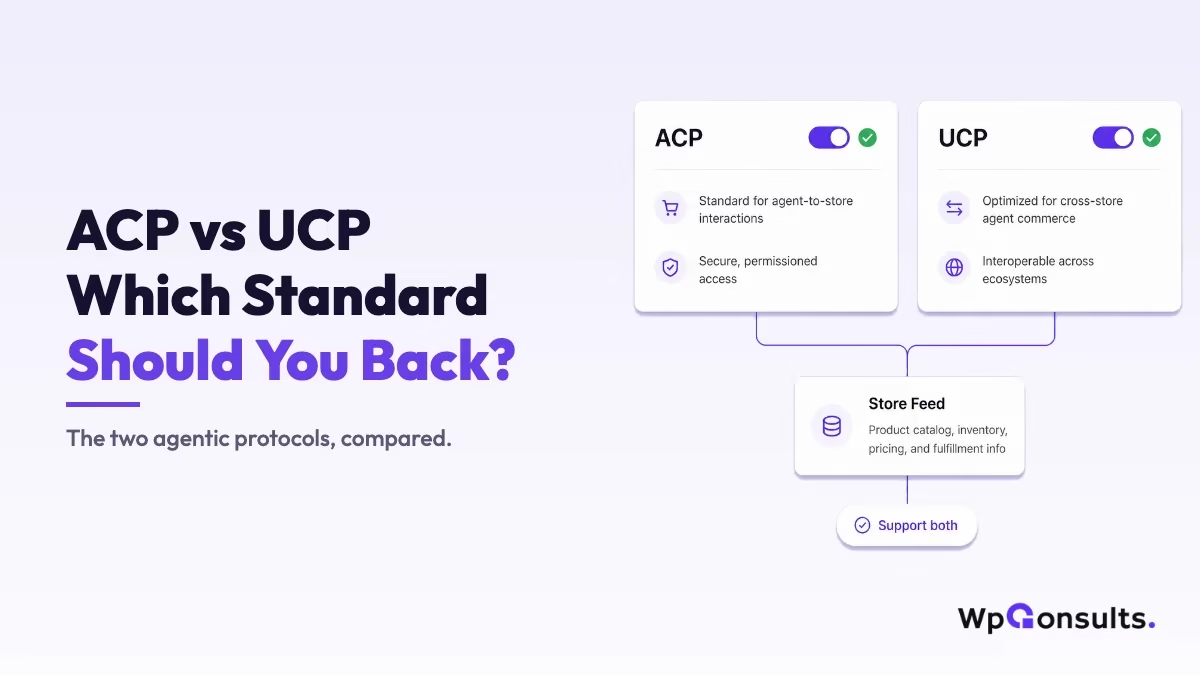
- The big architectural split: ACP submits your catalog to OpenAI’s index, while UCP lets agents read a product profile you host on your own domain.
- ACP adds OpenAI’s roughly 4% platform fee on each sale; UCP has no equivalent platform fee, you just pay normal processing.
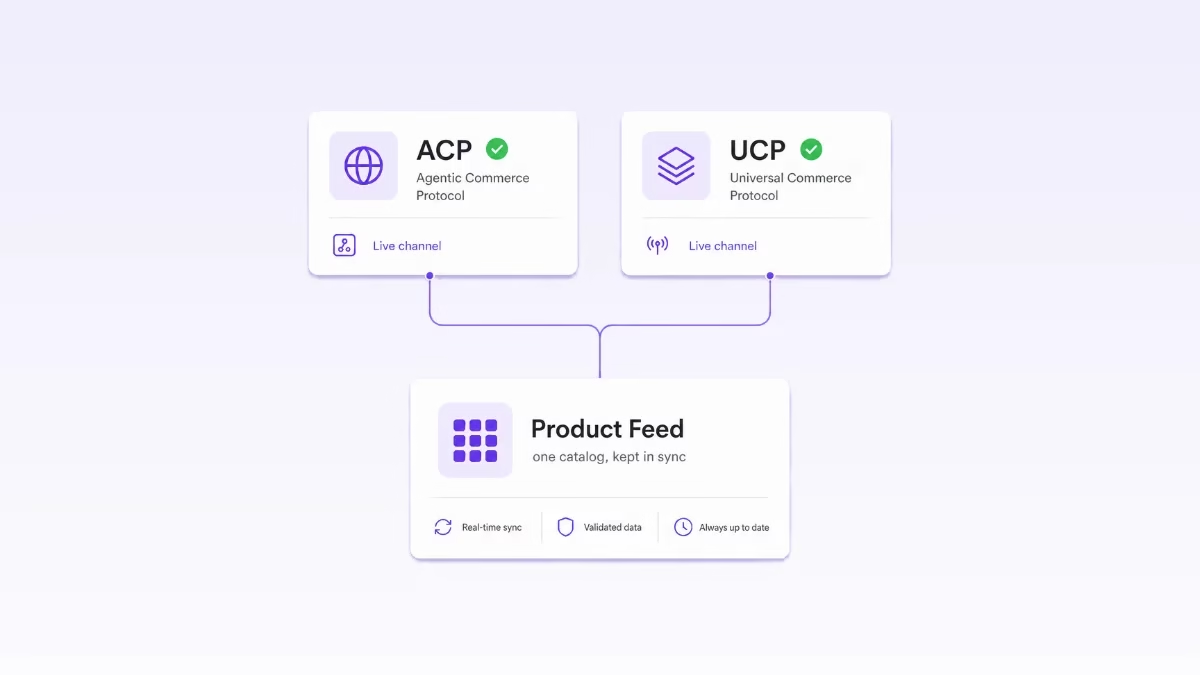
- The setup work overlaps heavily, so once your feed and catalog are clean, supporting both is far cheaper than doing either from scratch.
- For most stores the right move is both, sequenced by where your buyers already are.
The short answer
If you want the verdict up front: support both, and do not treat this as either/or. ACP and UCP are not competitors fighting for one slot; they are two different shelves, one inside ChatGPT and one across Google, and the work to get on each is mostly the same clean-catalog job. The only real decision is which you turn on first, and that comes down to where your buyers already spend their time.
What ACP and UCP actually are
ACP, the Agentic Commerce Protocol, is the OpenAI and Stripe standard behind ChatGPT Instant Checkout: you get your products into OpenAI’s system and shoppers buy them inside the chat. I covered the hands-on setup in that piece, so here I will keep it to how it compares.
UCP, the Universal Commerce Protocol, is Google’s open standard, built with Shopify and big retailers, for letting agents discover, cart, and buy across Google’s surfaces. The key design choice is that it is decentralized, and I dug into that angle in my piece on UCP and the product feed: instead of submitting to one company’s index, you publish a product profile that any agent can read.
The real differences
The cleanest way to see the gap is architecture. With ACP you submit your catalog to OpenAI’s index, and OpenAI controls ranking and discovery while payments run through Stripe, so it is a platform-mediated channel. With UCP you host a product profile on your own domain (at a /.well-known/ucp location), and any agent can read it without asking permission, which is a more open, decentralized model.
That difference shows up in where each one sells. ACP is chat-to-buy: it shines when a shopper is already talking to ChatGPT and wants to purchase without leaving. UCP is search-to-buy: it fits the shopper who starts on Google and lets an agent take it from there. One framing I liked from the strategic analyses is that UCP asks whether a product can be bought while ACP asks whether it should be, because ACP starts from the agent’s judgment and UCP starts from your catalog.
| ACP | UCP | |
|---|---|---|
| Backed by | OpenAI and Stripe | Google and Shopify |
| Where it sells | Chat-to-buy inside ChatGPT | Search-to-buy across Google surfaces |
| How you connect | Submit your catalog to OpenAI’s index; pay via Stripe | Host a product profile on your own domain that agents read |
| Discovery | OpenAI ranks and surfaces products | Open and decentralized; any agent can read your profile |
| Platform fee | About 4% to OpenAI per sale | None beyond normal processing |
| Best fit | Brands whose buyers live in ChatGPT | Brands relying on Google discovery |
What it costs
Cost is the one place the two genuinely diverge, and it matters for thin margins. ACP adds OpenAI’s platform fee, reported at around 4% per sale, on top of your normal payment processing, so a ChatGPT order costs you meaningfully more than a standard one. UCP has no equivalent platform fee; you pay your usual processing, because Google is not inserting a marketplace cut in the same way.
I would not let the fee alone decide it, though. A 4% cut on a sale you would not have made otherwise is still a sale, so the real question is whether ChatGPT is sending you buyers, not whether the fee exists. Model it on your actual margins rather than reacting to the percentage.
Which to prioritize
Here is how I would sequence it, matched to your situation.
- If you are on Shopify, you are close to both already, because Shopify’s agentic storefront work syndicates one clean catalog out to ChatGPT and Google’s surfaces, so turn on whatever your admin exposes and do not overthink the order.
- If most of your demand starts in Google search, lead with UCP, because that is where your buyers’ agents will look first and there is no platform fee slowing you down.
- If your audience lives in ChatGPT, or you sell the kind of impulse or gift product people ask an assistant to just buy, lead with ACP even with the fee, because that is where the intent is.
- If you are resource-constrained, do the shared work once (a clean, accurate feed and catalog) and you will find the second protocol is mostly configuration, not a rebuild.
So, which should your store support first?
In my view, the answer is genuinely both, and the framing of pick a side is the trap. The expensive part is a clean, accurate catalog, and you only pay that once; both protocols read the same underlying product truth, so once UCP is done, ACP is mostly setup, and the other way around. Sequence by where your buyers are, but plan to be on both shelves.
If I had to name a starting point for a typical store, I would lean UCP first, because the open, no-platform-fee model and Google’s reach make it the lower-friction shelf, then add ACP to catch the ChatGPT buyers. But that is a sequencing call, not a verdict against ACP, and a brand whose customers live in ChatGPT should flip that order without hesitation.
Not sure which agentic shelf to start with?
If you want help deciding between ACP and UCP and getting your catalog ready for both, work with us or email me. The setup overlaps, so doing it once and right is the cheapest way onto both shelves.
Update Logs
23 Jun 2026
- Added an internal link to the agentic commerce readiness checklist on the clean-catalog point.
22 Jun 2026
- Renamed the closing section to a natural question and added a caption to the comparison table.
20 Jun 2026
- Initial publication: compared ACP and UCP on architecture, where each sells, and cost, with a sequencing guide and the case for supporting both.
Want our posts to show up more often on Google?
One step & Google will surface this site in your Top Stories.