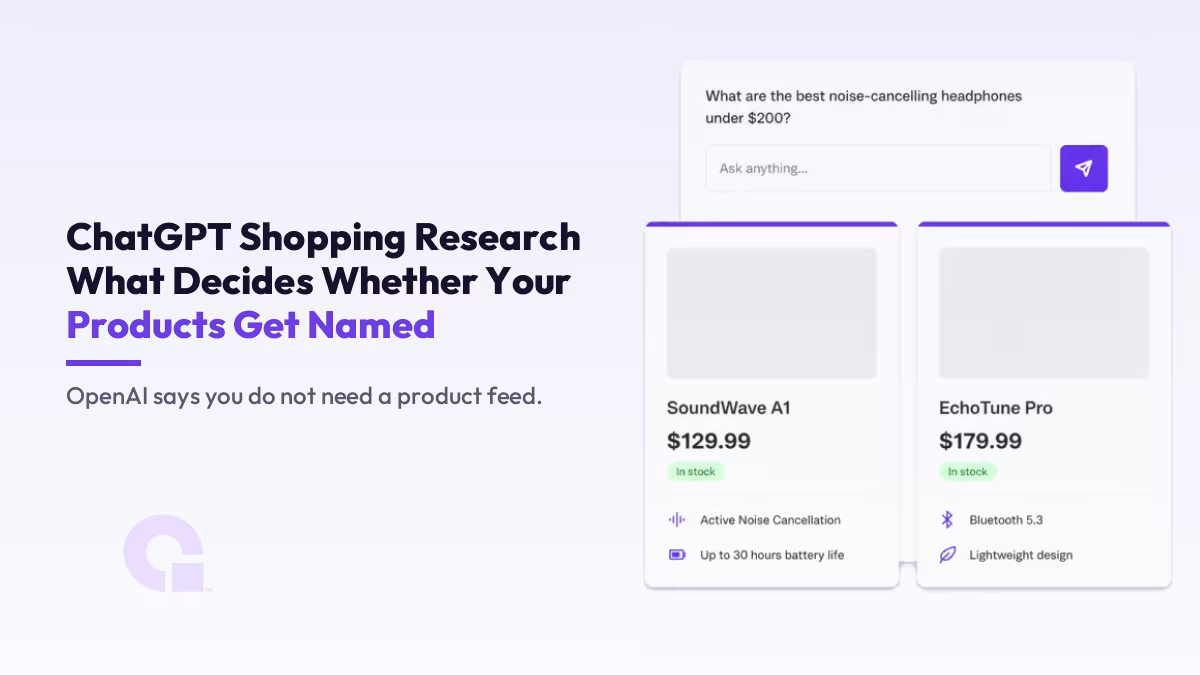
Shoppers are handing the product decision to ChatGPT, and almost every guide written for store owners says the same thing: integrate the protocol and you are in.
OpenAI’s own merchant documentation says something else. You do not need a product feed to be found, and what decides whether your products get named is mostly the product page you already have.
Key Takeaways
- ChatGPT shopping research is a product discovery mode inside ChatGPT that asks clarifying questions, then returns a written buyer’s guide with top picks and side by side comparisons.
- OpenAI’s help documentation says shopping research “may use” three inputs: merchant product data provided through the Agentic Commerce Protocol (ACP), publicly available product information, and other relevant retail sources.
- OpenAI’s merchant FAQ answers “Do I need a product feed if ChatGPT already crawls my site?” with the word “No”, so the feed is not the entry requirement most advice treats it as.
- ACP is no longer just a checkout standard. On March 24, 2026 OpenAI said it was expanding ACP to support product discovery, and moving away from a standalone Instant Checkout inside ChatGPT.
- For most independent stores the feed route is not open yet: it is an application with a waitlist, the self-serve merchant platform is still being built, and shopping in ChatGPT is live only for users in the United States.
- If you sell through Shopify or Etsy, OpenAI says your catalog is already integrated and there is nothing for you to apply for.
- The buyer’s guide compares products on price, size, core features, reviews and the constraints the shopper named, so those details have to be readable text on the product page, not only inside a feed.
- OpenAI does not publish how it weights the three inputs, and we have not tested it, so “may use” means may, not will, and nobody outside OpenAI can tell you which input wins.
Do you need a product feed to appear in ChatGPT shopping research?
No. OpenAI answers this directly in the FAQ on its own merchants page, which is the same page asking you to hand over a feed.
The question is printed as “Do I need a product feed if ChatGPT already crawls my site?” and the answer starts with “No, but feeds give you greater control over how your products appear, helping ensure more accurate and up-to-date information.”
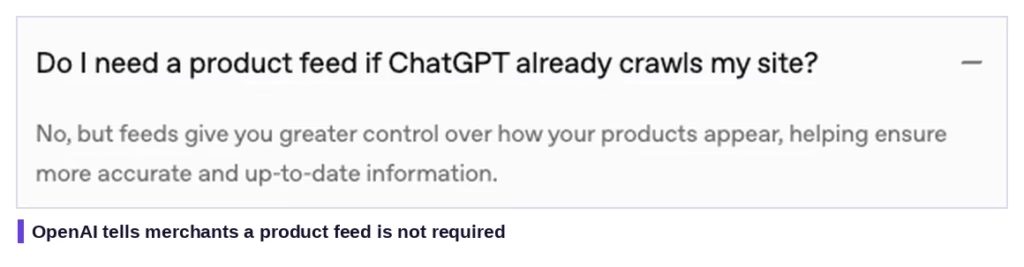
That matters more than it looks, because it is a vendor conceding a point it would rather not concede. OpenAI is selling feed participation on the same page where it tells you the feed is optional.
The help documentation backs it up from the other direction. Describing what happens once your intent is clear, OpenAI writes that ChatGPT “begins a multi-step product discovery process” and lists what “It may use”.
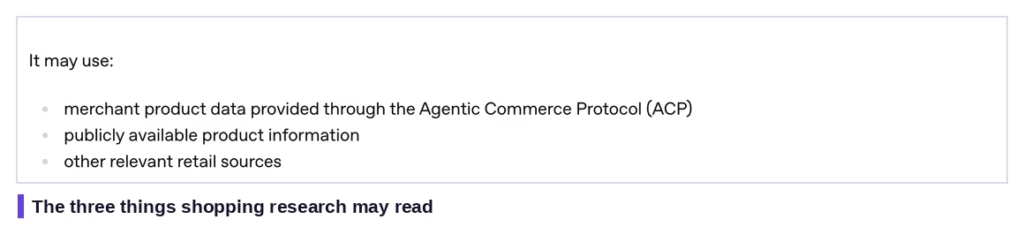
Three inputs, not one. Merchant product data through ACP, publicly available product information, and other relevant retail sources.
So a store with no ACP participation at all can still be read and named. That is the whole correction, and it is the vendor’s wording, not mine.
Now the honest limit, because this is one company describing its own black box. OpenAI says “may use” and never publishes how the three inputs are weighted, so claiming a feed is unhelpful would be exactly the same mistake as claiming it is required.
We have not run a controlled test on this either, and I am not going to pretend otherwise. Testing what an engine actually does instead of taking the documentation at face value is the method I use on AI citations generally, and it is the right next step here too.
What changed with the Agentic Commerce Protocol in March 2026?
ACP stopped being a checkout standard and became a discovery one. OpenAI announced it in a post dated March 24, 2026, saying it was “expanding the Agentic Commerce Protocol (ACP) to support product discovery”.
In the same post it said the opposite about the checkout half: “We’ve found that the initial version of Instant Checkout did not offer the level of flexibility that we aspire to provide, so we’re allowing merchants to use their own checkout experiences while we focus our efforts on product discovery.”
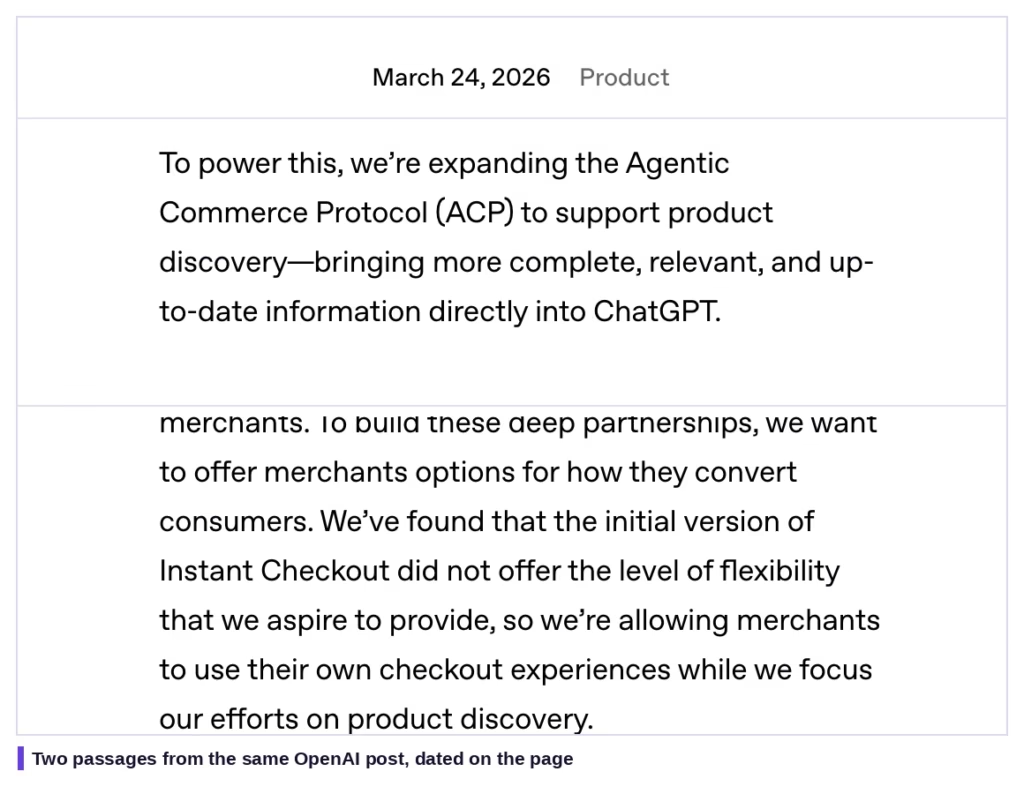
The merchants page repeats it in plainer words. Asked whether users can buy directly inside ChatGPT, OpenAI says it is “moving away from a standalone Instant Checkout experience in ChatGPT” and that “purchases are completed on merchant-owned websites or apps”.
This is why so much of the advice you will read is a version behind. Most of it was written when ACP was the way to sell inside the chat, and our own guide to getting products into ACP for Instant Checkout describes that earlier state too. The feature that guide covers is the one OpenAI is now winding down.
None of that makes ACP pointless. OpenAI names Target, Sephora, Nordstrom, Lowe’s, Best Buy, The Home Depot and Wayfair among the retailers already integrated for discovery, and companies that size do not integrate unless they expect it to move sales.
It just means ACP now adds detail to what OpenAI already reads about your products. It is not what decides whether you get read at all.
What does ChatGPT shopping research actually read on a product page?
Your product pages, directly. OpenAI’s privacy section says results are “based on publicly available retail sites”, and describes the behavior as “reading product pages directly, citing sources, and avoiding low-quality or spammy sites”.
The useful part is what the output is built from. OpenAI says the buyer’s guide includes “Side-by-side comparisons that highlight important attributes such as price, size, core features, and any constraints you mentioned”, and that a shopper can compare items on “price, features, reviews, and other key details”.
That is a short, specific list of the things your page has to state in words a reader can see, rather than in an image, a tab that loads later, or a feed you have not been able to submit yet.
| What the buyer’s guide compares on | What that means for your product page |
|---|---|
| Price | The current price written as text in the page itself, not inside a picture of the price, and not added by a script after the page opens. OpenAI’s own FAQ warns shoppers that prices “may not always match what you see on the retailer’s page”, so a stale or hidden price is a real risk to how you get described. |
| Availability | Say in stock or out of stock in words. If the only signal is a grayed-out button, there is nothing to read, and OpenAI tells shoppers to verify availability on your site anyway. |
| Core features and specs | I would put a plain specification block above the marketing paragraph, because the guide has to turn specs into something a shopper can act on. |
| Size and variants | List the sizes, capacities and colors you actually carry. If a size or color only appears once a script runs, the page itself never says you carry it. |
| Reviews | Review text and star ratings written into the page, not pulled in by a review app after the page opens. |
| The shopper’s own constraints | Budget, use case, compatibility. If your page never mentions who the product is for or what it does not do, there is nothing to match a constraint against. |
Notice how ordinary that list is. It is the same information a human shopper needs, which is usually the case with these things, and it is why I would not treat this as a separate AI project at all.
None of this works if you are blocking OpenAI’s crawler, and most stores have already handled that.
OpenAI notes that when a retailer blocks automated access, shopping research “will either skip those sources or rely on other sites with similar products”, and your server logs will tell you in an afternoon whether that is happening to you.
One thing this does not replace is structured data. Product schema still earns rich results in Google Search, and we have already argued that it is not what gets you into an AI shopping cart.
Neither of those is what this section is about. The point here is which words on your page get read during ChatGPT’s discovery step.
Who can send OpenAI a product feed today, and who cannot?
Fewer stores than the advice assumes. The feed is not a switch you flip in a dashboard, and for most independent merchants the route is not open yet.
Four things OpenAI states on the merchants page, all of them worth checking against your own situation before you spend a day on this:
- It is an application, and applying puts you in a queue. OpenAI writes that merchants “can apply to share product data”, and that “If you’ve already applied, you’re on the waitlist”. So the honest expectation is a wait, not an integration sprint.
- Shopify and Etsy sellers are already in. “If you sell through Shopify or Etsy, your catalog is already integrated, and no additional setup or application is required.” That single sentence removes a large share of store owners from the integrate-the-protocol advice they are being sold.
- Shopping in ChatGPT is live in the United States only right now. OpenAI says it plans to “expand to more merchants and regions over time”, so a store selling elsewhere cannot buy its way in at any price today.
- The self-serve platform does not exist yet. OpenAI says it is “building a merchant platform for self-serve data integration later this year”. Put that next to the waitlist and, for a lot of independent stores, your own product pages are the only route into this you can act on today.
OpenAI does make a case for the feed, and it is fair to report it as a claim rather than a finding. The merchants page promises “better placement in results” from richer data, without describing a mechanism or offering a way to measure it.
If you are on the waitlist and want to use the wait well, our agentic commerce readiness checklist covers the identifiers and feed hygiene work, and the older piece on why your product feed became a ranking surface explains what a commerce feed carries in the first place.
Why is there so little ChatGPT shopping research advice for store owners?
Because Google has read this topic as a shopper question, and the pages that rank answer the shopper. When I pulled the United States results for the term, every question in the People also ask box was written for someone buying, not someone selling.
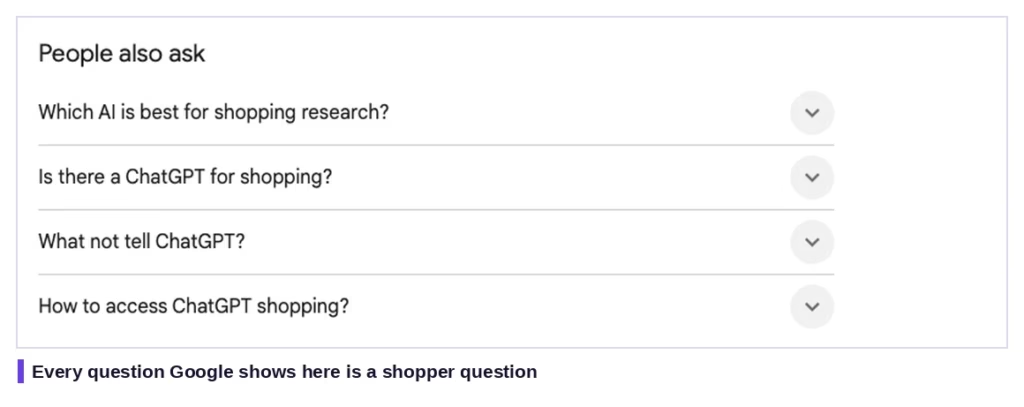
The rest of that page is the launch announcement, the ChatGPT product page, and threads by people asking where the feature went. Not one result on it is written for the person who owns the store.
Those “it disappeared” threads are worth explaining rather than repeating, because they are dated around late March 2026, the same window as OpenAI’s product discovery post. People watched a feature change shape during a pivot and reasonably read it as a removal.
The feature is live, and OpenAI’s help article showed an update within the past week when I read it on 18 Aug 2026.
But the name has already been reorganized once inside a year, which is why I would build for what the engine actually reads, not for whatever OpenAI is calling the feature this month.
A page that states price, stock, specs and honest reviews in readable text keeps working whatever OpenAI calls this next, and it does not stop working if you never get off the waitlist. If you want to watch whether any of it shows up, read what AI visibility tools actually measure before you pay for one.
So, should you chase a ChatGPT product feed right now?
For most stores, no, and I say that with the vendor’s own sentence behind me rather than a hunch. If you are on Shopify or Etsy you are already in and there is nothing to chase; if you are not, you join a waitlist, and the self-serve tool that would let you do it yourself is still being built.
Apply anyway, because it costs about an hour and your place in the line only improves while you wait. Then go and spend the real time on the product pages, which is the input OpenAI says it reads directly and the one nobody has to grant you access to.
The part I would push back on hardest is the framing that this is a new discipline. Price, availability, specs, variants and reviews stated plainly in text is what a good product page has always been, and it turns out to be what the buyer’s guide compares on too.
The honest gap is how OpenAI weighs those three inputs. It says “may use” and publishes nothing about how they rank against each other, so anyone telling you a clean product page beats a feed, or the reverse, is guessing at something OpenAI has not published.
Common questions about shopping research in ChatGPT
Are the products in ChatGPT shopping research paid placements?
No. OpenAI states that “Ads are separate from shopping research” and that results are organic, based on publicly available retail sites. If you want to advertise inside ChatGPT, that is a different product with its own rules.
Does ChatGPT shopping research use a shopper’s saved preferences?
Yes, when ChatGPT memory is turned on. OpenAI says shopping research can use what ChatGPT already knows about a shopper to tailor suggestions, and that the shopper can turn memory off or clear it at any time. It still works without memory, just with fewer personalized touches.
Work with WpConsults
Want someone to check what your product pages actually say to a shopping bot?
We will look at what your product pages serve in raw HTML, where price, stock and specs are getting hidden behind scripts or images, and what to fix first.
Update Logs
19 Aug 2026
- First publication. Written from three OpenAI documents read in full on 18 Aug 2026: the shopping research help article, the merchants page and its FAQ, and the March 24, 2026 product discovery post.
- Establishes that OpenAI’s own merchant FAQ says a product feed is not required, and corrects the widely repeated framing that ACP is only a checkout standard.
Want our posts to show up more often on Google?
One step & Google will surface this site in your Top Stories.