Local Services Ads and local SEO are not really an either/or choice, but they are not the same investment either, and that difference is the part almost every “do both” guide skips. Local Services Ads buy you the very top slot on a pay-per-lead basis, while local SEO earns the map pack and the organic results over months.
Here I will walk through how each one actually gets ranked, what Google’s 2026 move of Local Services Ads into the Google Ads platform changes, and how a home service business should split a budget between the two.
Key Takeaways
- Local Services Ads (LSA) run on pay-per-lead: you sit at the top with the Google Guaranteed badge and pay only for valid leads, not for clicks.
- LSA rank is set by your bid, responsiveness, reviews, and profile quality; Google’s own documentation names no website or SEO signal at all.
- Local SEO is the slow, compounding half: it earns the map pack and the organic results, and its cost per lead drops once you rank.
- The two are non-transferable investments; the only input they share is reviews and Google Business Profile accuracy.
- From August 2026 Google starts moving LSA into Google Ads for US home service verticals, so export your LSA history before your migration date.
- The honest split: run both if you can afford both, but treat them as two separate bets, not one that compounds into the other.
What Local Services Ads and local SEO actually are
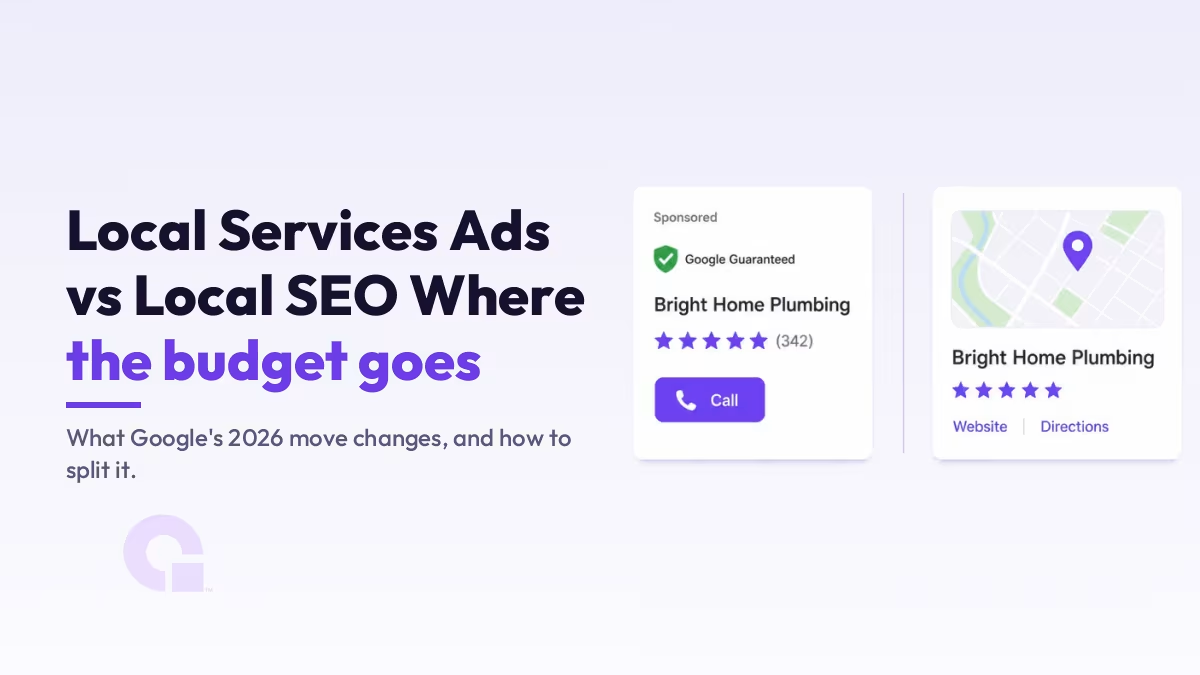
Local Services Ads are pay-per-lead ads that sit at the very top of a local search with the Google Guaranteed (or Google Verified) badge, and you pay only when a customer calls or messages you. Local SEO is the unpaid work of earning the map pack and the organic results below the ads, so you pay for the effort, not for each lead.
The two live in different parts of the same page. Local Services Ads occupy the sponsored block right at the top, above everything. The map pack (Google calls it the “Businesses” section) and the organic blue links underneath are what local SEO competes for, and they are unpaid.
Both run through your Google Business Profile in some way, which is a big part of why owners blur them together. But the money model and the ranking model are completely different, and that is where most budgets go wrong.
| Local Services Ads | Local SEO | |
|---|---|---|
| Position on the page | Top of the results, above the map pack | Map pack and organic, below the ads |
| How you pay | Per valid lead (a call or message) | For the work (content, links, technical), not per lead |
| Speed to first lead | Days, once you are verified | Weeks to a few months |
| Cost per lead over time | Roughly flat, the auction sets it | Falls as you rank and traffic compounds |
| What it ranks on | Bid, responsiveness, reviews, profile quality | Content, links, technical SEO, Business Profile signals |
| If you stop spending | Leads stop the day you pause | Rankings fade slowly; the asset persists |
How Local Services Ads ranking works, and why it shares nothing with your SEO
Local Services Ads rank through an auction that weighs your bid and your profile quality, not your website. Google’s own “About ad rankings” page lists the factors as your bid, how likely your ad is to win a lead (driven mostly by your responsiveness), and profile quality: your rating, number of reviews, average response time, images, and the verification checks you have passed.
Read that list and notice what is missing. There is nothing about your website, your content, your backlinks, your page speed, or your organic rankings. An SEO can do brilliant work and it will not move your Local Services Ads position by a single spot.
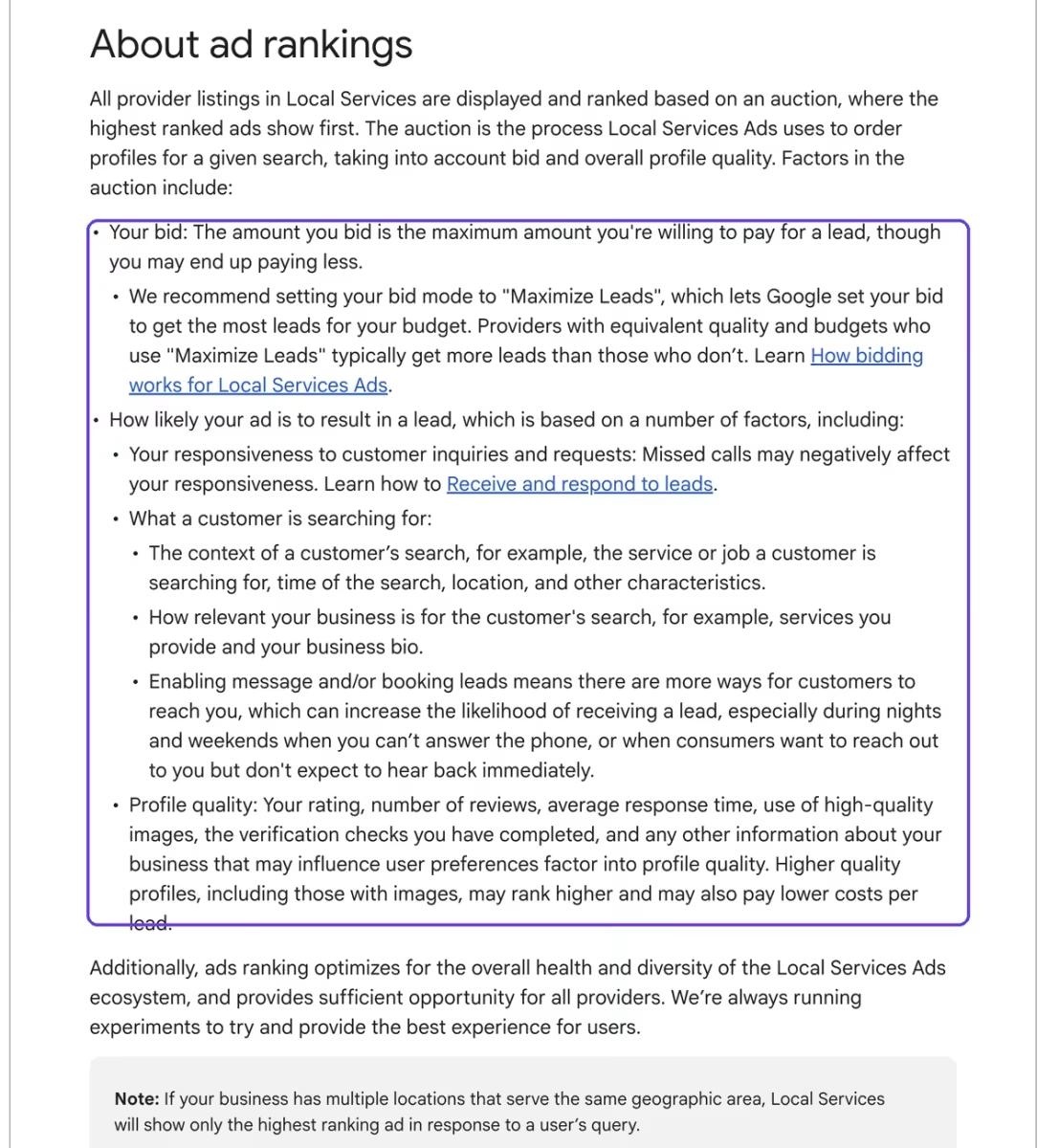
It helps to see the LSA levers for what they are, because none of them is an SEO lever:
- Your bid: the maximum you will pay per lead. It is a cash lever, and no amount of on-page work touches it.
- Responsiveness: missed calls hurt you, so answering the phone quickly is literally a ranking input here, which it never is for organic.
- Reviews and rating: this is the one lever that also strengthens your organic map pack, so it is the single shared input between the two channels.
- Profile quality and verification: a complete, verified profile with real images ranks better, and Google says it can even pay a lower cost per lead.
So Local Services Ads and organic local SEO are two separate auctions fed by two mostly separate input sets. The money and effort you pour into your bid, your response time, and your profile buy you nothing in organic search, and the content, links, and technical work that earn your organic rankings buy you nothing in the LSA auction.
The one place they meet is reviews and a clean Google Business Profile, which feed both. So the popular “run both because they compound together” line is only half right: they run in parallel, but they do not compound into each other. Understanding that changes how you split the money, which I will get to.
What local SEO actually buys a home service business
Local SEO earns you the map pack and the organic results, the space directly under the ads, and unlike Local Services Ads it keeps working after you stop spending. It is slower, usually weeks to a few months before it moves, but its cost per lead falls as your rankings and traffic compound.
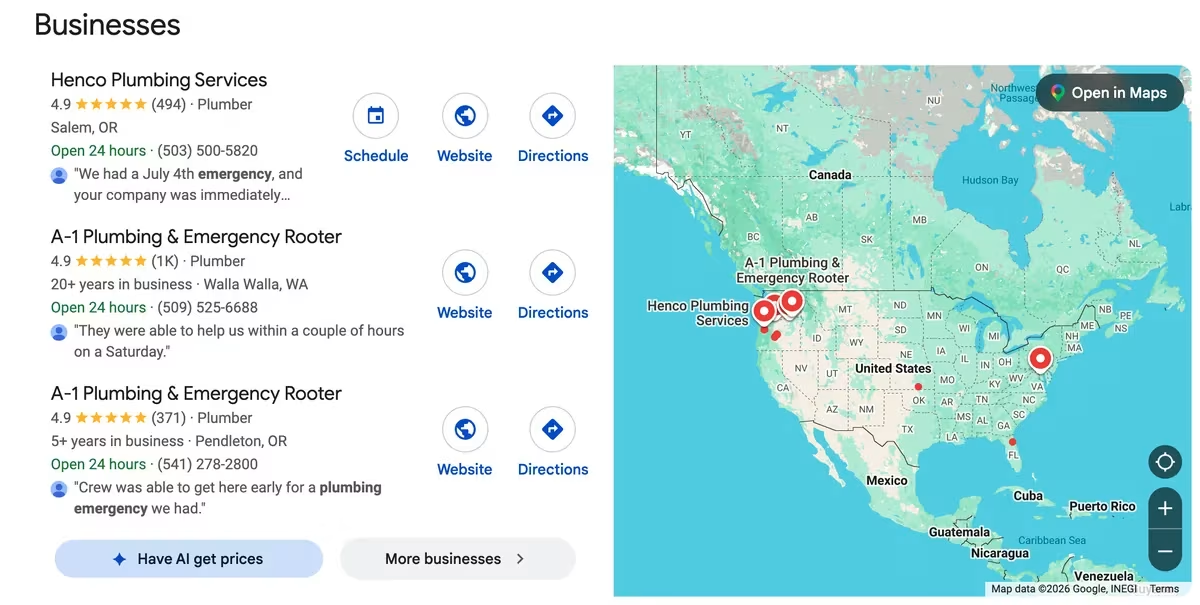
The work that earns those spots is real, and each piece pulls its own weight:
- Google Business Profile optimization: categories, services, photos, and hours done properly, because the profile is the anchor for the whole map pack. Our Google Business Profile optimization checklist runs through it step by step.
- Consistent NAP and citations: your name, address, and phone matching everywhere, so Google trusts which business it is ranking. We cover the details in what should stay consistent in a local SEO strategy.
- Service and location pages: real pages for what you do and where you do it, which is how a plumber or an HVAC business ranks organically, or how a mover earns city terms with route pages.
- Reviews and technical health: steady reviews and a fast, crawlable site, because both feed the ranking and the click.
Set the expectation honestly: local SEO is a three-month-plus play, not a one-hour task. Google Business Profile changes usually take a few weeks to move the local pack, and trying to shortcut it by buying or gaming reviews is a fast route to a suspended profile, not a shortcut to the top. If you run a moving company, our local SEO guide for moving companies shows the pace this actually runs at.
Local Services Ads vs standard Google Ads: they are not the same thing
Local Services Ads and standard Google Ads (the regular Search text ads) are different products, and it is worth saying plainly because buyers conflate them. Local Services Ads are pay-per-lead, keywordless, and show with the Google Guaranteed badge. Standard Google Ads are pay-per-click, keyword-targeted, and show as text ads.
The 2026 change puts Local Services Ads management inside the Google Ads platform, which is exactly what makes the two easier to mix up. But the pay-per-lead model is what still sets Local Services Ads apart, and that has not changed.
What the 2026 move into Google Ads changes (and what stays the same)
In 2026 Google is moving Local Services Ads into the Google Ads platform, but the core stays the same. You still pay per valid lead, your ads still show on Search and Maps in the same positions, and targeting stays keywordless. What changes is where you manage it, that manual bidding and industry-level Target CPA are going away, and that your old LSA reports do not carry over, so you have to export them first.
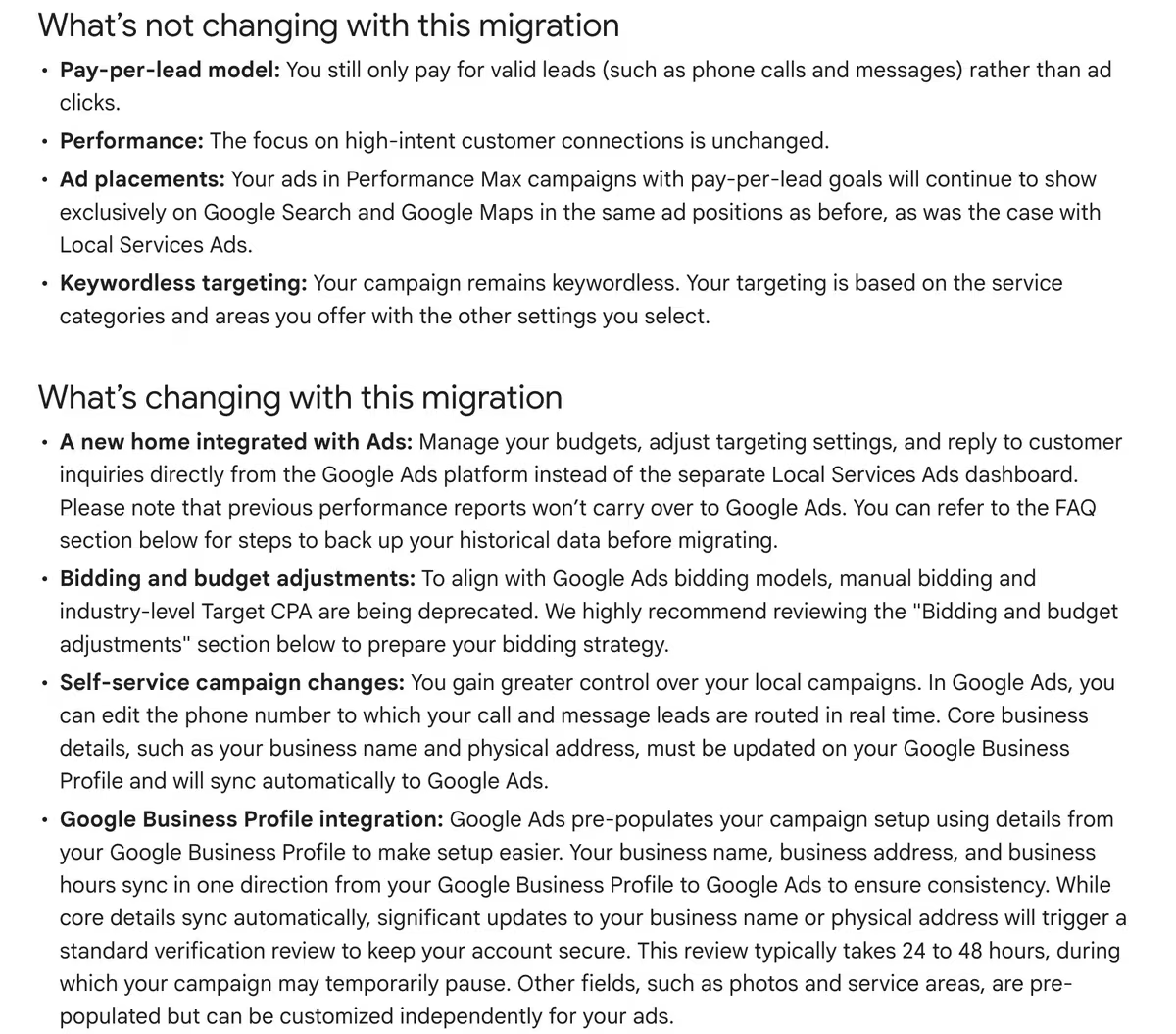
Google’s transition documentation is careful to reassure advertisers, and it is worth quoting it rather than paraphrasing. On what stays, Google says your ads “continue to show exclusively on Google Search and Google Maps in the same ad positions as before” and “you still only pay for valid leads.” On what moves, you now “manage your budgets, adjust targeting settings, and reply to customer inquiries directly from the Google Ads platform instead of the separate Local Services Ads dashboard.”
Two lines in that doc actually bite, so do not skim past them. First, “previous performance reports won’t carry over to Google Ads,” so you must export your data from the old dashboard before you migrate. Second, once you are migrated you lose access to the old LSA dashboard entirely. On the reassuring side, if you are already verified, your Google Verified badge transfers automatically, and Google sends a migration notice 14 days ahead with a reminder 7 days later.
When Local Services Ads moves into Google Ads
- August 2026: US home and storefront service verticals first, including plumbing, HVAC, electrical, appliance repair, house cleaning, lawn care, roofing, pest control, and moving
- Late 2026: broader groups, including service-area businesses with no storefront and accounts with custom bidding or booking setups
- 2027: non-US accounts and all remaining business categories
Here is my read, because Google’s doc is a source, not the last word. This move does not change the Local Services Ads versus SEO question at all: pay-per-lead, placement, and keywordless targeting all stay the same, so the value of the channel is the same the day after your migration as the day before. What it genuinely changes is the surface you manage it on, and the loss of manual bidding and per-vertical Target CPA. It is not “LSA is dead,” and treating it that way would be as misleading as the guides that have not noticed the change at all.
What Local Services Ads actually cost per lead
There is no official Local Services Ads cost per lead. Google sets it through the auction, and it varies widely by trade, market, and competition, so any single “average per lead” figure you see quoted is a vendor estimate, not a Google number. The honest way to budget is to set a weekly amount you can sustain, then watch your real cost per lead in the dashboard.
You will see confident dollar figures thrown around, both for LSA cost per lead and for SEO return on investment. I am deliberately not repeating them, because I cannot trace them to a primary source, and a number without a source is just a guess wearing a suit. What I can stand behind is the structural difference: LSA cost per lead stays roughly flat because you pay per lead, while local SEO’s marginal cost per lead falls once you rank, since the next lead from an organic ranking is close to free.
On the mechanics, Google’s own doc explains how the budget works: your weekly budget is “automatically divided by 7 to determine your daily average budget,” and your monthly spend “won’t exceed your daily average budget multiplied by 30.4.” So you control the ceiling; the auction controls the per-lead price underneath it.
How to split the budget between Local Services Ads and local SEO
For most home service businesses the answer is not either/or, but the split depends on your situation. If you are new with few reviews, lean on Local Services Ads for lead flow while local SEO matures. If you are established with review mass and rankings, shift weight toward SEO and use LSA to defend the top slot and catch emergency-intent searches.
| Your situation | Lean toward | Why |
|---|---|---|
| New business, few reviews, need leads now | Local Services Ads (most of the budget) | SEO takes months; LSA brings leads from day one once you are verified |
| Established, strong reviews and rankings | Local SEO, with LSA to defend the top slot | Your compounding asset is built; pay LSA only to hold position |
| Emergency-intent trades (burst pipe, no heat, lockout) | Local Services Ads weighted | Buyers call the first credible result, so speed wins over a slow scroll |
| Research-intent or higher-ticket jobs | Local SEO weighted | Buyers compare, so your pages, reviews, and content do the convincing |
| Very tight budget | Reviews and Google Business Profile first | The one input that feeds both, so it is the highest-leverage dollar |
Whatever the split, fund reviews and your Google Business Profile before either channel. They are the only input the two share, so that dollar works twice: it lifts your LSA profile quality and it strengthens your organic map pack at the same time. Everything else you spend only works in one of the two auctions.
So, should you run Local Services Ads or focus on local SEO?
Honestly, if you can afford both, run both, but go in with your eyes open: they are two separate bets, not one that quietly compounds. For a brand-new home service business I would start Local Services Ads for cash flow and build local SEO in parallel from day one, because the moment you pause LSA the leads stop, and SEO is the asset that keeps paying after you do.
For an established business with reviews and rankings already in place, I would treat LSA as insurance on the top slot, not the main engine, and put the weight into the organic asset that keeps compounding. And in either case I would spend the first review-and-Business-Profile dollar before anything else, because it is the only spend that works in both auctions at once. The 2026 move into Google Ads does not change that math; it just changes the dashboard, so export your history and carry on.
Common questions about Local Services Ads and local SEO
Do Local Services Ads help my organic SEO rankings?
No. Google’s ranking factors for Local Services Ads do not include your website, content, or backlinks, so running LSA does not lift your organic or map-pack rankings. The one thing that helps both is earning more reviews.
Is the Google Guaranteed badge the same as Google Verified?
They are close but not identical. Google Guaranteed covers home service providers and can include a lead-based guarantee for the customer, while Google Verified is the verification used for other professional categories. Both come from passing Google’s screening, and your badge transfers when your account moves into Google Ads.
Work with WpConsults
Want help splitting your local budget the right way?
If you run a home service business and you are not sure how much to put into Local Services Ads versus local SEO, we will look at your market, your reviews, and your rankings before you spend another dollar.
Update Logs
22 Jul 2026
- Published with Google’s 2026 Local Services Ads to Google Ads transition timeline and a plain read of why LSA rank and local SEO share no ranking input except reviews.
Want our posts to show up more often on Google?
One step & Google will surface this site in your Top Stories.