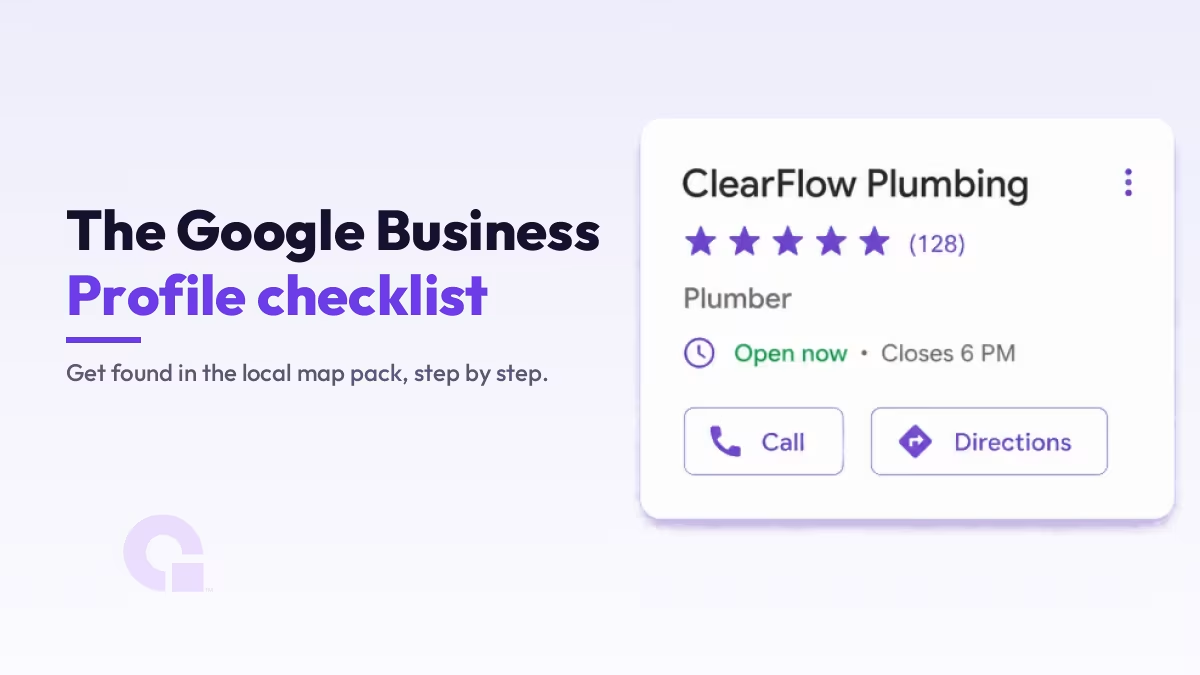
For a local business, your Google Business Profile does more day to day than your website does. It is what shows up in the map pack when someone nearby searches, and a complete, active profile is what decides whether you appear there or your competitor does.
This is the checklist I actually work through when I optimize one: the foundation to get exactly right, the category and services choices most profiles fumble, and the ongoing signals (photos, posts, reviews) that keep you visible rather than slowly slipping.
Key Takeaways
- Your Google Business Profile is usually your highest-leverage local asset; it decides whether you show in the map pack, often before your website matters.
- The primary category is the single most powerful field; pick the most specific one that fits, then add secondary categories for the rest.
- NAP consistency (name, address, phone) across your profile, website, and directories is foundational; mismatches quietly hold you back.
- Photos, weekly posts, and a steady flow of reviews are the activity signals that keep a profile visible, not one-time setup tasks.
- Responding to every review, good or bad, matters as much as collecting them, because it shows both Google and customers the profile is active.
Why your Google Business Profile is your highest-leverage local asset
When someone searches for a service near them, Google shows the local map pack above the normal results, and those three listings pull the majority of the clicks. Your profile, not your homepage, is what competes for that spot, so an incomplete profile is a business quietly losing jobs it never sees.
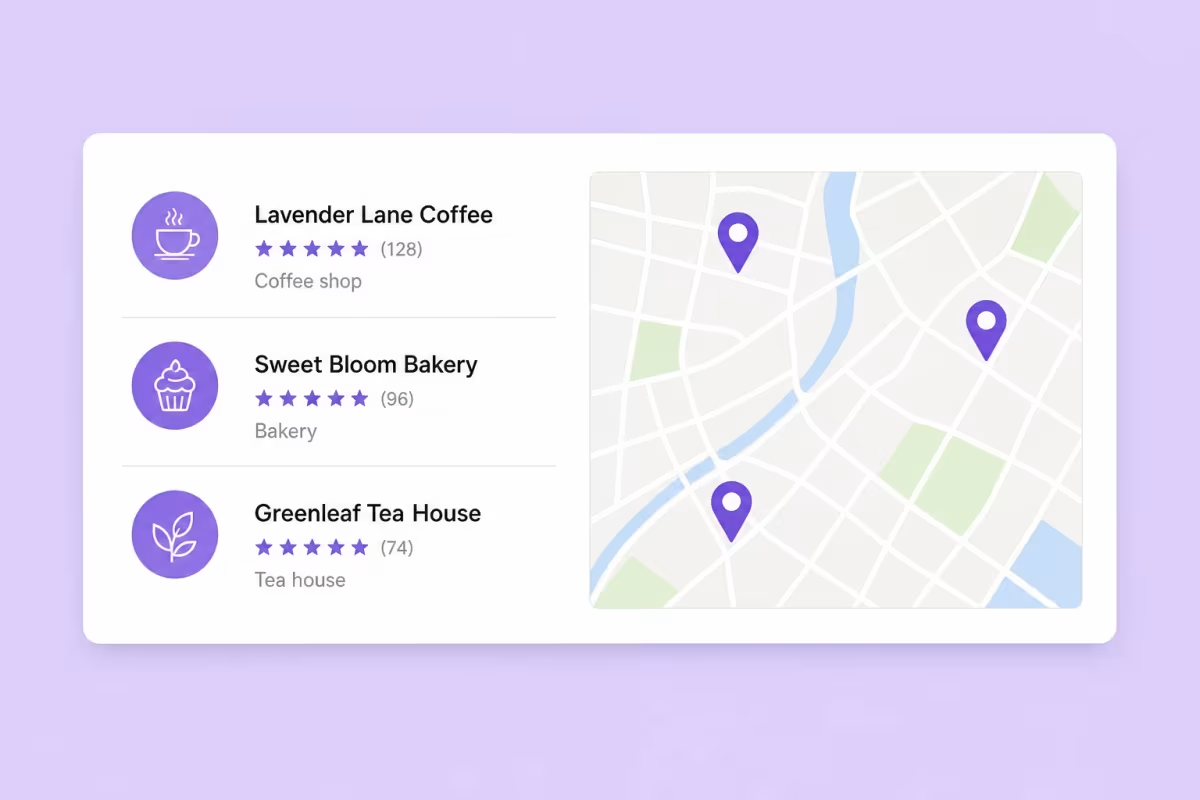
Google decides local rankings on roughly three things: relevance, distance, and prominence. You cannot move your address, but you have real control over relevance (how well your profile matches the search) and prominence (how established and active you look). Almost everything on this checklist is about improving those two, and it ties directly into how local results now feed AI Overviews for local searches.
Get the foundation right: name, primary category, and NAP consistency
Start with your business name, and use your real-world name exactly, without stuffing keywords into it. Adding “Plumber Chicago” to a name that is not actually that is against Google’s guidelines for representing your business, and it is a common reason profiles get suspended, so it is not worth the short-term gain.
The primary category is the highest-impact field on the whole profile, because it is the main way Google understands what you do. Pick the most specific category that genuinely fits, not a broad one: “Emergency plumber” over “Plumber” if that is your business, because specificity is what wins the relevant searches.
Then make your NAP (name, address, phone) identical everywhere it appears: the profile, your website, and every directory listing. Google reads consistency as a trust signal, and small mismatches, an old suite number here, a different phone format there, quietly undercut your prominence. I covered this foundation in more depth in what should be consistent in a local SEO strategy.
The Google Business Profile optimization checklist (2026)
Here is the working checklist. Do not treat it as one-and-done; the setup items you complete once, but the activity items (photos, posts, reviews) are ongoing, and that is exactly what separates a profile that ranks from one that stalls.
| Checklist item | What to do | Why it matters |
|---|---|---|
| Primary category | Choose the single most specific category that fits your business | The strongest relevance signal Google has for what you do |
| Secondary categories | Add categories for every other real service you offer | Widens the searches you can appear for without diluting the primary |
| NAP consistency | Match name, address, phone exactly across profile, site, and directories | Consistency is a trust signal; mismatches suppress prominence |
| Services and description | List every service with short descriptions; write a real business description | Adds relevant terms and helps you match longer, specific searches |
| Photos | Add real, current photos of your work, team, and location; keep adding | Profiles with fresh photos look active and earn more clicks |
| Google Posts | Post offers, updates, or news roughly weekly | A steady activity signal that also occupies more of your profile |
| Reviews | Ask happy customers for reviews; respond to every one | Volume, recency, and responses all feed prominence and trust |
| Q&A and attributes | Seed common questions; set attributes (accessibility, payments, etc.) | Answers real queries and fills relevance fields competitors skip |
Categories and services, where most profiles leave rankings on the table
The most common mistake I see is a profile that picked one broad category and stopped. Google lets you add secondary categories, and you should add one for every real service line you run, because each one opens up a set of searches you were invisible for before.
Below the categories sits the services section, and it is underused. Listing your individual services with a short description each gives Google more specific terms to match, and it is where a general contractor can spell out “kitchen remodeling”, “bathroom renovation”, and “deck building” instead of hoping one category covers all three. This is the cheap relevance win that most competitors never bother with, which is exactly why it works.
Photos, posts, and reviews, the signals that keep you visible
Once the setup is solid, ranking becomes a question of looking active, and three things carry that. Photos come first: add real, current pictures of your work and premises, and keep adding them, because a profile with fresh, genuine photos reads as a real, running business and earns more clicks than a bare one.
Google Posts are the second signal, and posting an offer or update roughly weekly keeps a steady heartbeat on the profile while taking up more of the space a searcher sees. Reviews are the third and heaviest: ask happy customers to leave one, keep them flowing rather than in one big burst, and respond to every review, good or bad. The responses matter as much as the reviews, because they show Google and customers alike that someone is actually running the profile.
Keeping your Google Business Profile current
The profiles that win are the ones nobody abandons after setup. A light, repeatable rhythm is enough, and it is far less work than the initial optimization once you have a routine.
A simple monthly Google Business Profile rhythm
- Each week: publish one Google Post (offer, update, or tip)
- Each week: reply to every new review, positive or negative
- Every couple of weeks: add a few fresh, real photos
- Monthly: recheck hours, services, and NAP for anything outdated
- Quarterly: review your categories against what you actually offer
Watch your hours especially around holidays, because a customer who drives to a “closed when it said open” listing leaves the kind of review you do not want. Keeping the profile honest and current is not glamorous, but it is what compounds over months into a listing Google trusts.
So, is optimizing your Google Business Profile still worth the effort?
If this were my local business, it would be the first thing I fixed, before touching the website. The map pack is where local intent actually converts, and a well-optimized profile competes there for free, which is a return few other channels come close to.
So yes, it is worth it, with one honest caveat: the setup is a day’s work but the reviews and posts are forever, and that ongoing part is where most businesses quietly give up. Keep the rhythm going, and you end up with the kind of profile that keeps pulling calls while your competitors’ listings gather dust.
Want Your Local Profile Working Harder?
Don’t hesitate to contact us or email me for a hands-on Google Business Profile and local SEO review. Remember, in local search the profile is the storefront, so getting it right is where the calls come from.
Want our posts to show up more often on Google?
One step & Google will surface this site in your Top Stories.