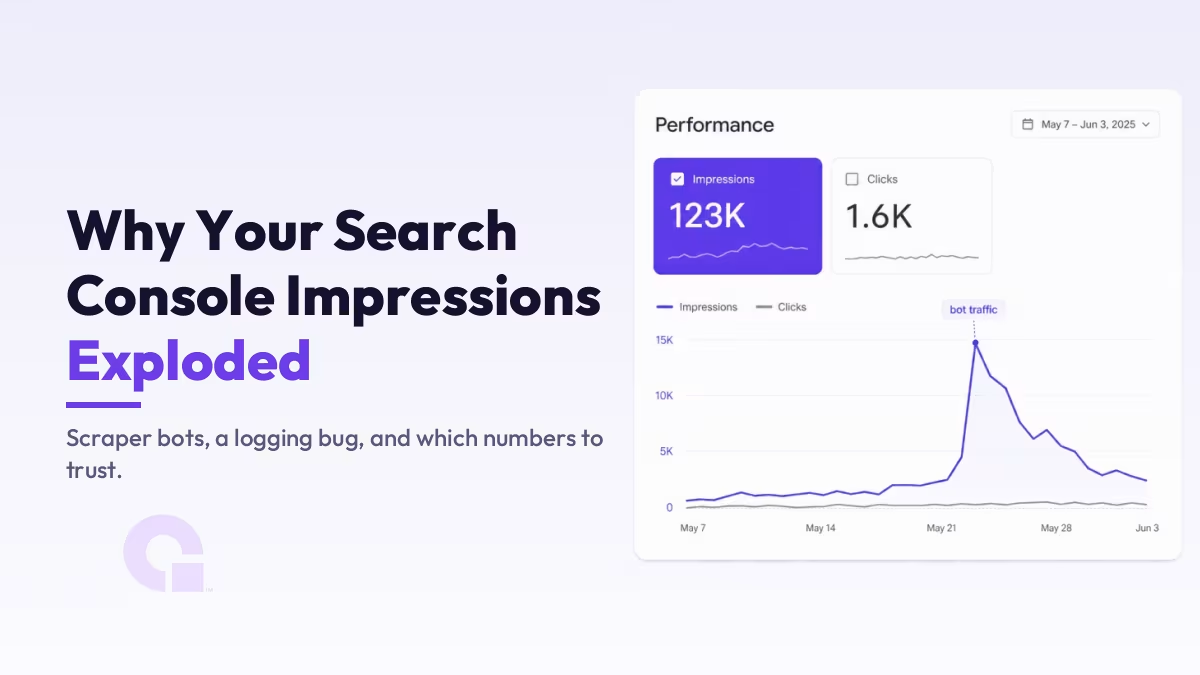
If your Search Console impressions shot up while clicks stayed flat, or dropped off a cliff lately, you are not imagining it and you probably did not do anything wrong. Two separate things have been inflating impressions: a year-long logging bug on Google’s side, and SERP scraper bots.
So this piece separates the two, shows you the signature to look for, and lands on the one metric I still trust when impressions get noisy. Short version: watch clicks, not impressions.
Key Takeaways
- A spike in impressions with flat clicks and a collapsing CTR is a data-quality signal, not a demand signal.
- Google confirmed a Search Console logging error that over-reported impressions from May 13, 2025 to April 27, 2026; clicks were not affected.
- Separately, SERP scraper bots inflate impressions, mostly on desktop, at average positions around 8 to 20.
- The old inflated impression data was not corrected, only fixed going forward, so year-over-year impression comparisons in that window are unreliable.
- Clicks and conversions are the honest floor; trust them over impressions, CTR, and average position for now.
- Part of the “AI Overviews ate my clicks” panic was really this measurement artifact.
The pattern: impressions up, clicks flat, CTR falling
The tell is simple once you know it: impressions balloon or swing wildly, clicks barely move, and your average CTR quietly falls through the floor. When real demand grows, clicks tend to move with impressions; when only impressions move, something other than human searchers is padding the number.
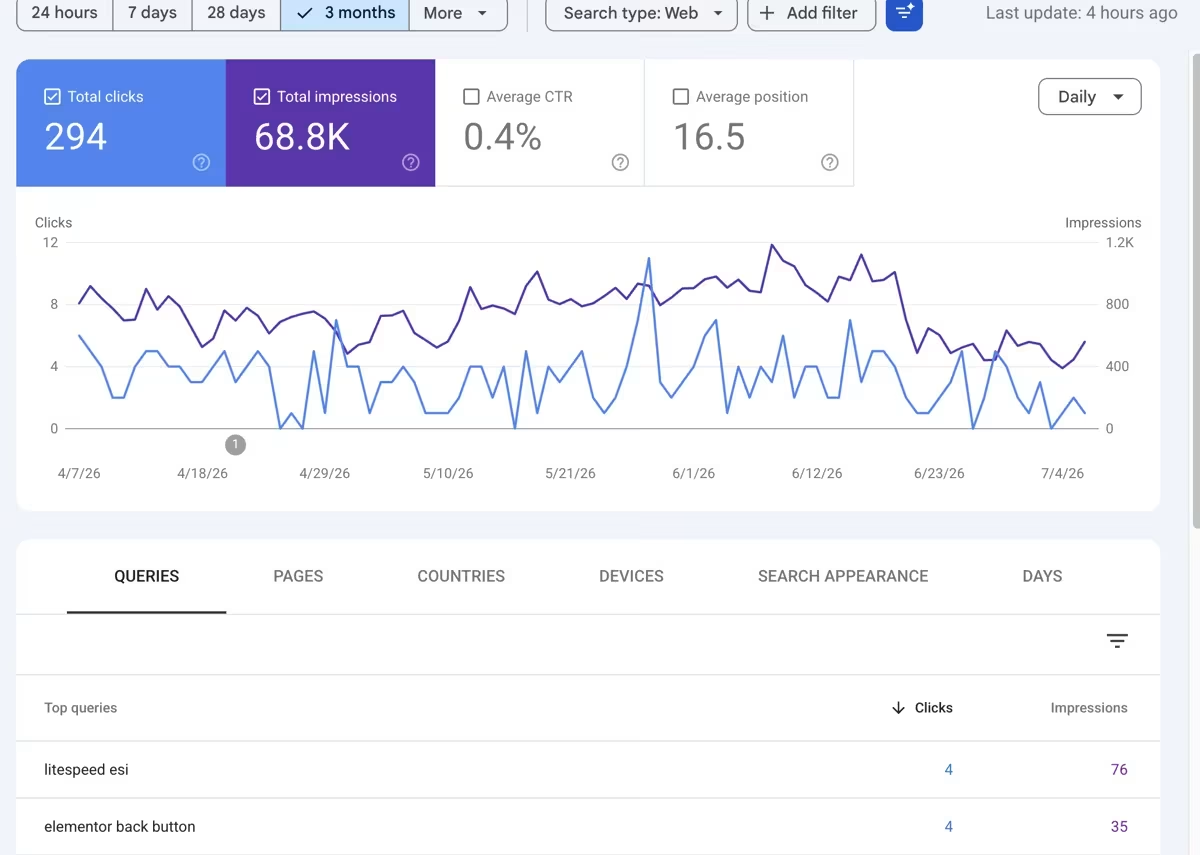
Here is my own site as a live example. Over the last three months, my Search Console shows about 68,800 impressions but only 294 clicks, a 0.4% average CTR at an average position of 16.5. Day to day the impressions swing from under 200 to over 1,200 while clicks sit between 0 and about 11. That gap is the signature, and the report below makes it obvious.
Cause one: Google’s year-long Search Console logging bug
The first cause is Google’s own. Google confirmed a logging error that over-reported impressions in the Search Console Performance report, and it ran for about 50 weeks. In Google’s words, clicks were “not affected by the error”; only impressions and the metrics derived from them, CTR and average position, were wrong.
The window matters: the bug affected impressions logged from May 13, 2025 until April 27, 2026, when Google resolved it going forward. As Search Engine Land reported, Google did not correct the historical data, and John Mueller John Mueller John MuellerSearch Advocate, GoogleGoogle's Search Advocate and the main on-the-record voice of Google Search Relations.LinkedInXSearch Central confirmed the fix applies going forward only. So when you see impressions “drop” in spring 2026, that is often the inflation being removed, not lost visibility.
The practical fallout is that any impression-based comparison spanning that year is shaky. Year-over-year impressions, CTR trends, and “share of voice” style visibility scores that lean on impressions all inherited the inflation, so treat them with real caution until you have clean data on both sides of the comparison.
Cause two: SERP scraper bots inflating impressions
The second cause is not Google’s bug at all, and it did not disappear when the bug was fixed. Rank-tracking tools and other services scrape the search results at scale, and when a scraper loads a results page that your URL appears on, Google can log that as an impression even though no human ever saw it.
This is why the noise clusters in a recognizable way. It shows up heavily on desktop, tends to sit at average positions around 8 to 20 (where deep-scraping tools pull many results), appears suddenly on queries you never ranked meaningfully for, and brings essentially no clicks with it. If a query has thousands of impressions, a position in the teens, and near-zero clicks, a bot is a likelier explanation than a sudden surge of shy humans.
How to tell bot noise and bug inflation from real demand
You do not need forensic tooling to sort signal from noise, just a habit of reading the report in the right order. I work down from clicks, because clicks are the hardest number to fake, and only then look at whether the impression story holds up.
Reading a strange impression spike
- Check clicks first: did clicks move with the impressions, or stay flat?
- Read average position: bot noise clusters around positions 8 to 20
- Segment by device and page: scraper inflation skews desktop and lands on odd queries
- Mind the bug window (May 2025 to April 2026) before trusting older impressions
- Anchor on clicks and conversions as the honest floor
The Pages and Queries tabs are your friends here. Sort by clicks rather than impressions, and the real, useful part of your data rises to the top while the bot-padded, click-less queries fall away. That single habit stops you from steering strategy off numbers that were never human in the first place.
Which Search Console numbers you can still trust
Clicks are the number I trust most right now, because neither the logging bug nor the scrapers moved them. Conversions and revenue downstream of those clicks are just as solid, since a bot that never clicks never buys. If clicks and conversions are steady, your business is steady, whatever the impression line is doing.
What I treat as soft for now is anything built on impressions: raw impression counts in the bug window, average CTR, average position, and any visibility index derived from them. They are not useless, but they carry known error, so I use them for direction and never quote them as precise. For crawl and indexing questions I lean on other signals instead, like the ones in our guide to log file analysis, which show what actually hit your server rather than what a report estimated.
What this means for the “AI Overviews ate my clicks” story
Here is the part I care about most, because it got told the wrong way round. Through 2025 and early 2026, a lot of sites watched impressions climb while CTR fell and concluded that AI Overviews were vacuuming up their clicks. It is a tidy story, and AI Overviews are genuinely changing click behavior, so it felt right.
But a real chunk of that falling CTR was the logging bug and scraper noise inflating the denominator, not AI stealing the numerator. When impressions are padded with views no human made, CTR drops on paper even if real humans clicked exactly as before. I am not waving away zero-click search, which is real; I am saying it got blamed for a measurement artifact, and treating an interested party’s report as fact is how that happens. This is the same reason I read anything indexing-related, like a sudden move in the page indexing report, against a second source before I react.
So, should you worry about your impression drop?
Honestly, in most cases no. If your clicks and conversions held while impressions fell in spring 2026, you are almost certainly seeing inflated impressions being cleaned out, which is a good thing, not a loss. The number got more honest; your traffic did not shrink.
The time to actually worry is when clicks fall, because that is the number the bug and the bots left alone. So set your dashboards and your nerves to clicks and conversions, use impressions only for rough direction until you have clean data on both sides of a comparison, and stop letting a padded, half-broken impression line dictate how you feel about your site.
Still not sure what your Search Console data is telling you?
If your impressions or CTR are behaving strangely and you want a second pair of eyes before you change anything, feel free to reach out or email me. Reading the report correctly is usually the whole fix.
Update Logs
09 Jul 2026
- First published: separates Google’s confirmed impressions logging bug (May 2025 to April 2026) from SERP scraper inflation, with my own Search Console data and a read-it-in-order method.
Want our posts to show up more often on Google?
One step & Google will surface this site in your Top Stories.