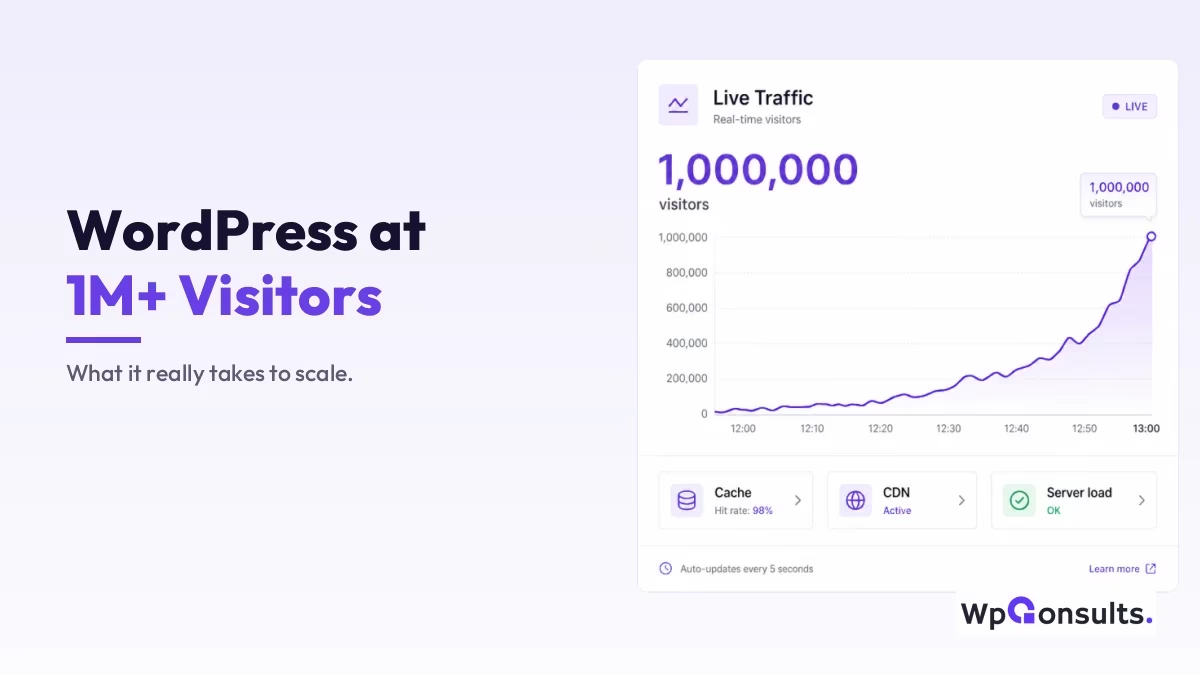
Yes, WordPress can handle a million visitors and far more; the platform is almost never the bottleneck, your setup is. The same core software runs enormous publishers and tiny blogs alike, and the difference between a site that stays up under load and one that falls over is entirely in the hosting, caching, and code around it.
So here is what actually decides whether a WordPress high traffic site survives a serious spike, and where people waste money getting it wrong.
Key Takeaways
- WordPress itself scales fine; the limits come from your hosting, caching, CDN, database, and plugin bloat, not the core software.
- Shared hosting cannot carry a million visits; you need managed WordPress, a VPS, a dedicated server, or cloud (AWS, Google Cloud, DigitalOcean).
- Full-page caching is the single biggest lever, because it serves static pages instead of rebuilding each one from PHP and the database.
- A CDN spreads delivery worldwide and absorbs traffic spikes before they reach your origin server.
- A lean theme, few plugins, and a clean database keep each request cheap, which is what lets one server handle high concurrency.
- Major publishers run on WordPress, proof that the ceiling is your configuration, not the CMS.
Is WordPress really the limit?
WordPress is just software, and it can serve very large audiences when the hosting and optimization are done right. Plenty of high-traffic news portals, magazines, and online shops run on it without trouble. So when a WordPress site struggles under load, the cause is almost always the environment around WordPress, not WordPress itself.
Hosting is the biggest factor
The single biggest variable is your hosting. Cheap shared plans put hundreds of sites on one box, so they simply cannot manage millions of visitors. To scale you want a tier with dedicated resources: managed WordPress hosting, a VPS, a dedicated server, or cloud infrastructure like AWS, Google Cloud, or DigitalOcean. These give your site the CPU, memory, and stability that high concurrency demands. If you are choosing, my fast WordPress hosting picks and agency hosting recommendations are a good starting point.
Caching is the single biggest speed lever
When a million people visit, your server cannot build every page from scratch; rendering each request through PHP and the database would melt it. Full-page caching solves this by saving finished pages in static form and serving those instead, which is why it is the highest-impact change you can make. Tools like WP Rocket, W3 Total Cache, and LiteSpeed Cache all do this; the key is that most visitors hit a cached page and never touch PHP at all.
A CDN spreads the load
A content delivery network copies your static assets to servers around the world, so a visitor in the US and one in Asia both get fast loads from a nearby edge. Just as importantly, a CDN absorbs traffic spikes at the edge before they ever reach your origin, which is what keeps the site up during a surge. Cloudflare and BunnyCDN are both solid options, and Cloudflare’s free tier already covers a lot of ground.
Keep the database lean
At millions of visits, an unoptimised database becomes a hidden bottleneck: bloated tables, leftover post revisions, and orphaned plugin data all slow queries down. Keeping it clean with a tool like WP-Optimize, and making sure dynamic queries are cached, keeps each uncached request cheap so the server can serve more of them at once.
Lightweight themes and minimal plugins
Not every theme or plugin is built for scale. A heavy multipurpose theme or twenty active plugins add code to every page, which slows rendering and inflates the work the server does per request. Lean themes like GeneratePress, Astra, or Kadence, paired with only the plugins you truly need, keep pages light, and that directly improves your Core Web Vitals too.
Real-world proof
This is not theoretical. Large publishers such as TechCrunch, along with many enterprise sites running on WordPress VIP, serve millions of visits on WordPress every month. That alone settles the question: the platform is not the ceiling, your configuration is.
So, can WordPress handle a million visitors?
In my view, yes, comfortably, but only if you build for it. Put the budget where it counts: capable hosting first, then full-page caching and a CDN, then a lean theme and a clean database. Get those right and WordPress will scale well past a million visits without drama.
Get them wrong, lean on cheap shared hosting and a pile of heavy plugins, and the site will crawl or crash the moment traffic arrives. The CMS was never the problem; the setup around it is what you are really buying.
Planning for serious traffic?
If you want your WordPress site built to scale, work with WpConsults or email me, and we will get the hosting, caching, and code ready before the traffic shows up.
Update Logs
27 Jun 2026
- Rewrote the guide for 2026 with the reasoning behind each scaling lever, fixed the broken links, and added internal links to the hosting, caching, and Core Web Vitals guides.
Want our posts to show up more often on Google?
One step & Google will surface this site in your Top Stories.