The most underrated lever in local SEO is not a clever tactic, it is consistency: making sure your business details say exactly the same thing everywhere Google can find them. Get that right and you build trust with both search engines and customers; get it wrong and you quietly leak rankings and calls.
In this guide I will walk through what actually needs to stay consistent in a local SEO strategy, why it matters, and where consistency stops being the thing holding you back so you do not overrate it either.
Key Takeaways
- Your NAP (Name, Address, Phone) must be identical everywhere it appears; this is the foundation of local trust.
- Keep your Google Business Profile (the old Google My Business) name, categories, hours, and description aligned with your website.
- Consistency extends past NAP to hours, business description, branding, and the details in every citation and directory.
- Keep one single source of truth for your data, audit it regularly, and reinforce it with LocalBusiness schema.
- Consistency is necessary but not sufficient; reviews, proximity, and genuine relevance still decide who ranks at the top.
What consistency really means in local SEO
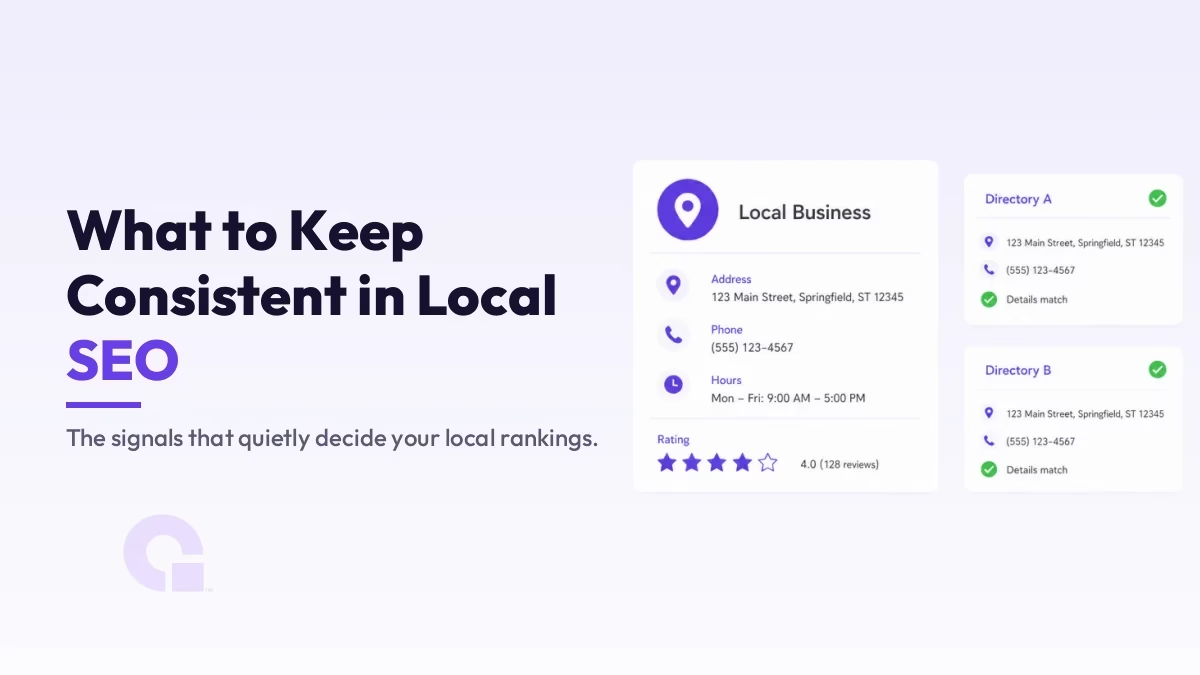
Consistency here means one thing: every place your business appears online tells the same story. The same name, the same address in the same format, the same phone number, the same hours. Search engines piece together your business from dozens of sources, and when those sources agree, Google is confident it knows who you are and where you operate.
When they disagree, that confidence drops. A study like Moz’s Local Search Ranking Factors has long placed citation and NAP consistency among the signals that matter for local rankings, and the logic is simple: mixed signals create doubt, and doubt costs you visibility in the map pack.
NAP consistency, the non-negotiable
NAP stands for Name, Address, and Phone number, and it is the single most important thing to keep identical. Treat it as your digital identity: if it does not match across the web, you are asking Google to guess which version is correct.
Here is the kind of mismatch I see constantly. A bakery is listed as “Sarah’s Bakery” on its Google Business Profile, “Sarah’s” on Yelp, and “Sarah’s Bakehouse” on Facebook, with the phone number formatted three different ways. None of those are wrong on their own, but together they fragment the business in Google’s eyes and split the trust that should be pooling into one strong listing.
| Element | Keep it identical across | Why it matters |
|---|---|---|
| Business name | Website, Google Business Profile, Yelp, Facebook, every citation | Mismatches make Google unsure which entity is the real one |
| Address (and its format) | Every listing and your site footer | A stray or old address can rank instead and confuse the map |
| Phone number | All listings and click-to-call on your site | One number reads as one trusted business |
| Hours | Google Business Profile, directories, website | Wrong hours lose real customers at the door |
| Categories and description | Google Business Profile and your website messaging | Tells Google what you do and who you serve |
Your Google Business Profile
Your Google Business Profile, which Google renamed from Google My Business a few years back, is usually the first thing a customer sees, so treat it with the same care as your physical storefront. Pick the most accurate primary category, use the attributes that genuinely apply, and write a description that matches the messaging on your website rather than inventing a new pitch.
The profile is also where consistency pays off fastest, because it feeds the map pack directly. If your hours there contradict your website, or your name carries a keyword stuffed onto the end that your signage does not, you are sending the exact mixed signal you are trying to avoid. When you are ready to optimize the profile itself, our Google Business Profile optimization checklist walks through it field by field.
Beyond NAP, what else must match
Once NAP is locked down, consistency carries through a few more layers, and each one reinforces the same identity:
- Website and landing pages: show your NAP clearly on the contact page and in the footer, and mark it up with LocalBusiness schema so search engines read it without guessing. That structured data is far more reliable than the old advice of stuffing your address into meta tags.
- Citations and directories: on Yelp, the relevant industry directories, and the data aggregators, keep not just NAP but hours, website link, and description uniform. This is the citation layer that local link building builds on.
- Social profiles: use the same name, logo, and cover imagery so the brand looks like one business, and link those profiles back to your site.
- Reviews and responses: reply in a consistent voice, and keep the business name you use in responses the same as everywhere else.
How to keep it all consistent
The practical fix is boring but effective. Keep one single source of truth, a simple spreadsheet with your exact name, address, phone, hours, and description, and copy from it every time you create or edit a listing. That alone prevents most drift.
Then audit periodically, because details rot over time as old listings resurface or someone edits one in isolation. Citation tools like BrightLocal and Whitespark are built for exactly this: they find your existing citations, flag the inconsistent ones, and help you clean them up. If you serve a specific trade, the same discipline applies whether you are doing SEO for a moving company or any other local service; the elements just need to stay identical wherever they live.
Where consistency is not the whole game
Here is the balance worth keeping, because it is easy to overrate this. Consistency is necessary, but it is not what wins the top spot on its own. Plenty of businesses have spotless NAP and still sit below a competitor, because the competitor has more and better reviews, sits closer to the searcher, or is simply more relevant to the query.
So think of consistency as clearing the bar, not winning the race. It removes the doubt that holds you back, and then your reviews, your Google Business Profile activity, and genuinely relevant local content do the work of pushing you up. Fix consistency first because it is foundational, then spend your energy on those ranking drivers.
So what really needs to stay consistent?
If this were my business, I would lock down NAP first, everywhere, without exception, then make the Google Business Profile and website agree down to the hours and the description. That covers the consistency that genuinely moves trust and rankings, and it is the part most owners get wrong by accident.
After that, I would stop treating consistency as the whole strategy and shift to earning reviews and building relevant local content, because that is where the real ranking gains live. Consistency is the foundation you pour once and maintain; it is not the building.
Need help cleaning up your local listings?
If your NAP is scattered across the web and you are not sure which listings are dragging you down, work with us or email me and we will audit your local presence and fix the inconsistencies properly.
Update Logs
09 Jul 2026
- Linked out to our new Google Business Profile optimization checklist for readers who want the full profile walkthrough.
29 Jun 2026
- Rewritten and updated: Google My Business renamed to Google Business Profile throughout, an unverified click-rate statistic removed, LocalBusiness schema recommended over old meta-tag advice, and a new section on why consistency alone does not win local rankings.
Want our posts to show up more often on Google?
One step & Google will surface this site in your Top Stories.