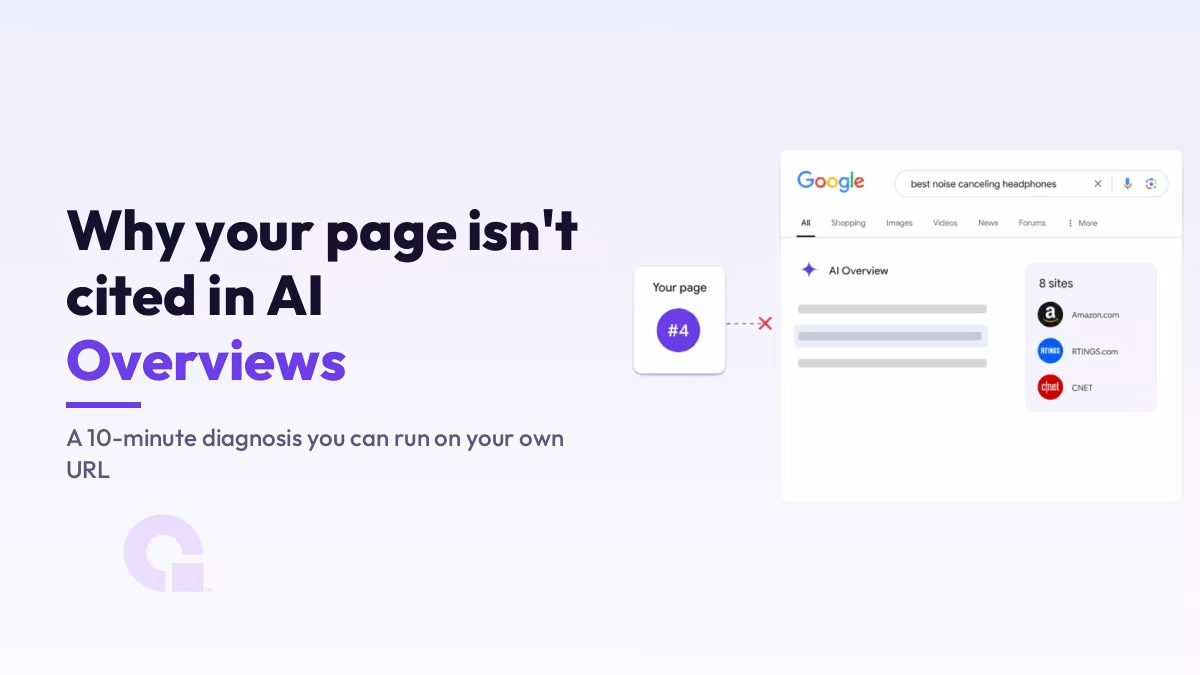
Votre page figure en première page, un aperçu généré par l'IA s'affiche en réponse à la requête, et votre URL n'apparaît nulle part dans le panneau de source. Il ne s'agit pas d'un problème de référencement ; essayer d'améliorer votre classement ne résoudra donc pas le problème.
Vous trouverez ci-dessous le diagnostic de 10 minutes que j'effectue, présenté dans un ordre qui donne la priorité aux vérifications les moins coûteuses, et qui distingue clairement la moitié des problèmes que vous pouvez résoudre dès cet après-midi de ceux qui prendront des mois.
Principaux enseignements
- Le classement et les citations sont deux choses différentes. Dans son « Aperçu de l'IA », Google répond précisément à cette question en précisant que les moteurs d'IA ne se contentent pas de citer les pages les mieux classées.
- Avant de modifier quoi que ce soit, vérifiez bien. Le nombre de sites référencés varie de lui-même : pour une même requête, sur le même marché, à quatre heures d'intervalle, nous avons compté 11 sites référencés, puis 9.
- Une mention n'est pas une position que l'on occupe et que l'on conserve. Sur notre propre page, elle était présente sur les quatre marchés pendant quatre nuits, puis elle a disparu, sans qu'aucun changement n'ait été apporté à la page et alors que son classement restait inchangé.
- Google précise une condition d'éligibilité stricte : la page doit être indexée et pouvoir s'afficher avec un extrait. A
nosnippet,data-nosnippet, ou serrémax-snippetLa balise « tag » disqualifie discrètement une page qui est pourtant très bien classée. - L'« extractabilité » est la partie qui peut être corrigée. Répondez à la question posée dans les 2 ou 3 premières lignes sous le titre correspondant, puis développez votre réponse.
- La vérification, c'est la partie qui prend du temps. Si aucune autre source fiable ne confirme vos propos, il est risqué de vous citer.
- Search Console ne peut pas déterminer votre position pour une requête spécifique lorsque le nombre d'impressions est faible. Nous avions commis cette erreur sur notre propre page et l'avons corrigée.
Le classement et le fait d'être cité dans les revues « AI Overviews » sont deux choses distinctes.
Une page peut figurer dans le top 10 sans pour autant être citée dans un résumé généré par l'IA, car le classement détermine les pages que Google affiche, tandis que la citation détermine le passage que le résumé généré par l'IA extrait. Il s'agit de deux sélections distinctes, effectuées selon des critères différents : l'IA a besoin d'une réponse concise et autonome qu'elle peut extraire d'une source dont elle estime pouvoir garantir la fiabilité.
Vous n'êtes pas obligé de me croire sur parole. J'ai capturé la page de résultats de recherche américaine (SERP) pour cette question précise le 13 juillet 2026, et l'outil « AI Overview » de Google lui-même l'a clairement indiqué.
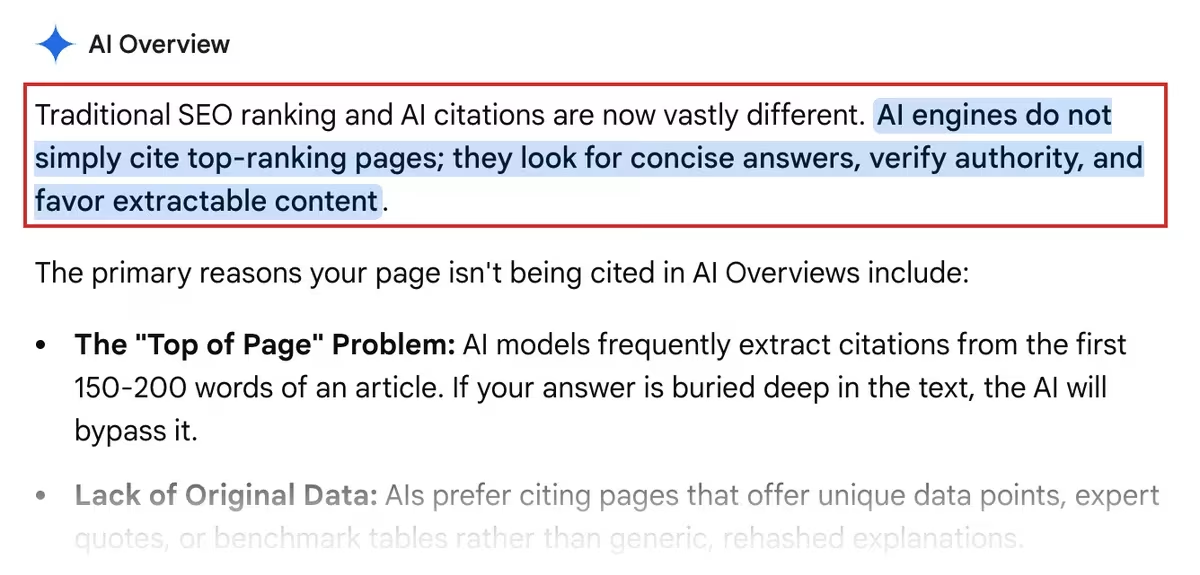
La phrase surlignée dit : “ Les moteurs d'IA ne se contentent pas de citer les pages les mieux classées ; ils recherchent des réponses concises, vérifient la fiabilité des sources et privilégient les contenus exploitables. ”
Ainsi, la fonctionnalité que nous essayons tous d'exploiter nous indique, dans sa propre réponse, que nos classements ne sont pas la solution. Honnêtement, c'est une preuve plus convaincante que n'importe quelle étude de corrélation figurant actuellement dans les résultats de recherche pour cette requête, et cela ne coûte rien de vérifier.
Diagnostic en 10 minutes d'une page non référencée
Presque tous les guides sur ce sujet vous conseillent de commencer par une « chirurgie » du contenu : réécrire l'introduction, ajouter un schéma, ajouter des données originales. Ces éléments sont importants, et j'y reviendrai, mais il s'agit des étapes trois et quatre, pas de la première. Il y a d'abord deux vérifications moins coûteuses, et ce sont justement celles que personne ne fait.
L'ordre dans lequel j'effectue les vérifications
- Est-ce qu’un « Aperçu de l’IA » s’est même affiché, et y avez-vous jeté un coup d’œil ?
- La page peut-elle être citée (critère de l'extrait) ?
- Votre réponse peut-elle réellement être extraite de la page ?
- Y a-t-il quelqu'un d'autre qui partage ton avis ?
Étape 1 : vérifiez si la fonction « AI Overview » se déclenche, puis vérifiez à nouveau
Avant de conclure que vous avez été exclu, effectuez la requête deux fois à des dates différentes et comptez le nombre de sources citées à chaque fois. Les « AI Overviews » ne s’activent pas à chaque requête, et l’ensemble des sites qu’ils citent n’est pas stable ; un simple coup d’œil peut donc facilement vous donner une impression erronée. Si vous souhaitez avoir une idée de la fréquence à laquelle cette fonctionnalité s’active, j’ai analysé cela en détail dans à quelle fréquence les « AI Overviews » sont-ils réellement publiés ?, notamment pour expliquer pourquoi les chiffres publiés présentent des divergences aussi importantes.
C'est ce que Google affirme lui-même dans son Documentation sur les fonctionnalités d'IA: Les “ aperçus générés par l'IA ” « ne s'affichent que lorsque nos systèmes estiment qu'ils apportent une valeur ajoutée à la recherche classique ; c'est pourquoi ils ne s'affichent souvent pas ». Google est certes une partie prenante, mais sur ce point précis, sa description correspond à ce que nous constatons.
Voici nos propres chiffres, et je vais préciser à haute voix la taille de l'échantillon, car elle est réduite. Pour une requête, sur un marché donné, un jour donné, nous avons enregistré la page « AI Overview » vers 01 h 50, puis à nouveau vers 04 h 52. La première capture mentionnait 11 sites. Le deuxième cité 9. Rien n'a changé sur notre page au cours de ces quatre heures.
Il s'agit là d'une observation, pas d'une loi, et deux captures d'écran d'une même requête ne prouvent rien concernant Internet. Cela suffit néanmoins à justifier la règle suivante : refaites une capture d'écran avant de tirer des conclusions.
Pendant que vous y êtes, lisez attentivement le panneau « Source ». Sur la capture d'écran ci-dessus, la section « Présentation de l'IA » citait 8 sites, et le premier n'était pas un guide de référencement bien ficelé.
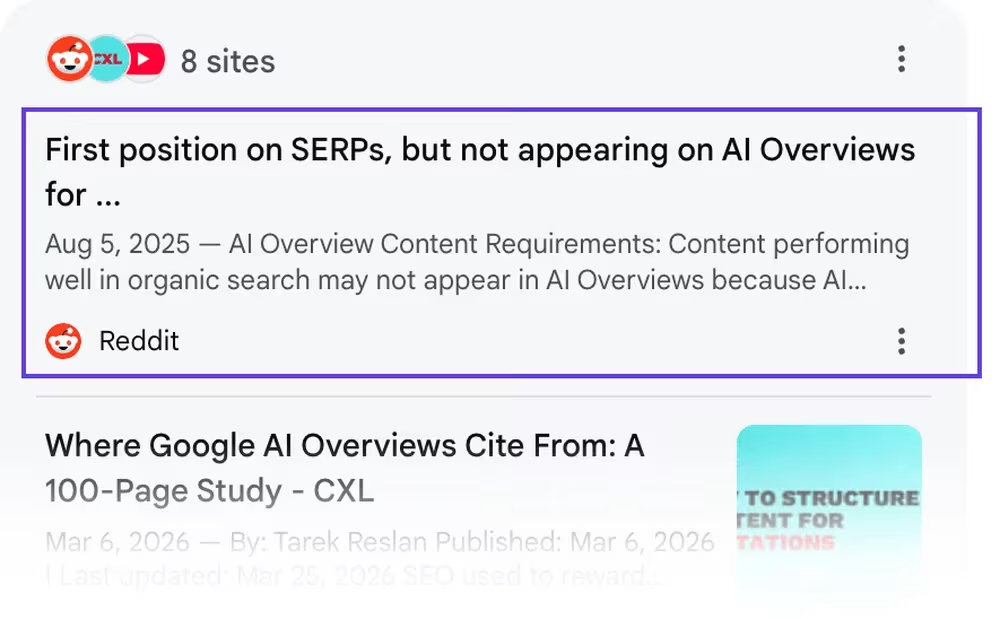
Un fil de discussion Reddit publié par une personne confrontée exactement au même problème que vous a été cité avant une étude officielle. Dans chaque aperçu sur l'IA que nous avons recensé jusqu'à présent, sur six requêtes différentes, au moins un fil de discussion Reddit figurait parmi les sources. L'échantillon étant restreint, je parle d'une tendance que nous observons régulièrement, et non d'un pourcentage ni d'une règle quant aux préférences de Google.
Une contravention peut-elle disparaître d'elle-même ?
Oui, et nous avons pu constater ce phénomène sur notre propre page. La mention est apparue sur les quatre marchés que nous suivons, où elle est restée pendant quatre nuits consécutives, avant de disparaître dès la cinquième, sans qu'aucun changement n'ait été apporté à la page ni à son classement.
Voici l'évolution avec les dates correspondantes. Sur notre page d'expérimentation llms.txt, nous n'avons pas été cités pendant neuf tours consécutifs, du 15 au 24 juillet 2026, puis nous avons été cités sur les quatre marchés pendant quatre tours consécutifs, du 25 au 28 juillet, avant de ne plus l'être les 29 et 30 juillet.
Deux éléments expliquent cette lisibilité. Google a réindexé la page une seule fois, le 13 juillet, puis n’y est plus jamais revenu ; ainsi, toutes les captures effectuées par la suite donnaient accès à une version qui n’avait jamais changé en arrière-plan. De plus, le classement de la page dans Search Console est resté stable, autour de la 20e place, tant au moment de son apparition qu’au moment de sa disparition. La page n’a pas bougé ; c’est la référence qui a changé.
Une deuxième expérience permet d'obtenir une version encore plus claire du même phénomène. Une page de contrôle que nous n'avons délibérément jamais modifiée apparaît, comme le confirme une capture d'écran, dans le panneau « Sources » de la vue d'ensemble de l'IA aux États-Unis et au Canada le 25 juillet 2026, mais n'y figure pas les nuits précédentes ni suivantes. Elle est apparue puis a disparu pendant que nous restions les bras croisés.
Une citation n'est donc pas une position que l'on occupe de manière permanente. D'après nos données, elle se comportait comme un emplacement dont l'attribution est redéfinie à chaque récupération, ce qui signifie que l'extractibilité semble conférer l'éligibilité plutôt qu'une permanence.
Les limites font partie du résultat, les voici donc. Il s’agit d’une page, d’une requête, de quatre marchés et d’un opérateur, auxquels s’ajoute une seule nuit vérifiée visuellement sur le groupe témoin, le tout sur un site en direct alors que Google évolue en temps réel sous nos yeux. Cela confirme que “ c’est un levier et que la mention peut ne pas rester ”, jamais un pourcentage, et pour toute nuit où personne n’a ouvert la capture d’écran, la formulation correcte est “ non confirmée ” plutôt que “ non mentionnée ”, car une capture d’écran montre la partie visible du panneau des sources et non sa liste complète.
C'est pourquoi cet élément relève du diagnostic plutôt que du compte-rendu d'étude. Si vous effectuez les quatre vérifications un soir où votre référence est justement absente, vous risquez de diagnostiquer un problème qui n'existe pas. La règle de l’étape 1 s’assert donc un peu plus : il ne s’agit pas de ’ vérifier deux fois dans la même journée “, mais de vérifier sur plusieurs jours avant de conclure que votre page en est la cause.
Étape 2 : vérifiez si votre page peut être citée
Une page ne peut être mentionnée dans un aperçu IA que si elle est indexée et éligible à l'affichage dans Google Search avec un extrait. Cela signifie qu'une nosnippet balise, une data-nosnippet attribut autour du texte concerné, ou un attribut restrictif max-snippet Cette valeur empêchera, sans aucun avertissement, une page parfaitement bien classée d'apparaître dans le pool de citations.
Ce n'est pas ma théorie. Celle de Google… Documentation sur les fonctionnalités d'IA le précise clairement : “ Pour pouvoir apparaître en tant que lien complémentaire dans les aperçus IA ou en mode IA, une page doit être indexée et éligible à l'affichage dans la recherche Google avec un extrait, tout en respectant les exigences techniques de la recherche. Il n'y a pas d'exigences techniques supplémentaires. ”
Ce même document comporte désormais une section intitulée “ Dépannage des commandes d'aperçu ”, dont le principe de base est que ces balises excluent effectivement votre contenu des fonctionnalités d'IA ; la seule question est de savoir si la vôtre est correctement mise en œuvre et si le site a déjà fait l'objet d'une nouvelle exploration.
Voici donc un test rapide de 30 secondes. Ouvrez le code source de votre page et examinez la balise meta « robots » dans le En-tête>. Vous ne voulez surtout pas voir quelque chose comme ça :
<!-- These keep you out of the citation pool -->
<meta name="robots" content="nosnippet">
<meta name="robots" content="max-snippet:0">

<!-- And this hides the specific passage you wanted lifted -->
<div data-nosnippet>Votre meilleure réponse, invisible pour les résumés générés par l'IA</div>
Ce qu'il vous faut, en revanche, c'est une ligne de code qui ne limite pas la longueur de l'aperçu. Voici la ligne réelle tirée de la page sur laquelle je mène une expérience plus loin dans cet article, et max-snippet:-1 C'est ce qui compte, car cela signifie qu'il n'y a pas de limite de longueur.
<meta name="robots" content="follow, index, max-snippet:-1, max-video-preview:-1, max-image-preview:large">Vérifiez également le code HTML exploré, et pas seulement la source que vous voyez dans votre navigateur. L'outil d'inspection d'URL de Google vous montre le code HTML que Googlebot a réellement reçu, et c'est cette version qui fait foi, car un plugin ou un CDN peut injecter une directive que votre navigateur ne vous montre jamais.
Maintenant, soyons honnêtes, car je ne veux pas faire passer une affirmation de Google pour un fait avéré. Nous n'avons pas encore testé cela nous-mêmes. Google énonce les conditions d’éligibilité et décrit le lien de causalité, ce qui constitue la meilleure preuve disponible, même s’il s’agit d’une preuve fournie par une partie intéressée. Il s’agit d’un test de 30 secondes qui s’appuie sur une véritable correction, alors n’hésitez pas à l’essayer, mais considérez ce mécanisme comme une affirmation de Google jusqu’à ce que quelqu’un (nous, espérons-le) le teste publiquement.
Étape 3 : vérifiez si votre réponse peut être décollée de la page
Un « aperçu IA » extrait un passage, et non une page entière ; par conséquent, la réponse à chaque question abordée par votre page doit figurer dans un bloc autonome qui reste cohérent même si les paragraphes environnants sont supprimés. Si la réponse n'apparaît que comme une conclusion que le lecteur tire après avoir parcouru toute une section, il n'y a rien à citer et vous êtes hors course, même si votre page est la meilleure sur le sujet.
Concrètement, cela signifie : répondez à la question en 2 ou 3 lignes, juste sous le titre qui la pose, puis développez votre réponse ci-dessous. Il en va de même pour votre résumé d'introduction et votre liste de points clés, qui sont généralement les deux éléments les plus susceptibles d'être cités.
C'est la structure qui fait le reste. Des titres qui désignent clairement leur sujet, des tableaux où la réponse prend véritablement la forme d’une comparaison, des étapes où la réponse s’inscrit véritablement dans une séquence, une rubrique FAQ où les lecteurs posent véritablement des questions complémentaires, ainsi qu’une couverture adéquate des mots-clés sémantiques, connexes et de « longue traîne » liés à votre sujet : tout cela réuni au sein d’une seule page solide, plutôt que dispersé entre cinq pages peu convaincantes.
La fraîcheur fait également partie de cette catégorie, et elle coûte moins cher qu'on ne le pense. Une page dont les informations, les dates et les exemples sont visiblement à jour est plus facile à citer qu'une page qui semble dater de 2023, et il vaut généralement mieux mettre à jour une page de qualité que d'en rédiger une nouvelle de moindre qualité.
Étude de CXL portant sur 100 citations tirées de « AI Overview » a révélé que 55% d'entre elles provenaient des 30% premières lignes d'une page, ce qui mérite d'être souligné et mentionné en toute honnêteté : il s'agit d'une mesure indiquant où les citations se sont concentrées, et non d'une preuve que le fait de placer votre texte plus haut dans la page entraîne une citation. Considérez cela comme une indication sur l'endroit où l'algorithme porte son regard en premier, et non comme une règle absolue.
Nous avons testé la partie consacrée à l'extractibilité sur nous-mêmes, et cette phase s'est achevée le 29 juillet 2026. Nous avons réorganisé les introductions des sections sur notre Page d'expérimentation « llms.txt » Ainsi, chaque réponse se trouve dans un bloc isolable, et la page a bien figuré dans l'ensemble cité sur les quatre marchés pendant quatre nuits d'affilée avant d'en être à nouveau exclue.
La section ci-dessus, qui traite de la question de savoir si une citation peut disparaître d'elle-même, précise les dates et les limites applicables. En résumé : d'après nos données, cela semble constituer un critère d'éligibilité, et non un moyen de conserver une place, et nous publions ces informations quoi qu'il en soit, car nous nous y étions engagés.
Étape 4 : vérifiez si d'autres personnes corroborent vos propos
Dans un « aperçu de l'IA », il est plus prudent de reprendre une affirmation également avancée par d'autres sources fiables ; ainsi, une page qui répond à une question déjà tranchée d'une manière inhabituelle constitue une référence risquée, même si elle est correcte. La corroboration est la partie la plus longue de ce problème, et c'est celle dont personne ne vous parle, car elle ne peut pas être fournie en un après-midi.
Cela ne veut pas dire que vous devez vous contenter de répéter ce que disent les autres. Cela signifie que le réponse factuelle Le contenu de votre citation doit correspondre à ce sur quoi s'accordent les sources fiables, tandis que votre analyse, vos données et votre lecture alternative trouvent leur place dans le corps du texte et dans la conclusion, là où elles doivent figurer.
Si vous répondez à une question à laquelle personne d'autre n'a pris la peine de répondre, vous n'avez aucun problème de corroboration, car il n'y a pas de consensus dont vous pourriez vous écarter. Ces sous-questions restées sans réponse constituent les emplacements de citation les moins prisés du web, et la plupart des sites les ignorent complètement.
Les facteurs qui contribuent réellement à alimenter ce volet sont des facteurs à effet lent : être cité par d’autres, avoir un véritable auteur reconnu avec une expérience avérée, et apporter des preuves que personne d’autre ne possède. Nos propres tests sur si les statistiques permettent d'améliorer les citations en matière d'IA et sur balisage Schema et citations issues de l'IA aborder deux des astuces que les gens considèrent le plus souvent comme des raccourcis.
Ce que chaque contrôle permet réellement de vérifier
| Vérifier | Heure | Ce qu'un échec comme celui-ci met en évidence |
|---|---|---|
| Retour sur la présentation de l'IA | 2 minutes | Vous n'avez jamais été déconnecté ; la mise a simplement été déplacée, ou la fonctionnalité ne s'est pas déclenchée. |
| Vérifier à nouveau sur plusieurs jours | Une semaine | L'emplacement est en cours de réattribution, il n'est pas perdu. Une référence peut expirer sur une page que vous n'avez jamais modifiée. |
| Métadonnées des robots et code HTML exploré | 30 secondes | Vous ne pouvez pas être cité, quelle que soit la qualité de la page. |
| Passages avec les réponses en premier | Un après-midi | Votre réponse existe, mais elle ne peut pas être extraite ; il n'y a donc rien à citer. |
| Corroboration | Mois | Vos propos sont dignes d'être cités, mais il est risqué de vous en attribuer la paternité ; c'est donc une source plus sûre qui remporte la place. |
Ce que Search Console peut et ne peut pas prouver concernant votre classement
Search Console indique une position moyenne pour le page pour l'ensemble des requêtes dans lesquelles elle apparaît ; ainsi, lorsque le nombre d'impressions est faible, il est impossible de déterminer votre position pour une requête spécifique. En dessous du seuil d'anonymisation de Google, les lignes correspondant aux requêtes ne sont tout simplement pas affichées, et vous n'obtenez que la moyenne au niveau de la page, ses impressions et son taux de clics.
Je le sais parce que j'ai moi-même d'abord mal interprété nos propres données. Voici le rapport réel concernant notre page llms.txt, filtré pour ne concerner que cette URL, sur la période de 28 jours allant jusqu'au 12 juillet 2026.
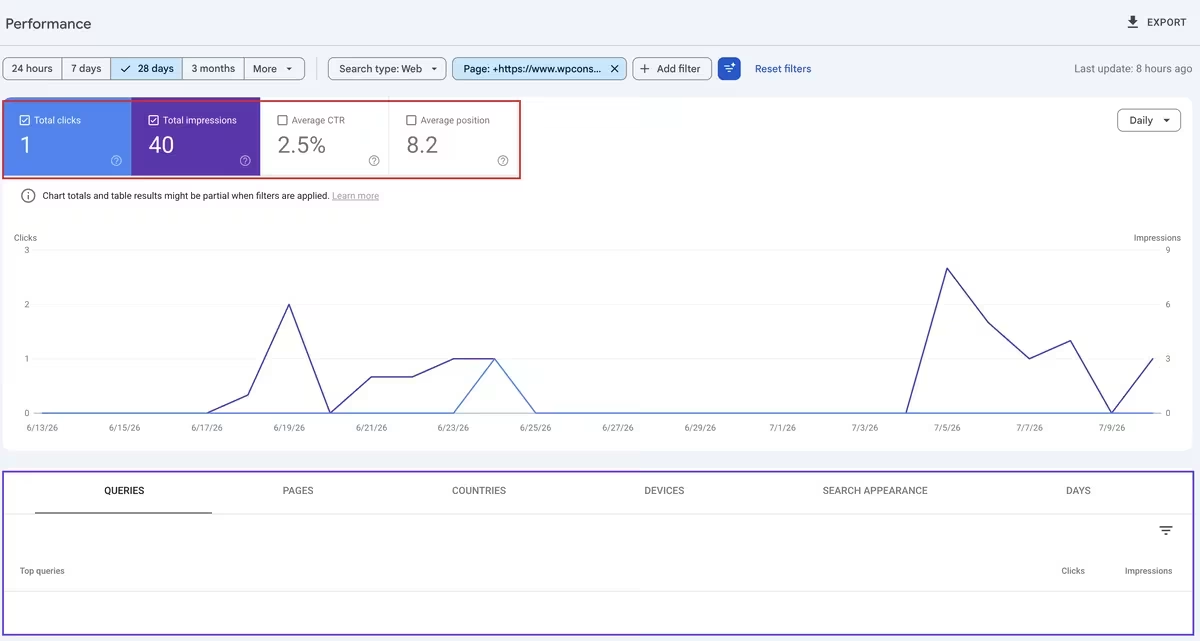
Regardez les deux encadrés ensemble, car c’est dans l’écart entre les deux que réside l’information. Les indicateurs sont bien là, et on serait donc tenté d’interpréter “ position 8,2 ” comme notre classement pour cette requête. L’onglet « Requêtes » situé en dessous est vide, ce qui signifie que Search Console ne nous indiquera aucune requête pour laquelle cette page est apparue.
Nous nous sommes dit : “ Nous sommes classés 8,2 pour cette requête, mais Google a cité quelqu’un d’autre à notre place ”. C’était une interprétation plus séduisante que ce que les données laissaient réellement entrevoir. Ce que les données montrent, c’est que la page affiche une note moyenne de 8,2 pour l’ensemble des requêtes pour lesquelles elle apparaît, ce qui n’est absolument pas la même chose.
Nous avons donc corrigé cela dans notre fichier d'étude et je vous le signale ici, car la Search Console d'un petit site vous induira en erreur exactement de cette manière, et un diagnostic n'a que très peu de valeur s'il ne précise pas les tests qui vous induisent en erreur.
Si vous souhaitez évaluer le coût des « AI Overviews » plutôt que de débattre de leur position, il s'agit là d'une tâche distincte qui requiert une méthode spécifique, et j'explique la démarche dans Mesure de l'IA : aperçu de la perte de trafic.
Les chiffres présentés dans la section « Aperçu de l'IA » indiquent qu'il ne faut pas répéter
Deux chiffres reviennent sans cesse dans cette conversation, mais aucun des deux ne résiste à une vérification ; ne basez donc pas votre stratégie sur eux.
- “ Les modèles d'IA extraient les citations des 150 à 200 premiers mots. ” Ce chiffre, qui semble très précis, provient directement de la présentation sur l'IA telle que nous l'avons capturée, sans qu'aucune source ne soit visible dans le panneau. Une réponse générée par l'IA avançant une statistique non sourcée sur le fonctionnement des réponses de l'IA illustre bien l'ensemble du problème, et je ne l'inclurais pas dans une présentation.
- “ 96% des pages citées satisfont aux critères du filtre E-E-A-T. ” Je n'ai pas réussi à remonter à l'étude d'origine. On la cite quand même, et c'est ainsi qu'un chiffre finit par devenir un lieu commun.
Le problème plus général concernant les pages classées pour cette requête n'est pas qu'elles soient trompeuses, mais que leurs chiffres relèvent d'une simple corrélation et qu'aucun d'entre eux ne peut être vérifié par vous, sur votre page, cet après-midi. Les vérifications mentionnées ci-dessus, en revanche, le peuvent.
C'est un sujet sur lequel j'ai déjà échoué par le passé. J'ai rédigé le test que j'ai effectué au lieu de me fier à ce que disent Google et OpenAI au sujet des citations liées à l'IA, et en résumé, le message est le même que dans la version longue : notez ce que la machine cite réellement, lors de vos propres recherches, et accordez-lui plus de crédit qu'aux communiqués de presse de qui que ce soit.
Alors, pourquoi votre page n'apparaît-elle pas dans « AI Overviews » ?
D'après mon expérience, la plupart du temps, il s'agit de l'une des trois situations suivantes, par ordre de probabilité : soit tout va bien et vous avez simplement jeté un œil à un pool qui bouge, soit vous êtes discrètement exclu en raison d'une directive « snippet » dont personne ne se souvient avoir ajouté, soit votre réponse figure bel et bien sur la page, mais elle est enfouie à un endroit d'où rien ne peut la faire ressortir.
Les conseils consistant à ajouter un schéma, à respecter les critères E-E-A-T et à publier du contenu original ne sont pas faux, et je les suis tous les trois. C'est simplement coûteux, chronophage et impossible à vérifier, et c'est un point de départ étrange alors qu'il existe deux vérifications gratuites à effectuer avant cela.
Ce à quoi je m'opposerais le plus, c'est l'idée selon laquelle il s'agit toujours d'un problème de qualité du contenu. Souvent, il s'agit d'un problème technique déguisé en problème de qualité du contenu, et le moyen le plus rapide de s'en rendre compte est d'effectuer quelques vérifications simples avant même de réécrire un seul paragraphe. La deuxième méthode la plus rapide consiste à revérifier la semaine suivante, car notre propre référencement est apparu puis a disparu alors que la page restait inchangée.
Vous avez effectué les vérifications et vous êtes toujours bloqué ?
Envoie-moi l'URL et la requête, et je vais y jeter un œil. Tu peux nous contacter ou m'envoyer un courriel directement. S'il s'avère qu'il s'agit d'une balise d'éligibilité, cela ne prend que deux minutes à corriger et vous ne devriez pas avoir à payer qui que ce soit pour la trouver.
Journal des mises à jour
31 juillet 2026
- Nous avons ajouté une section consacrée à la question de savoir si une mention peut disparaître d'elle-même, en nous appuyant sur nos propres résultats antérieurs : notre page a été mentionnée sur les quatre marchés pendant quatre nuits consécutives, puis n'a plus été mentionnée, alors que rien n'avait été modifié sur la page et que son classement restait stable ; nous avons également observé une page de contrôle que nous n'avons jamais modifiée, qui est apparue dans le panneau des sources avant d'en disparaître à nouveau.
- Nous avons corrigé le paragraphe consacré à l'extractibilité à l'étape 3, qui indiquait encore que ce test était en cours alors qu'il s'était achevé le 29 juillet, et l'avons remplacé par le résultat que nous avions promis de publier, quelle qu'en soit l'issue.
13 juillet 2026
- J'ai ajouté le rapport Search Console correspondant à cette affirmation concernant le classement, qui indique 40 impressions avec une position moyenne de 8,2 et un onglet « Requêtes » entièrement vide, ainsi que la balise meta « robots » de la page que nous testons.
- Publié pour la première fois, cet article s'appuie sur nos propres captures d'écran de la section « Aperçu de l'IA » datées des 12 et 13 juillet 2026, ainsi que sur la documentation de Google relative aux fonctionnalités d'IA. Il inclut également notre rectification d'une affirmation exagérée formulée précédemment concernant ce que les données de position de la Search Console permettent de démontrer.
Vous souhaitez que nos publications apparaissent plus souvent sur Google ?
En un clic, Google affichera ce site dans votre rubrique « À la une ».

 Étude de ChatGPT sur les achats : quels sont les facteurs qui déterminent réellement si vos produits sont cités ?
 Mots-clés à longue traîne et analyses basées sur l'IA : les conclusions de notre étude sur les mentions dans le commerce électronique
 Outils de visibilité IA : ce qu’ils mesurent réellement et comment les évaluer avant de les acheter