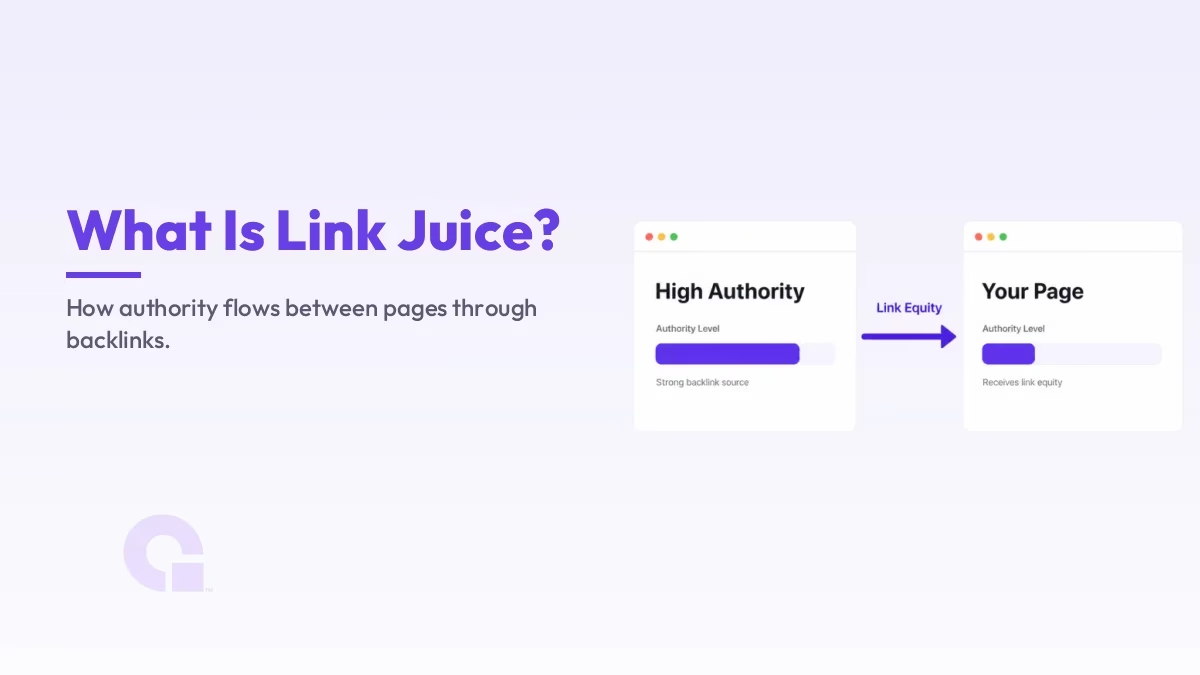
Link juice is the SEO nickname for the authority one page passes to another through a link. When a trusted site links to you, a portion of its credibility flows across, and search engines read that as a signal your page is worth ranking.
This piece explains what link juice really is, what makes one link pass more authority than another, and how to build and keep it flowing without falling for the spammy shortcuts. The short version: links are votes, but not all votes count the same.
Key Takeaways
- Link juice is the authority, or link equity, that one page passes to another through a link.
- It is the practical idea behind PageRank: links act as votes, weighted by the source’s own authority.
- Not all links are equal; relevance, the linking site’s authority, placement, and follow status all change how much passes.
- Links marked nofollow, sponsored, or UGC generally do not pass equity.
- You earn link juice by being worth linking to, then keep it flowing with smart internal links.
What link juice actually is
Link juice is not an official Google term, but the mechanism behind it is real. It traces back to PageRank, the original idea that a link is a vote of confidence, and that a vote from an important page counts for more than a vote from an obscure one. Google’s own guidance on links still treats them as a core way it discovers and judges pages.
So when people say a page has lots of link juice to pass, they mean it has accumulated authority from the links pointing at it, and some of that authority carries onward through the links it places. It is less a literal liquid and more a useful way to picture authority moving through the web’s link graph.
Why not all links pass the same authority
This is where most people oversimplify. A backlink is not a flat unit of value; how much authority flows depends on several things at once, so a single link from a respected, relevant site in your field can outweigh dozens of weak ones.
| Factor | Passes more when | Passes less when |
|---|---|---|
| Linking site’s authority | The source is trusted and established | It is a thin or low-quality site |
| Relevance | The site and page relate to your topic | The link is from an unrelated niche |
| Placement | It sits inside the main content | It is buried in a footer or sidebar |
| Follow status | It is a normal followed link | It is nofollow, sponsored, or UGC |
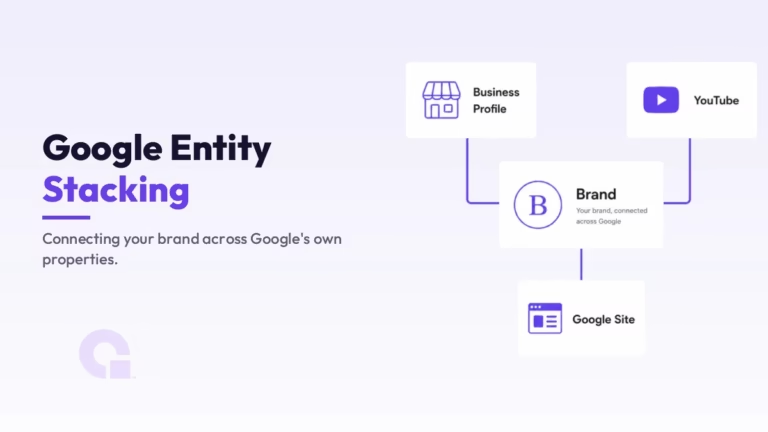
The practical lesson is to stop counting links and start weighing them. One genuine editorial mention from an authority in your space does more than a pile of directory links, which is exactly why manufactured link schemes underperform, a point I make in detail in my take on Google entity stacking.
Follow, nofollow, and the attributes that stop the flow
Not every link is meant to pass authority, and Google gives publishers a way to say so. The rel attributes nofollow, sponsored, and ugc tell Google a link is not an editorial endorsement, for example a paid placement or a user-generated comment. Those links generally pass little or no equity.
This matters in two directions. It is why links you can drop yourself on open platforms rarely move the needle, and it is also why you should mark your own paid or affiliate links correctly, so you are not seen as trying to pass authority you should not. Honest labeling keeps you on the right side of Google’s link spam rules.
Internal links: the part you fully control
Here is the part people forget. Link juice does not only come from other sites; it moves around your own site through internal links, and that flow is entirely in your hands. When a strong page earns backlinks, you can pass some of that authority to the pages you actually want ranking by linking to them from it with clear, descriptive anchor text.
That is why a sensible internal structure quietly lifts your whole site. If you map your content into related clusters, authority spreads where it is useful instead of pooling on one page, which is the same logic behind building a proper topical map for SEO.
How to build link juice the right way
There is no real shortcut, but the path is clear. Earn links by being worth linking to: genuinely useful content, original data, or tools that other sites want to reference, plus the occasional guest contribution or reclaimed broken link where it fits naturally. This is the off-page side of the picture I cover more broadly in what off-site SEO is.
Then protect and direct what you have earned: keep your internal links tidy, avoid orphaning important pages, and do not bleed authority into low-value pages you do not need indexed. Building and steering link juice together beats chasing raw link counts.
So how much should you worry about link juice?
Honestly, think about it as a lens, not a metric to obsess over. You cannot measure link juice precisely, and tools that score it are estimates, so chasing a number is a trap. What holds up is the underlying behavior: earn links from trusted, relevant sources and route that authority sensibly through your own site.
Do that and the rankings tend to follow, because you are working with how search engines actually weigh trust rather than trying to game a metaphor. Quality of links and smart internal structure will always outlast any trick built on volume.
Update Logs
30 Jun 2026
- Rewrote with the PageRank context, a clearer breakdown of what makes links pass more or less authority, and a new section on internal links and the nofollow attributes.
Want our posts to show up more often on Google?
One step & Google will surface this site in your Top Stories.