Empilement d'entités Google Cette méthode est présentée comme une astuce ingénieuse pour obtenir des liens retour : créez du contenu sur les plateformes de Google, reliez-les entre elles, et regardez votre classement grimper. L'idée repose sur un fondement solide, mais la plupart des conseils prodigués s'apparentent davantage à des vœux pieux qu'à la manière dont Google perçoit une marque.
Voici mon avis en toute franchise. Ce qui fonctionne vraiment, c’est le développement de l’identité de marque, c’est-à-dire des profils authentiques et vérifiés, ainsi que des informations cohérentes sur qui vous êtes. Ce qui ne mène nulle part, voire peut vous causer des ennuis, c’est de créer des documents Google Docs et des sites Google Sites interconnectés pour en faire un réseau de liens privés.
Principaux enseignements
- “Le ” empilement d'entités » est un terme utilisé dans la communauté du référencement naturel (SEO), et non un critère de classement officiel de Google.
- L'élément central est la création d'une identité de marque : revendiquer et vérifier les propriétés Google qui vous appartiennent réellement.
- La création d'un réseau de liens entre des documents Google Docs, des feuilles de calcul Google Sheets et des sites Google Sites n'apporte que peu de valeur et va à l'encontre des politiques de Google en matière de spam.
- Google reconnaît votre marque en tant qu'entité grâce à des informations cohérentes et corroborées sur l'ensemble du Web, et non grâce à une multitude de liens créés par vos soins.
- Mettez tout en œuvre pour laisser une empreinte concrète : des profils précis, des informations cohérentes et des mentions méritées.
Ce que l'on entend par « empilement d'entités Google »
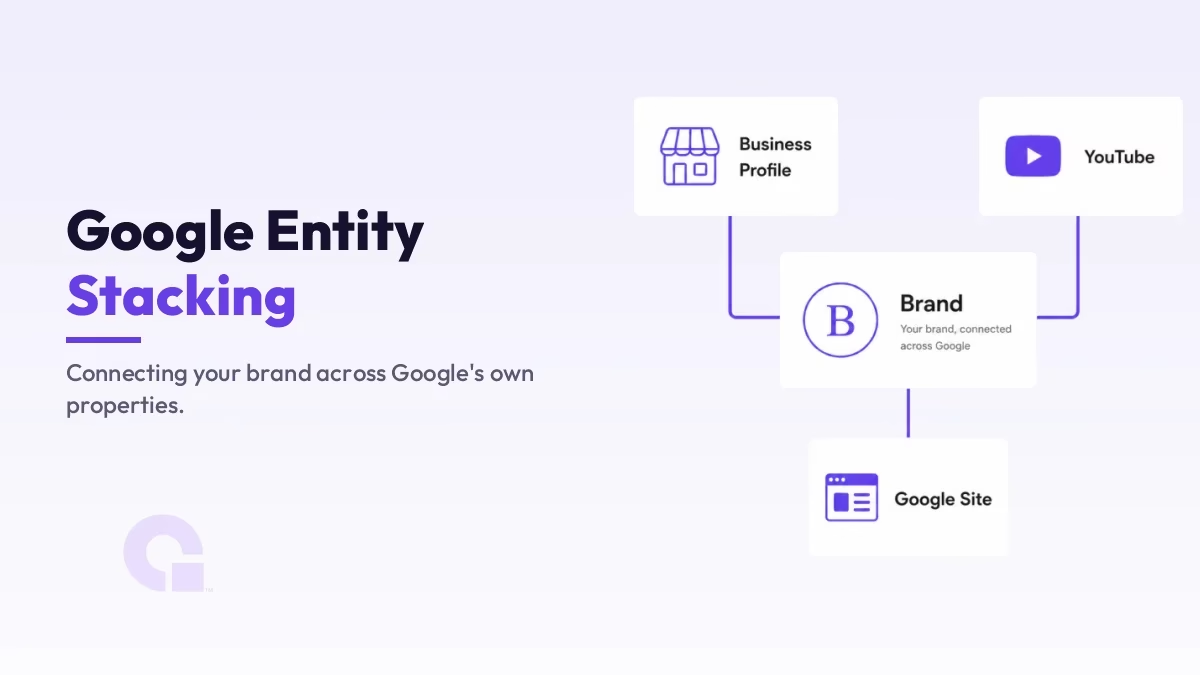
Lorsque les spécialistes du marketing parlent d’« entity stacking » sur Google, ils font généralement référence à la création d’un ensemble de propriétés sur les plateformes de Google : un profil d’entreprise, un site Google, une chaîne YouTube, ainsi que des documents Docs, des feuilles de calcul Sheets et des présentations Slides, puis à leur interconnexion et à leur redirection vers votre site web. L'argument avancé est que les liens provenant de domaines appartenant à Google ont un poids particulier et renforcent la notoriété de votre marque aux yeux de l'algorithme.
L'idée sous-jacente n'est pas farfelue. Google s'efforce effectivement de comprendre le monde comme un réseau d'entités (personnes, entreprises, lieux) plutôt que comme une simple succession de mots-clés. Le problème, c'est le raisonnement qui consiste à en déduire : “ Je vais donc créer mes propres signaux d'entité à l'aide des outils gratuits de Google pour être référencé plus rapidement ”.
Le grain de vérité : les entités et le Knowledge Graph
Il y a là une idée légitime qui mérite d'être prise au sérieux. Google gère un Graphique des connaissances qui modélise les entités et leurs relations, et le fait d’y figurer en tant qu’entité reconnue est un véritable atout. Cela fait partie des critères utilisés par Google pour évaluer l’expertise et la fiabilité, et c’est le raisonnement qui sous-tend son contenu utile et recommandations relatives à l'E-E-A-T.
Le problème, c'est la manière dont cette reconnaissance s'acquiert. Google se forge une image de votre marque à partir de sources concordantes : de nombreuses sources indépendantes qui vous décrivent de manière cohérente. Un profil d'entreprise vérifié et une véritable chaîne YouTube font partie de cette image, mais ils comptent parce qu'ils sont authentiques, et non parce qu'ils se trouvent sur un domaine Google. C'est l'aspect « entité » de l'évolution plus large que j'analyse dans mon Guide du référencement sémantique.
Les faiblesses de la version « spam »
La version « à base de liens » de l'empilement d'entités échoue pour une raison simple : les liens que vous créez vous-même et que vous contrôlez entièrement ne constituent pratiquement pas une validation indépendante. Une pile de documents Google Docs et de sites Google Sites que vous avez créés, reliés entre eux et bourrés de textes d'ancrage correspond exactement au type de manipulation que Google Politiques relatives au spam de liens décrire, et la plupart de ces liens sont de toute façon accompagnés d'une balise « nofollow » ou ignorés.
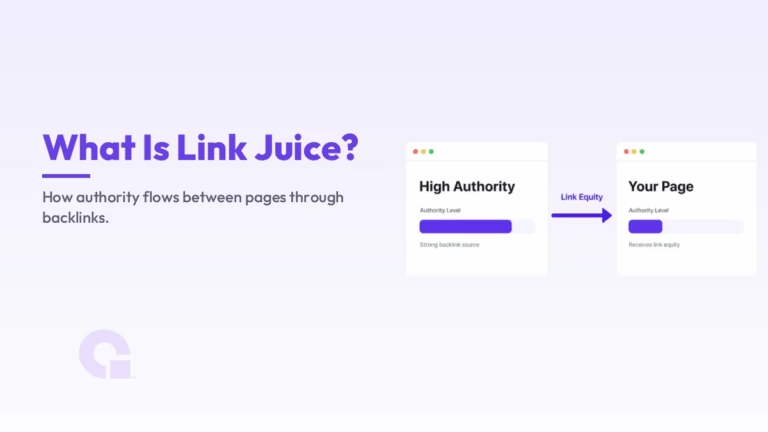
Cela revient également à mal comprendre le fonctionnement de la valeur des liens. Comme je l'explique dans Qu'est-ce que le « link juice » et pourquoi est-ce important ?, l'autorité provient de sites fiables et indépendants qui choisissent de créer un lien vers votre site, et non de pages que vous avez vous-même créées. Le nombre de liens que vous créez vous-même ne remplace pas une seule mention rédactionnelle authentique.
| Ce qu'on appelle l“” empilement d'entités » | L'allégation | La réalité |
|---|---|---|
| Revendiquer et vérifier des propriétés Google réelles | Renforce l'identité de votre marque | C'est vraiment utile, car les profils sont authentiques et vérifiés |
| Mise en relation des documents, feuilles de calcul et sites créés avec Spun | Dépasse l'autorité de domaine de Google | La plupart du temps, ces liens sont accompagnés d'une balise « nofollow » ou ignorés, et vont à l'encontre des politiques anti-spam |
Que faire à la place : créer une véritable entité
Le travail qui fait réellement avancer la reconnaissance des entités est moins passionnant, mais bien plus durable. Revendiquez et complétez intégralement les profils qui vous appartiennent réellement, veillez à ce que votre nom, votre adresse et vos coordonnées soient identiques sur chacun d’entre eux, et assurez-vous que votre propre site web indique clairement qui vous êtes grâce à un balisage structuré cohérent.
Ensuite, obtenez des éléments de validation qui échappent à votre contrôle : des mentions réelles, des référencements dans des annuaires réputés, une couverture médiatique et des liens provenant de sites indépendants de votre secteur. Cette cohérence repose sur le même principe que celui que je prône dans Les éléments qui doivent être cohérents dans une stratégie de référencement local, et c'est ce qui permet à Google de relier les points pour dresser un portrait précis de votre marque.
Alors, est-ce que l'« entity stacking » de Google vaut vraiment la peine que vous y consacriez du temps ?
En général, non, du moins pas telle qu’elle est habituellement enseignée. L'astuce des propriétés interliées est une méthode fastidieuse pour créer des ressources que Google ne prend guère en compte, et s'y consacrer détourne l'attention des éléments qui génèrent un effet cumulatif. Si votre conception de l'« empilement d'entités » consiste à revendiquer un profil d'entreprise authentique et une véritable présence sur YouTube, très bien : il s'agit simplement d'une bonne hygiène de marque sous un nom plus tape-à-l'œil.
Ce que je ne ferais surtout pas, c'est de considérer une pile de pages Google créées de toutes pièces comme un raccourci pour améliorer le référencement. Construisez une marque que d'autres sources décrivent de manière cohérente, et la reconnaissance de l'entité viendra d'elle-même ; c'est là un aspect qu'aucun raccourci ne peut simuler.
Journal des mises à jour
30 juin 2026
- Nous avons reformulé l'article afin de distinguer clairement la véritable stratégie de développement de l'identité de marque de la version consistant en un système de liens, en y incluant des références au Knowledge Graph de Google et à ses politiques en matière de spam, ainsi qu'une conclusion plus claire.
Vous souhaitez que nos publications apparaissent plus souvent sur Google ?
En un clic, Google affichera ce site dans votre rubrique « À la une ».