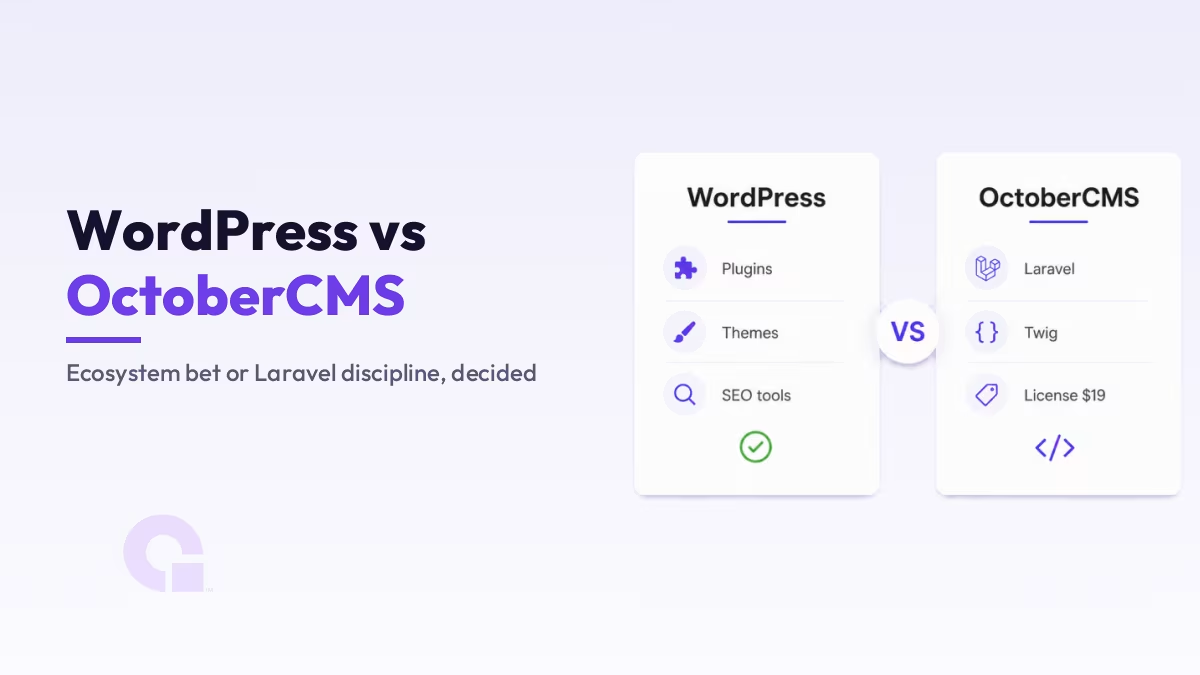
La comparaison entre WordPress et OctoberCMS n'est pas vraiment un duel entre deux outils similaires ; il s'agit plutôt d'un choix entre le plus grand écosystème de contenu du Web et une plateforme axée sur les développeurs et basée sur Laravel. Les deux permettent de publier des pages, mais elles s'adressent à des publics différents, ce qui explique pourquoi tant de comparaisons qui les évaluent fonctionnalité par fonctionnalité s'avèrent finalement inutiles.
Je vais les comparer en fonction des critères qui déterminent réellement le choix : l'écosystème, les licences et les coûts, l'expérience développeur et le workflow SEO, et je désignerai un choix clair pour chaque situation.
Principaux enseignements
- WordPress fonctionne à peu près 43% de tous les sites web selon W3Techs, et cette ampleur se traduit par des plugins, des thèmes, des services d'hébergement et du personnel à embaucher pour chaque problème que vous pourriez rencontrer.
- OctoberCMS est un CMS basé sur Laravel destiné aux développeurs : il offre des modèles Twig épurés et un contrôle total sur le code, mais son écosystème est nettement plus restreint.
- En octobre 2021, October est passé à un système de licences payantes ; le prix d'une licence personnelle commence à $19 par projet, tandis que le cœur de WordPress reste gratuit et open source.
- Winter CMS est une version dérivée gratuite, sous licence MIT, destinée à tous ceux qui souhaitent bénéficier de l'approche d'October sans être soumis à sa licence.
- Pour les sites de contenu, les boutiques en ligne et la plupart des projets clients, WordPress est la solution la plus pratique ; October s'impose quant à lui pour les développements Laravel sur mesure réalisés par une véritable équipe de développeurs.
Ce que sont réellement WordPress et OctoberCMS
WordPress est le CMS open source qui alimente environ 43% de tous les sites web, selon W3Techs. À l’origine, il s’agissait d’un logiciel de blog qui s’est transformé en une plateforme polyvalente où presque toutes les fonctionnalités, des boutiques en ligne aux abonnements, sont proposées sous forme de plugins plutôt que de code à écrire soi-même. Si ce nom ne vous dit rien, vous pouvez consulter mon petit guide explicatif sur Que signifie « WP » ? aborde les notions de base.
OctobreCMS vient d'une approche différente : il s'agit d'un CMS basé sur Laravel, le framework PHP le plus populaire, qui utilise le système de modèles Twig et dispose d'un interface d'administration épurée et minimaliste. Il part du principe que l'on dispose d'un développeur sur place, et est passé d'une licence open source à une licence payante en 2021, ce qui a modifié le profil de ses utilisateurs.
Écosystème et plugins : là où WordPress se démarque vraiment
À lui seul, le répertoire de wordpress.org propose des dizaines de milliers de plugins gratuits, sans compter une boutique de plugins payants, des milliers de thèmes, ainsi qu’un vivier d’agences et de freelances dans tous les pays. Quels que soient les modules dont vous avez besoin, quelqu’un les a déjà développés, documentés et a répondu aux questions posées dans les fils de discussion d’assistance ; et si votre configuration devient insuffisante, la plateforme s’adapte bien au-delà de ce que l’on pourrait croire ; j’ai testé cette question dans des conditions extrêmes dans Un site WordPress peut-il gérer 1 million de visiteurs ?.
L'offre disponible sur la marketplace en octobre ne représente qu'une infime partie de cela, et pour de nombreuses fonctionnalités, la réponse honnête est : “ il faut le développer soi-même avec Laravel ”. Pour être juste, ce n'est pas uniquement un inconvénient : moins d'options prêtes à l'emploi signifie moins de plugins surchargés ou abandonnés, et le code que vous déployez est un code que vous maîtrisez. Cela fait simplement de chaque fonctionnalité une tâche de développement plutôt qu'un simple bouton d'installation.
Les licences et le coût réel de chaque CMS
Le cœur de WordPress est gratuit sous licence GPL ; votre argent sert donc à financer l'hébergement, les plugins premium et la personne qui assure la maintenance du site ; les formules d'hébergement géré d'entrée de gamme sont vraiment bon marché chez des fournisseurs tels que Hostinger. OctoberCMS nécessite une licence par projet de production, avec une licence personnelle à partir du $19, la première année étant offerte pour les nouveaux comptes, et la licence elle-même étant perpétuelle (son expiration vous prive uniquement des mises à jour et de l'accès à la boutique en ligne).
Aucun projet n'échoue à cause de la version $19 ; la licence importe donc moins en termes de coût qu'en tant que signal : October est désormais un produit commercial destiné aux installations professionnelles. Si cette décision concernant la licence vous dérange par principe, CMS d'hiver, le fork communautaire créé lorsque October est passé à un modèle payant, conserve la même approche libre sous licence MIT.
Expérience des développeurs : maîtrise de Laravel ou familiarité avec WordPress ?
C'est là qu'October se distingue vraiment. Il s'appuie sur Laravel, utilise des modèles Twig au lieu d'un code PHP alambiqué, propose des migrations bien pensées et dispose d'une base de code parfaitement compatible avec le contrôle de version, ce qui rend le développement en équipe rigoureux bien plus agréable que ne le permet jamais vraiment le code classique d'un thème WordPress.
WordPress intègre d'anciens modèles PHP ainsi qu'un mélange d'API héritées et d'API de l'ère des blocs, et personne ne vante son élégance. Ce qu'il offre en revanche, c'est une familiarité à grande échelle: une documentation très complète, des réponses à toutes les erreurs que vous pourriez un jour saisir dans un champ de recherche, et la possibilité de recruter un expert en la matière sur n'importe quel marché, ce qui, dans la plupart des projets concrets, a plus de valeur que l'élégance.
Workflows de référencement et de gestion de contenu sur WordPress et OctoberCMS
En matière de gestion de contenu, WordPress a tout simplement une longueur d'avance. Les rédacteurs bénéficient d'un flux de travail de publication abouti, tandis que la couche technique (schéma, plans de site, redirections et analyse on-page) est fournie clé en main par un plugin de référencement tel que Rang Math. On ne saurait trop insister sur l'importance de cet avantage initial si le site tire ses revenus de son contenu.
Avec October, les balises meta, les plans de site et les redirections sont des éléments que votre développeur doit mettre en place, soit manuellement, soit à l'aide de petits plugins disponibles sur les marketplaces. Un bon développeur Laravel est tout à fait capable de créer un site October optimisé pour le référencement, mais vous payez pour des heures de travail que WordPress vous offre gratuitement, et votre équipe éditoriale ressentira chaque semaine les limites de ces outils éditoriaux moins complets.
| Aspect | WordPress | OctobreCMS |
|---|---|---|
| Construit sur | Son propre noyau PHP (GPL, open source) | Framework Laravel, système de modèles Twig |
| Écosystème | Des dizaines de milliers de plugins, de thèmes et d'agences | Petite place de marché ; la plupart des fonctionnalités sont développées sur mesure |
| Coût de la licence | Le cœur du logiciel est gratuit ; vous payez l'hébergement et les plugins premium | Rémunération au projet, licence personnelle n° $19 |
| Conçu pour | Propriétaires de sites, éditeurs et développeurs généralistes | Développeurs et équipes Laravel |
| Outils de référencement naturel | Les plugins aboutis prennent en charge les schémas, les plans de site et les redirections | La configuration a été en grande partie effectuée par votre développeur |
| Le plus adapté | Sites de contenu, boutiques en ligne, sites clients, blogs | Applications sur mesure nécessitant une couche CMS |
Dans quels cas OctoberCMS est-il vraiment le meilleur choix ?
Si votre équipe maîtrise déjà parfaitement Laravel et que le projet est en réalité une application sur mesure qui nécessite justement du contenu modifiable, October est le choix le plus naturel. Vous conservez ainsi une seule pile technologique, un seul pipeline de déploiement et un contrôle total sur le modèle de données, au lieu d'essayer de transformer WordPress en un framework d'application qu'il n'a jamais été conçu pour être.
Cette solution convient également aux clients qui ont besoin d'un panneau d'administration verrouillé et spécialement conçu, car vous leur fournissez exactement les champs sur lesquels ils doivent intervenir, et rien d'autre. Cette précision est véritablement plus difficile à obtenir sous WordPress sans multiplier les plugins de restriction les uns après les autres.
Alors, WordPress ou OctoberCMS pour votre prochain projet ?
Si c'était mon projet et que l'objectif était de créer un site de contenu, une boutique en ligne, un site professionnel pour un client ou tout autre projet axé sur le référencement, j'opterais pour WordPress sans trop hésiter, car son écosystème, les talents disponibles et les outils de référencement de plus en plus aboutis ne cessent de se renforcer mois après mois. C'est exactement le même raisonnement que j'ai appliqué lorsque j'ai comparé Wix, WordPress et Squarespace : comparatif: le choix d'une plateforme relève avant tout d'un pari sur l'écosystème.
Octobre n'est pas le perdant dans cette affaire, c'est le spécialiste : avec une équipe Laravel et une solution sur mesure, il offrira une expérience plus épurée que WordPress ne le fera jamais, et Winter CMS couvre les mêmes fonctionnalités gratuitement. Choisissez-le simplement parce que votre équipe et votre projet y sont véritablement adaptés, et non parce que le code est plus élégant.
Vous cherchez un CMS pour votre prochain projet ?
Le choix de la plateforme coûte peu cher à faire maintenant, mais il sera coûteux de revenir dessus plus tard. Travailler avec nous ou m'envoyer un courriel et nous adapterons le CMS, l'hébergement et la configuration SEO à ce que vous êtes en train de développer.
Journal des mises à jour
2 juillet 2026
- Nous avons mis à jour la comparaison pour 2026 en tenant compte des licences en vigueur en octobre, de la branche « Winter » du CMS, d'un tableau comparatif et d'une analyse plus précise permettant de déterminer à quels projets chaque CMS est réellement adapté.
Vous souhaitez que nos publications apparaissent plus souvent sur Google ?
En un clic, Google affichera ce site dans votre rubrique « À la une ».