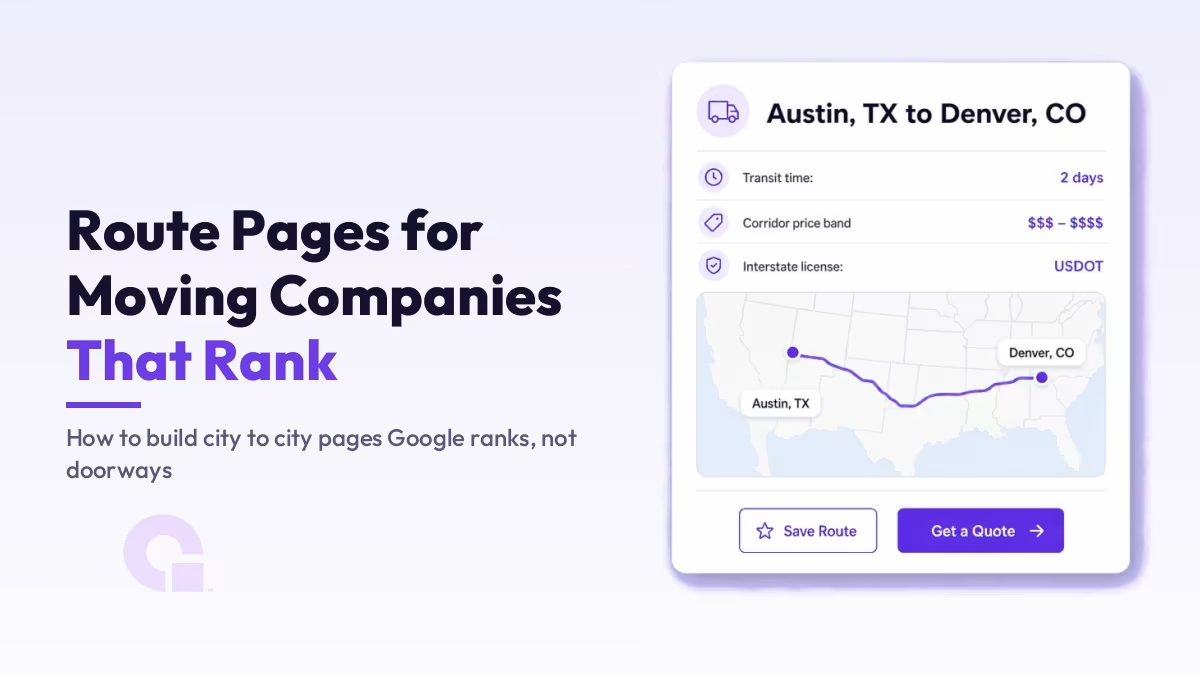
Presque toutes les entreprises de déménagement que j'ai examinées se sont vu donner le même conseil : créez une page pour chaque itinéraire que vous desservez, et le référencement suivra. Elles se mettent donc à créer une quarantaine de pages quasi identiques, en échangeant simplement les noms de deux villes sur chacune d'elles, puis attendent. Soit ces pages ne sont jamais référencées, soit elles disparaissent discrètement de l'index, sans que personne n'explique pourquoi.
Les pages d'itinéraires peuvent tout à fait être bien classées, et pour les déménageurs interurbains, elles constituent l'une des meilleures stratégies possibles. Mais cette stratégie ne fonctionne que si chaque page justifie pleinement son existence. C’est justement ce que les guides qui vous vendent cette stratégie omettent de préciser ; je vais donc vous présenter les spécifications, la méthode de sélection et vous donner une vision honnête de la position de Google concernant les pages « doorway ».
Principaux enseignements
- Une page « itinéraire » d'une entreprise de déménagement est une page créée pour un axe spécifique entre deux villes que vous desservez réellement, par exemple entre Austin et Denver, et non une page générique présentant votre zone d'intervention.
- Une page consacrée à un itinéraire n'est bien classée que si elle contient des informations spécifiques à cet itinéraire : un temps de trajet réel, une fourchette de prix réelle pour ce trajet, les particularités de l'itinéraire en matière d'autorisations et de logistique, ainsi que des détails sur le point de départ et la destination.
- Avant de publier, effectuez le « test de suppression » : supprimez les deux noms de villes ; s'il ne reste alors aucun élément distinctif sur la page, il s'agit d'une page passerelle.
- La politique de Google relative aux pratiques abusives liées aux pages passerelles mentionne explicitement les pages ciblant des régions ou des villes spécifiques et qui redirigent les utilisateurs vers une seule page ; les pages de redirection « minces » constituent donc un risque avéré, et non un risque hypothétique.
- Créez des pages d'itinéraires pour les liaisons que vous exploitez déjà et pour lesquelles vous établissez souvent des devis, plutôt que de créer une page pour chaque paire de villes possible. Huit pages de qualité valent mieux que quatre-vingts pages sans contenu.
- Les pages d'itinéraire quasi identiques se retrouvent généralement marquées comme “ Explorées, non indexées pour le moment ”, car Google regroupe les doublons en une seule page.
À quoi sert une page « Itinéraires » pour une entreprise de déménagement ?
Une page « itinéraire » est une page consacrée à un axe de transport que vous desservez, c'est-à-dire un trajet spécifique entre un point de départ et une destination, comme Austin-Denver ou Chicago-Phoenix. Elle cible les recherches interétatiques et longue distance portant précisément sur cette paire de villes, et répond aux questions que se pose réellement une personne qui prévoit ce déménagement spécifique : combien de temps dure le trajet, quel est le coût approximatif du trajet, et quelles sont les particularités d'un déménagement traversant ces États précis.
Cela diffère d'une page consacrée à une ville ou à une zone de service, qui cible un lieu précis (“ déménageurs à Austin ”). Une page consacrée à un itinéraire met l'accent sur la relation entre deux lieux ; c'est pourquoi elle peut se positionner dans les résultats de recherche à forte intention, du type “ déménager d'Austin à Denver ”, où l'internaute a déjà pris la décision de déménager.
Voici ce que j’ai trouvé d’intéressant en vérifiant ce que Google cite réellement pour ces requêtes. Lors d’une recherche d’itinéraire entre deux villes, les sources de l’« AI Overview » proviennent presque exclusivement des pages d’itinéraires des entreprises de déménagement elles-mêmes et des annuaires d’itinéraires, et non des guides d’agences de référencement. En d’autres termes, une page d’itinéraire bien conçue peut être la source citée pour son « corridor ». L'opportunité est bien réelle ; c'est au niveau de la mise en œuvre que tout s'effondre.
Que doit contenir la page « Itinéraires » d'une entreprise de déménagement ?
Une page consacrée à un itinéraire mérite son classement uniquement si elle contient des informations pertinentes pour ce trajet, et rien d'autre. Si la seule différence entre votre page « Austin-Denver » et votre page « Austin-Seattle » réside dans les noms des deux villes, vous n'avez pas créé deux pages distinctes, mais une seule page que vous avez publiée deux fois.
Voici donc les critères auxquels je voudrais que chaque page d'itinéraire réponde avant sa mise en ligne. Chacun de ces éléments doit être véritablement spécifique à l'itinéraire concerné, et non pas un champ de modèle rempli de chiffres inventés.
| Ce qui figure sur la page | Pourquoi cela doit-il être spécifique à chaque couloir ? |
|---|---|
| Temps de transit réel pour la voie | Le trajet d'Austin à Denver est différent de celui d'Austin à Miami. Seul ce trajet permet d'avoir une estimation réaliste (et de savoir ce qui peut la modifier, comme le passage en hiver). |
| Une fourchette de prix réelle pour ce tronçon | La tarification des trajets longue distance dépend de la distance et de la saison. Une fourchette de prix concrète pour cet itinéraire, même large, est plus utile et plus pertinente que la simple mention “ obtenir un devis ”. |
| Les autorisations et la logistique du parcours | Les déménagements interétatiques nécessitent un numéro USDOT et relèvent de Règles de la FMCSA; certaines voies comportent des péages, des stations de pesage ou des fermetures saisonnières qu'il convient de mentionner. |
| Informations sur l'origine et la destination | Les règles de stationnement, l'accès aux immeubles et les particularités du quartier aux deux extrémités. Voilà des connaissances locales qu'un modèle ne peut pas reproduire. |
| La preuve que tu joues vraiment cette voie | Un véritable travail que vous avez accompli sur la voie, une analyse de ce passage, ou encore votre programme pour l'aborder. C'est ce qui transforme une simple entrée de blog en une page digne d'être citée. |
Le test de suppression est le moyen le plus rapide de vérifier la conformité d'une page à cette spécification. Masquez les deux noms de ville sur la page et lisez ce qui reste. Si le texte restant pourrait tout aussi bien s'appliquer à n'importe quel autre itinéraire, la page est une « page passerelle » et Google la traitera comme telle. Si ce qui reste décrit toujours clairement un trajet réel et précis, vous avez une page qui mérite d'être publiée.
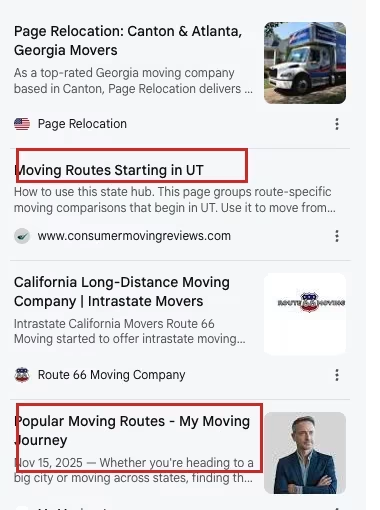
Pour vous montrer ce qui ne passe pas ce test, voici deux pages d'itinéraires que j'ai extraites d'un annuaire bien classé pour ces requêtes. Remarquez que la description est identique octet par octet ; seuls le code postal et les noms de ville changent.

Ces deux pages échouent au test de suppression dès la première lecture. Si l'on supprime “ Eagle Mountain (UT) à Monroe (NC) ” et “ Layton (UT) à Gering (NE) ”, on se retrouve avec exactement la même phrase. C'est ce type de schéma qui conduit à regrouper ou à ignorer tout un dossier de pages d'itinéraires.
Combien de pages consacrées aux itinéraires une entreprise de déménagement devrait-elle créer ?
Créez des pages consacrées aux itinéraires que vous empruntez réellement et pour lesquels vous établissez souvent des devis, et non pas une page pour chaque liaison entre deux villes répertoriée par un outil d'analyse de mots-clés. Pour la plupart des entreprises de déménagement, cela correspond à environ cinq à quinze pages de qualité, et non pas aux cinquante à cent pages qu'un modèle permet de créer facilement. Huit vraies pages rapporteront toujours plus que quatre-vingts pages minces, car seuls ces huit-là ont quelque chose à dire.
L'erreur de sélection que je constate le plus souvent consiste à choisir des thèmes en fonction du volume de recherche. Le volume de recherche vous indique ce que les gens recherchent, mais pas les domaines sur lesquels vous pouvez réellement rédiger une page de fond. Une meilleure source d'information est constituée par vos propres données professionnelles, qui sont d'ailleurs la seule source d'informations détaillées spécifiques à votre secteur d'activité.
Comment choisir les pages d'itinéraires à créer
- Concentrez-vous sur les itinéraires où vous avez déjà fait vos preuves : ceux sur lesquels vous avez déjà effectué des missions, pour lesquels vous disposez de temps de trajet réels et d'avis clients sur lesquels vous appuyer.
- Ajoutez-y les segments de marché que vous ne cessez de mentionner mais sur lesquels vous enregistrez des pertes : il existe une demande, et une page bien conçue peut commencer à y répondre.
- Éliminez toute catégorie pour laquelle vous ne pouvez pas, en toute honnêteté, fournir les informations requises : l'absence de détails concrets signifie qu'il n'y aura pas de page, pour l'instant.
- Publiez cette liste restreinte, et ne la développez qu'une fois que chaque page est véritablement spécifique.
C'est cette même rigueur que j'incite à adopter dans tous les stratégie de référencement local: un nombre réduit de pages, chacune comportant un objectif précis et des arguments solides, plutôt qu'un vaste réseau de pages quasi vides. Une entreprise de déménagement qui se concentre sur une poignée de « couloirs » bien structurés l'emportera presque à chaque fois sur un concurrent qui en compte une centaine.
Les pages consacrées aux villes des entreprises de déménagement sont-elles des pages passerelles ?
On parle de « pages passerelles » lorsqu’elles sont très similaires entre elles et qu’elles ont pour principale fonction de rediriger tous les visiteurs vers le même formulaire de devis. En revanche, elles ne constituent pas des pages passerelles lorsque chacune d’entre elles apporte une réelle valeur ajoutée à son parcours spécifique. La distinction repose précisément sur le « test de suppression » évoqué plus haut, et il vaut mieux se référer aux explications de Google à ce sujet plutôt que de se fier au résumé d’un prestataire.
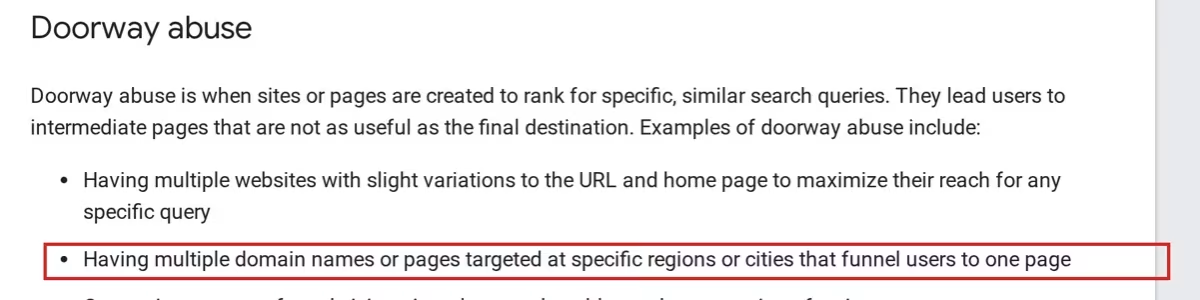
Les règles de Google en matière de spam définissent l'abus de « doorway » (terme actuellement utilisé pour désigner ce que l'on appelle encore communément les « pages passerelles ») comme des sites ou des pages créés dans le but d'être bien classés pour des requêtes spécifiques et similaires, qui redirigent les utilisateurs vers des pages intermédiaires moins utiles que la destination finale. L'un des exemples cités correspond presque à la description d'une configuration de page de redirection « thin » :
Disposer de plusieurs noms de domaine ou pages ciblant des régions ou des villes spécifiques, qui redirigent les utilisateurs vers une seule et même page.
Recherche Google, Politiques relatives au spam pour la recherche Web Google (violence à l'entrée)
Voici maintenant ce que je trouve vraiment étrange, et c’est la raison pour laquelle tant d’entreprises de déménagement tombent dans ce piège. Si vous recherchez sur Google “ référencement pour entreprises de déménagement ”, le guide sur l’IA de Google lui-même vous conseille de créer des pages uniques pour chaque ville que vous desservez, sans mentionner la politique relative aux pages “ doorway ” qui figure juste à côté. Le mot qui fait toute la différence dans ce conseil est « unique », et rien dans le contexte n’explique ce que cela signifie concrètement.
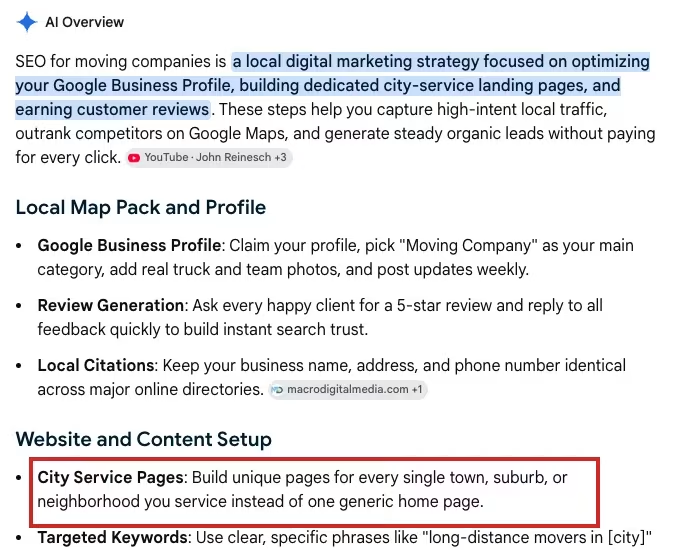
Les deux affirmations sont donc vraies en même temps. Les pages constituent un format légitime et référencé lorsqu’elles sont authentiques, tandis que ce même format est qualifié d’abus lorsqu’il est “ maigre ”. Les conseils que tout le monde répète se limitent à « créer une page pour chaque itinéraire » et ne vous indiquent jamais de quel côté de la ligne vous vous situez. Le « test de suppression » permet justement de rester du bon côté de cette ligne, et je soumettrais chaque page d’itinéraire à ce test avant sa publication. En ce qui concerne plus particulièrement l’angle de la recherche par IA, j’approfondis ce sujet dans mon article sur Présentations générales sur le référencement local et l'IA.
Pourquoi certaines pages de routage apparaissent-elles comme “ explorées, mais non indexées pour le moment ” ?”
Lorsqu'un lot de pages de parcours est quasi identique, Google les explore souvent, les considère comme des doublons et n'en conserve qu'une seule, les autres étant marquées comme “ Explorées, non indexées pour le moment ” dans Search Console. Il s’agit là d’un problème que presque personne ne mentionne dans les conseils relatifs aux pages de route, et c’est le signe le plus évident que vos pages manquent de contenu.
Il ne s'agit pas d'une pénalité, et il n'y a généralement pas d'erreur à corriger. Google refuse simplement de consacrer un emplacement d'indexation à une page qui reprend le contenu qu'il détient déjà. Si vous ouvrez le rapport « Pages » et que vous voyez votre dossier « route » figurer dans cette catégorie, la solution ne consiste pas à créer davantage de pages ou à ajouter davantage de liens internes, mais à enrichir le contenu de vos pages existantes avec des éléments distincts, conformément aux spécifications ci-dessus.
J'explique en détail comment interpréter ce statut et comment agir en conséquence dans exploré, non indexé pour le moment. En ce qui concerne plus particulièrement les pages de parcours, considérez-les comme votre tableau de bord : à mesure que les pages passent de ce groupe à celui des “ pages indexées ”, vous savez que le travail sur le contenu unique porte ses fruits.
Une entreprise de déménagement devrait-elle donc créer des pages consacrées à ses itinéraires ?
Honnêtement, oui, mais bien moins que ce qu'on vous a dit, et chacune d’entre elles est véritablement bien étoffée. Les pages consacrées aux itinéraires constituent l’un des atouts majeurs d’une entreprise de déménagement interurbain, car elles répondent à des recherches très ciblées et Google référence activement les pages de ces entreprises pour ces requêtes. Cette opportunité est bien réelle.
Ce que je ne ferais pas, c’est de les traiter comme un simple jeu de volume. L’approche par modèle, à savoir une page pour chaque paire de villes, est le moyen le plus rapide de se retrouver avec un dossier rempli de liens qui ne seront jamais indexés et qui ne vous apporteront rien. Si c'était mon entreprise de déménagement, je créerais un ensemble restreint de pages pour les liaisons que j'exploite réellement, je soumettrais chacune d'entre elles au « test de suppression », et je n'en ajouterais d'autres qu'une fois qu'elles auraient fait leurs preuves. C'est plus lent, mais c'est la méthode qui fonctionne. Cet article vient compléter mon guide plus général sur Référencement naturel pour les entreprises de déménagement, qui complète le tableau de la situation locale.
Vous souhaitez que vos pages d'itinéraires soient conçues pour être bien référencées, sans pour autant alourdir votre site ?
Si vous dirigez une entreprise de déménagement et que vous souhaitez mettre en place une page d'itinéraires qui vous permette d'améliorer votre référencement plutôt que de servir de page de redirection, travailler avec nous ou m'envoyer un courriel. Je vous aiderai à choisir les bonnes orientations et à donner à chaque page une véritable raison d'être.
Vous souhaitez que nos publications apparaissent plus souvent sur Google ?
En un clic, Google affichera ce site dans votre rubrique « À la une ».

 Profil Google My Business suspendu : quel recours introduire, et dans quel ordre ?
 Référencement local pour les entreprises proposant des services dans une zone géographique donnée : dans quelles villes pouvez-vous réellement vous positionner ?
 Votre avis Google n'apparaît pas ? Comment en déterminer la cause réelle et savoir qui peut y remédier