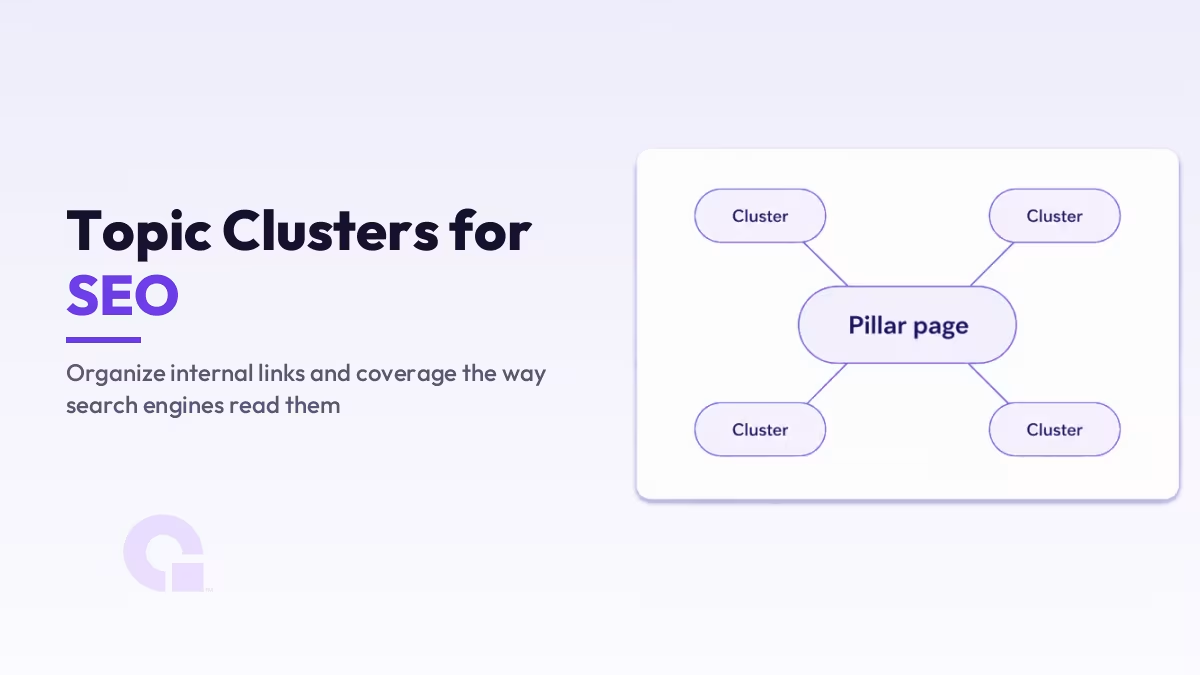
Les groupes thématiques constituent un moyen simple d'organiser votre contenu : un vaste page pilier sur un thème central, plusieurs pages de la grappe sur ses sous-thèmes, ainsi que les liens internes qui les relient entre eux. Bien conçue, cette structure permet tant aux lecteurs qu'aux moteurs de recherche de se rendre compte de l'étendue de votre traitement d'un sujet.
Dans ce guide, je vais vous expliquer en quoi les « topic clusters » contribuent réellement au référencement naturel (SEO), vous guider pas à pas dans leur création et vous dire en toute franchise dans quels domaines ce modèle est surestimé. Ce n’est pas le diagramme de clusters qui influe sur le classement, mais bien la couverture thématique et le maillage interne qui le sous-tendent.
Principaux enseignements
- Un « cluster thématique » est constitué d'une page pilier consacrée à un thème général et de plusieurs pages de cluster traitant de ses sous-thèmes, toutes reliées entre elles par des liens internes.
- La véritable valeur en matière de référencement naturel réside dans les liens internes et dans l'exhaustivité du contenu, et non dans la forme du diagramme lui-même.
- Les clusters vous aident à éviter la cannibalisation des mots-clés en attribuant à chaque intention de recherche une page de référence bien définie.
- Google ne privilégie pas les regroupements pour le simple plaisir de les regrouper ; il privilégie la profondeur, une structure claire et les liens qui aident les utilisateurs à s'y retrouver.
- Commencez par créer du contenu : un pilier vide comportant quelques pages de cluster ne sera pas bien classé simplement parce qu’il a la forme d’un cluster.
Qu'est-ce qu'un « topic cluster » exactement ?
Un groupe thématique se compose de trois parties. Le page pilier donne un aperçu général d'un sujet essentiel, à savoir le pages de la grappe chacune aborde en détail un sous-thème, et des liens internes relient chaque page de groupe à l'article pilier et, lorsque cela s'avère utile, les unes aux autres.
Si vous découvrez ce concept, imaginez un moyeu et ses rayons. L'article phare est le moyeu qui présente le sujet dans son ensemble, et chaque rayon répond à une question précise que le lecteur pourrait se poser ensuite. Ce sont les liens qui transforment un ensemble d'articles distincts en une ressource cohérente sur le sujet.
| Aspect | Page thématique | Page du cluster |
|---|---|---|
| Objectif | Vue d'ensemble d'un thème central | Réponse approfondie sur un sous-thème |
| Intention de recherche | Vaste et de haut niveau | Spécifiques, souvent à longue traîne |
| Exemple | “ Le guide complet du café infusé à froid ” | “ Combien de temps le café infusé à froid se conserve-t-il au réfrigérateur ? ” |
| Liens | Liens vers toutes les pages des clusters | Liens vers le pilier et vers les groupes connexes |
En quoi les groupes de thèmes contribuent-ils réellement à votre référencement naturel ?
Le premier avantage réside dans les liens internes. Lorsque votre page pilier renvoie vers des pages de groupe et que celles-ci renvoient à leur tour vers la page pilier, vous transmettez à la fois du contexte et une partie de l'autorité de la page aux URL que vous souhaitez voir bien classées, et vous fournissez à Google des indications claires, liens explorables à suivre. Si vous souhaitez en savoir plus sur le fonctionnement de cette autorité, j'aborde ce sujet dans mon guide consacré à Qu'est-ce que le « link juice » ?.
Le deuxième aspect concerne l'exhaustivité. Une série d'articles vous oblige à répondre à la question principale et aux questions qui en découlent, ce qui correspond exactement au niveau d'approfondissement qui témoigne d'une véritable expertise sur un sujet. Cela recoupe largement référencement sémantique, où il importe davantage d'aborder un sujet et les éléments qui s'y rapportent que de répéter un mot-clé.
Le troisième point est que les clusters vous aident à éviter cannibalisation des mots-clés. Lorsque chaque page a un objectif clair, on évite d'avoir trois articles inachevés qui se font concurrence pour la même requête et qui se neutralisent mutuellement. Un pilier solide et des groupes de pages ciblés valent mieux qu'un ensemble disparate de pages qui se chevauchent et que Google ne parvient pas à distinguer.
Quand le modèle des clusters thématiques est surestimé
Voici la partie que la plupart des guides omettent. Les groupes thématiques constituent un moyen utile d'organiser le contenu, mais ils ne sont pas obligatoires, et Google n'accorde pas de bonus de classement pour le simple fait d'avoir créé ce schéma. Ce modèle a été popularisé par HubSpot, et de nombreux sites qui obtiennent d'excellents classements ne créent jamais de structure formelle de type « piliers et grappes ».
Ce qui détermine réellement le classement, c'est ce qui se cache derrière la structure : une couverture exhaustive, des liens internes qui aident réellement les utilisateurs à naviguer, et une hiérarchie claire du site. Le cluster est la carte, pas le territoire. Si vous publiez une page pilier peu étoffée et une poignée de pages de cluster superficielles, le simple fait de les organiser dans un schéma soigné ne suffira pas à les sauver ; commencez donc par construire le contenu, puis laissez la structure s’en charger.
Comment créer un cluster thématique, étape par étape
Cela étant dit, voici la méthode que j'utilise. Elle est volontairement simple, car c'est dans l'exhaustivité et les liens que réside toute la rigueur, et non dans un processus complexe.
Créer un cluster thématique
- Choisissez un thème central suffisamment vaste pour justifier la création d'une rubrique dédiée.
- Répertorier les véritables sous-thèmes sur lesquels les gens posent des questions
- Rédigez la page pilier sous la forme d'une véritable présentation générale
- Rédigez des pages de cluster ciblées, une par intention
- Reliez-les entre eux et faites le point sur l'ensemble tous les quelques mois
Commencez par choisir un thème central suffisamment large pour servir de point d'ancrage, puis identifiez les sous-thèmes que les internautes recherchent réellement autour de celui-ci. Les outils de recherche de mots-clés sont utiles, mais il est également intéressant de consulter la rubrique “ Les internautes ont également demandé ” et vos propres requêtes dans Search Console. Si vous souhaitez une méthode plus complète pour mettre cela en place, mon guide cartographique thématique vous guide pas à pas dans l'analyse d'un sujet dans son ensemble avant de vous lancer dans la rédaction.
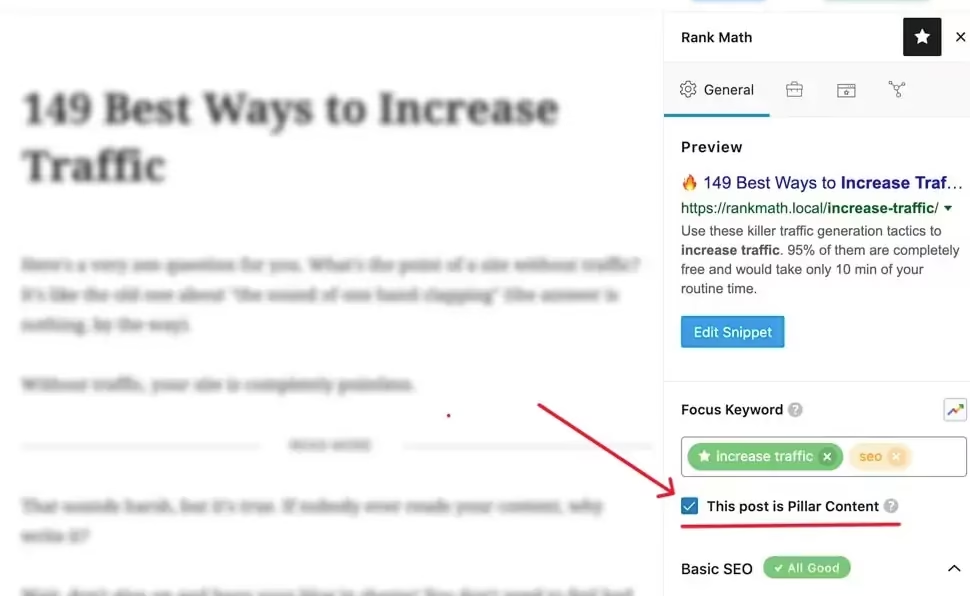
Ensuite, rédigez la page pilier sous la forme d'un véritable aperçu qu'un nouveau visiteur pourrait lire du début à la fin, puis créez les pages du cluster, en veillant à ce que chacune d'entre elles traite exclusivement d'une seule question. Pour conserver une structure claire dans WordPress, vous pouvez marquer une page comme « contenu pilier » et obtenir des suggestions de liens internes à l'intérieur. Rang Math.
Procédez ensuite à la création des liens, une étape que l'on a souvent tendance à bâcler. Créez des liens entre l'article pilier et chaque groupe de thèmes à l'aide d'un texte d'ancrage descriptif, reliez chaque groupe de thèmes à l'article pilier, et reliez entre eux les groupes de thèmes étroitement liés. Enfin, passez en revue le groupe de thèmes tous les quelques mois, actualisez les informations obsolètes et intégrez tout nouveau sous-thème sous la forme d'une nouvelle page de groupe de thèmes.
Un exemple de cluster thématique que vous pouvez reproduire
Imaginons que vous teniez une boutique spécialisée dans le matériel pour le café. Votre page phare pourrait s'intituler “ Le guide complet du café cold brew ”, un véritable tour d'horizon expliquant ce qu'est le cold brew, en quoi il diffère du café glacé et ce dont vous avez besoin pour le préparer. Cette page cible ce terme général et sert de repère aux nouveaux acheteurs.
Autour de cet article pilier s’articulent des pages de groupe qui répondent chacune à une question concrète : “ Combien de temps le cold brew se conserve-t-il au réfrigérateur ? ”, “ Cold brew ou café glacé ? ”, “ Quel est le meilleur dosage pour le cold brew ? ”, ainsi qu’un guide d’achat consacré aux machines à cold brew. Chaque groupe de pages renvoie vers l’article pilier, l’article pilier renvoie vers toutes ces pages, et le guide d’achat redirige discrètement vers vos pages produits. C’est ainsi qu’un groupe de pages remplit sa fonction : capter les recherches spécifiques et les canaliser vers la page qui génère des ventes.
Alors, vaut-il la peine de créer des groupes thématiques ?
Honnêtement, oui, mais pour la bonne raison. Je créerais des clusters non pas parce que Google exige ce schéma, mais parce que la rigueur qu’ils imposent, le fait de couvrir le sujet de manière exhaustive et de relier les éléments entre eux de façon cohérente, est précisément ce qui permet au contenu d’être bien classé et de retenir les lecteurs plus longtemps sur votre site.
Si ce site était le mien, je considérerais le cluster comme un outil de planification, et non comme un trophée. Cartographiez le sujet, rédigez des pages qui méritent véritablement d’être bien classées, reliez-les avec soin, et résistez à la tentation de publier un pilier « fantôme » juste pour en avoir un. La structure n’a de valeur que si le contenu est là pour la soutenir.
Vous souhaitez que vos groupes de thèmes soient correctement structurés et reliés entre eux ?
Si vous préférez que l'on se charge pour vous du mappage, de la rédaction et de la création de liens internes, travailler avec nous ou m'envoyer un courriel et nous allons mettre en place un cluster qui mérite véritablement son classement.
Journal des mises à jour
4 juillet 2026
- J'ai réécrit le guide en mettant l'accent sur les éléments qui génèrent réellement des résultats, à savoir les liens internes et la couverture ; j'ai ajouté une section franche sur les aspects du modèle « piliers et clusters » qui sont surestimés ; j'ai simplifié les étapes de mise en œuvre et j'ai ajouté un exemple prêt à l'emploi.
Vous souhaitez que nos publications apparaissent plus souvent sur Google ?
En un clic, Google affichera ce site dans votre rubrique « À la une ».

 La règle des 95-5 dans le B2B : comment calculer votre part de marché potentielle
 Catégories et balises WordPress : comment choisir, et quel est le rôle de vos pages d'archives dans les résultats de recherche ?
 Référencement local pour les entreprises proposant des services dans une zone géographique donnée : dans quelles villes pouvez-vous réellement vous positionner ?